The commercial base is thinner than the politics suggests
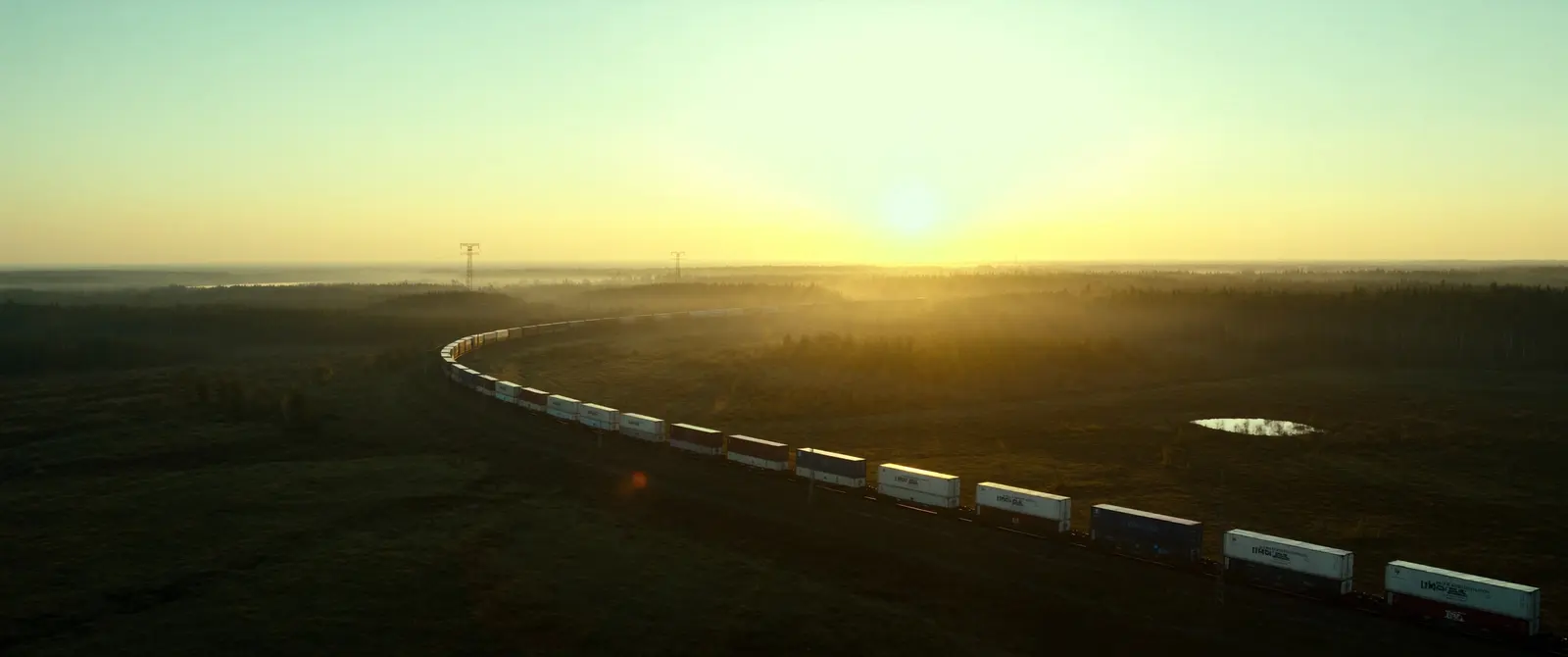
Trade between the two countries is modest and concentrated. Russian exports lean towards fertilisers, metals, hydrocarbons and machinery; South African exports towards fruit, chemicals, automotive components and some food products. Most of the relationship is commodity and agricultural trade rather than capital investment, which matters: there is a small pool of executives on both sides who have actually closed a project end to end.
The institutional framework is thin but real. Both countries sit in BRICS, and there is a bilateral double taxation agreement. Tax treaties do not interpret themselves - before structuring a holding company, ask a tax adviser to confirm the current status of the treaty, the withholding rates it actually applies and how Russian tax authorities are applying it in practice today.
For foreign investors generally, the source of capital has shifted sharply. 75% of foreign direct investment now comes from friendly countries, against 25% before (UNCTAD via Izvestia, 2025). South African capital sits inside that friendly category, which means fewer legal barriers than a German or British investor faces, and more room to negotiate with regional administrations.
- Set expectations on scale: neither market is a primary export destination for the other
- Treat the tax treaty as a hypothesis to verify, not a given
- Check whether your South African bank will process the payment before you sign anything
Payments: where most projects actually stall
Russia's settlement pattern has been rebuilt. 86% of exports are now settled in rubles and friendly-country currencies (Bank of Russia, 2025). That does not mean paying rouble invoices is frictionless for a South African company. The obstacle is rarely the Russian counterparty; it is the South African or international bank in the middle, which weighs its dollar clearing exposure, its correspondent relationships and its own risk appetite before touching a payment involving a Russian entity.
In practice you are choosing between three routes: direct rand-rouble conversion, which exists but has limited depth and wide spreads; settlement in a neutral currency such as the dirham or the yuan through accounts in third countries; and rouble settlement into a Russian account, which is the simplest inside Russia but needs a source of roubles, either from local revenue or from a conversion arrangement.
Russian banks use SPFS, the domestic alternative to SWIFT, and some institutions with no Western correspondent ties will onboard foreign clients readily. That solves the in-country leg but worsens the outbound leg, because a bank with no Western relationships is exactly the profile that triggers extra due diligence at your home bank or its correspondent.
Sequence matters. Before a deal is signed, establish in writing which bank on each side will process the transfer, in which currency, and with which documentation. Changing the settlement route after contracts are signed is where capital gets stranded.
- Confirm an executable payment route in writing before signing a contract
- Budget for slower settlement and higher conversion costs, not for fees alone
- Keep the compliance file on source of funds complete from day one; it will be requested
Legal vehicles: LLC, branch, or a domestic fund structure
The default vehicle is a limited liability company, registered with the Federal Tax Service through a Russian notary. A foreign legal entity can also register a branch or a representative office. A branch can conduct commercial activity; a representative office is limited to liaison and market research, though it can hire local staff. Choose the branch if you intend to invoice, and the representative office if the first stage is purely investigation.
If the plan is a holding structure rather than an operating business, special administrative regions are the Russian instrument for redomiciling corporate groups. There are 674 companies registered as residents of special administrative regions (Ministry of Economic Development, 2025). The regime was built mainly for Russian groups returning from offshore jurisdictions, so the entry conditions and the required commitments should be read carefully before assuming they fit an external investor's structure.
For greenfield industrial projects, the relevant instrument is the special investment contract, which fixes conditions for a project over a long horizon in exchange for incentives. There are 90 special investment contracts with more than ₽2T in declared investment (Government of Russia, 2025). These are negotiated, not applied for over a counter, and the regional administration is usually your counterparty alongside the federal ministry.
For portfolio exposure rather than direct investment, access runs through regulated investment platforms and brokerage accounts: 106 licensed investment platforms (Bank of Russia, May 2026). The public market is comparatively small - capitalisation is 19.5% of GDP against a target of 66% by 2030 (Bank of Russia, Aug 2026) - so expect thinner liquidity than in Johannesburg.
- Operating business: local LLC or branch, registered via a Russian notary
- Holding structure: special administrative region, subject to residency conditions
- Long-horizon industrial project: special investment contract, negotiated with the region
- Portfolio route: brokerage account or a licensed investment platform
What a South African investor cannot do, and where approval is required
Agricultural land cannot be owned by foreign entities. It can be leased, with leases running up to 49 years. For a South African agribusiness or food processor, that turns a land-purchase business case into a lease-and-operate case, with the lease terms becoming the central commercial question.
Border areas are closed to foreign land ownership. This includes Sochi, Anapa, Gelendzhik and Novorossiysk. Property in those locations can be leased or operated, but not owned by a foreign person or company. Any project brief that assumes acquisition in those areas needs rewriting at the outset.
Investment in strategic sectors requires prior approval under Law 57-FZ. The list covers defence-adjacent activity, certain subsoil uses, telecoms and other areas of national significance. Filing takes time and can be refused; the review should start before, not after, a term sheet is agreed.
There is also a layer of home-country control. Outbound investment from South Africa falls under exchange control administered by the South African Reserve Bank, which sets annual allowances and requires approval for certain structures. The limits change, so the specific threshold that applies to your transaction must be confirmed with a South African authorised dealer or adviser rather than assumed from older guidance.
Sectors where the fit is genuine
Mining and metals is the obvious overlap. Russia produces 44% of the world's palladium (USGS, 2025) and is a major platinum-group producer, which puts South African mining-services, beneficiation and equipment firms in a familiar technical environment. The same applies to mineral processing technology and mine-safety systems.
Agriculture and food processing offer a second route, with the land-ownership restriction shaping the model: lease land, own the processing asset. Russia's freshwater endowment - 20% of the world's unfrozen fresh water sits in Lake Baikal (UNESCO, 1996) - and its large arable base support a long-term food-processing case, though logistics and regional variation in infrastructure are the usual constraints.
The corporate tax environment is workable: 25% profit tax, with 0-5% available under certain special regimes (Federal Tax Service, 2025), and standard VAT at 22% since 1 January 2026 (Federal Tax Service, 2026). Those headline rates are only meaningful after you model the regional incentives that apply to your specific project, since incentives are granted at regional level and vary by territory.
The workforce is a genuine argument for higher-value activity: 64% of adults aged 25 and over hold tertiary education, against 50% in the United States (World Bank / UNESCO, 2021). Automotive, chemicals and IT services investors repeatedly cite engineering availability; they also cite wage inflation in the largest cities.
- Mining services and metallurgy: technical familiarity, strongest overlap
- Agro-processing: ownership of the plant, lease of the land
- Chemicals and automotive components: existing supplier chains
- IT and engineering services: deep technical labour pool
The order of steps that works
Start with the compliance question rather than the business plan. Ask your South African bank, in writing, whether it will handle payments connected to a Russian entity and what documentation it needs. A negative answer here changes the entire structure, including whether the Russian operating company should be owned directly or through an intermediary jurisdiction - a decision that must be taken with tax and legal counsel, not improvised.
Next, incorporate: a Russian notary submits the registration documents to the Federal Tax Service; the company receives its registration number and tax number; then come the bank account, the accounting function and, depending on the activity, licences. Opening an account is now the slowest administrative step, and banks apply enhanced due diligence to companies with foreign ownership, so prepare the corporate chain documents, the beneficial ownership disclosure and the source-of-funds file in advance.
If the sector is strategic, file under Law 57-FZ before committing capital. If land is involved, resolve the ownership question early: lease only, and outside the closed border areas. If the project is industrial and long-term, begin the conversation with the regional administration about a special investment contract at the same time as the site selection, because the incentive package can change which site makes sense.
Staffing, visas and residence permits should be treated as a project workstream, not an afterthought. A foreign employee needs a work permit against a quota and then a visa; senior managers are commonly processed through the highly qualified specialist route, which has its own salary threshold that changes and must be checked at the time of hire.
- 1. Written confirmation of a payment route from your bank
- 2. Notarial registration of the LLC with the Federal Tax Service
- 3. Bank account opening with a complete beneficial ownership file
- 4. Sector approval under Law 57-FZ, if applicable
- 5. Land arrangement: lease, not purchase, and clear of closed border areas
- 6. Regional incentive negotiation, run in parallel with site selection
Risks to price in
Compliance risk is the dominant one, and it is asymmetric. Neither South African law nor Russian law prohibits the investment, but the transaction may still be uneconomic if it costs you your dollar correspondent relationship or your ability to insure an asset. Secondary exposure to Western sanctions is a live consideration for any bank or insurer in the chain, and the answer differs by institution, not by country.
Currency and rate risk are material. The Bank of Russia key rate stood at 14% (Bank of Russia, Sep 2026). That is a signal of how expensive rouble funding can be and of how much movement to expect in the exchange rate; any project model built on rouble revenue and rand or dollar returns needs a properly stressed currency assumption. Rates change, so verify the current level before you model anything.
Execution risk is real and is usually about people rather than rules. Distances are large, regional administrations differ in competence, and a project approved in one region can stall in the next. Local partners with a verifiable operating history, and a Russian law firm retained from the start rather than once a dispute appears, reduce this considerably.
Finally, banking risk: sanctions on individual Russian banks are a moving picture, and a bank that works today may not work in a year. Do not allow the business to depend on a single banking relationship, and keep the option of settling through a third-country account open.
- Compliance exposure at your home bank and insurer
- Currency volatility and high rouble funding costs
- Counterparty and regional execution quality
- Single-bank dependency for settlement
- Tax treaty interpretation risk on withholding and repatriation
FAQ
Do sanctions prevent a South African company from investing in Russia?
South Africa has not adopted the Western sanctions regime, so the investment is not prohibited under South African law, and South Africa is not on Russia's list of unfriendly states, meaning the special account regime does not apply. The practical constraint is elsewhere: banks, insurers and logistics providers in the chain may carry Western exposure and decline or slow the transaction. Get independent compliance advice on your specific counterparties, banks and currencies before committing capital.
Can a South African company open a bank account in Russia?
Yes. The company must first be registered with the Federal Tax Service, then apply to a Russian bank, which will run enhanced due diligence on foreign-owned entities: corporate chain documents, beneficial ownership disclosure and source-of-funds evidence. Expect the account opening to take longer than the registration itself, and expect some banks to decline the profile outright. Applying to more than one bank in parallel is normal practice.
Can a foreigner buy land in Russia?
Agricultural land cannot be owned by foreign individuals or companies; it can be leased for up to 49 years. Certain border areas, including Sochi, Anapa, Gelendzhik and Novorossiysk, are closed to foreign land ownership entirely. Non-agricultural commercial property can generally be owned, subject to the strategic-sector rules where relevant.
Is there a double taxation treaty between South Africa and Russia?
Yes, a bilateral agreement exists, but treaties are amended and their application in practice varies by income type and by how the Russian tax authority treats a given structure. Confirm the current withholding rates and the required documentation, including residency certification, with a tax adviser in both jurisdictions before you set up the holding structure.
How much capital do I need to start?
Minimum charter capital for a limited liability company is low by international standards, but it is not the real number. The binding costs are compliance and legal work, local accounting and payroll, office or production space, and the time cost of an account opening that may take months. Model total entry cost rather than statutory minimum, and treat the payment route as a cost centre of its own.
Information on this website is not an offer or an individual investment recommendation. Investing involves risk, including the loss of all invested capital. Investing via investment platforms is high-risk and may result in the loss of the entire investment. Figures are sourced from third parties and dated. Investors must comply with the laws of their jurisdiction.