Why there is no clean direct lane
Most large liner operators stopped calling Russian ports, so capacity is supplied by smaller regional carriers, feeder operators and non-Western lines. From Singapore, that almost always means a relay: a mainline leg to a hub in China, the UAE, Turkey or India, then a second leg into St Petersburg, Novorossiysk or a Baltic port.
The practical consequence is that a single booking is rarely a single contract. You deal with a freight forwarder who consolidates, and you inherit the risk of a transshipment port refusing the box, a carrier rejecting the HS code mid-voyage, or a container sitting at the relay point while documents are re-cut.
- Confirm in writing that the named carrier accepts the Russian port of discharge for your specific commodity before you book.
- Check whether the transshipment hub accepts the HS code - some reject dual-use-looking electronics outright.
- Ask the forwarder who is the actual carrier on the second leg, not just the booking party.
- Verify cargo insurance covers the full routing including the relay, not only the ocean leg.
- Budget for time, not just cost: relay routings add weeks of uncertainty at handover points.
The four corridors in practice
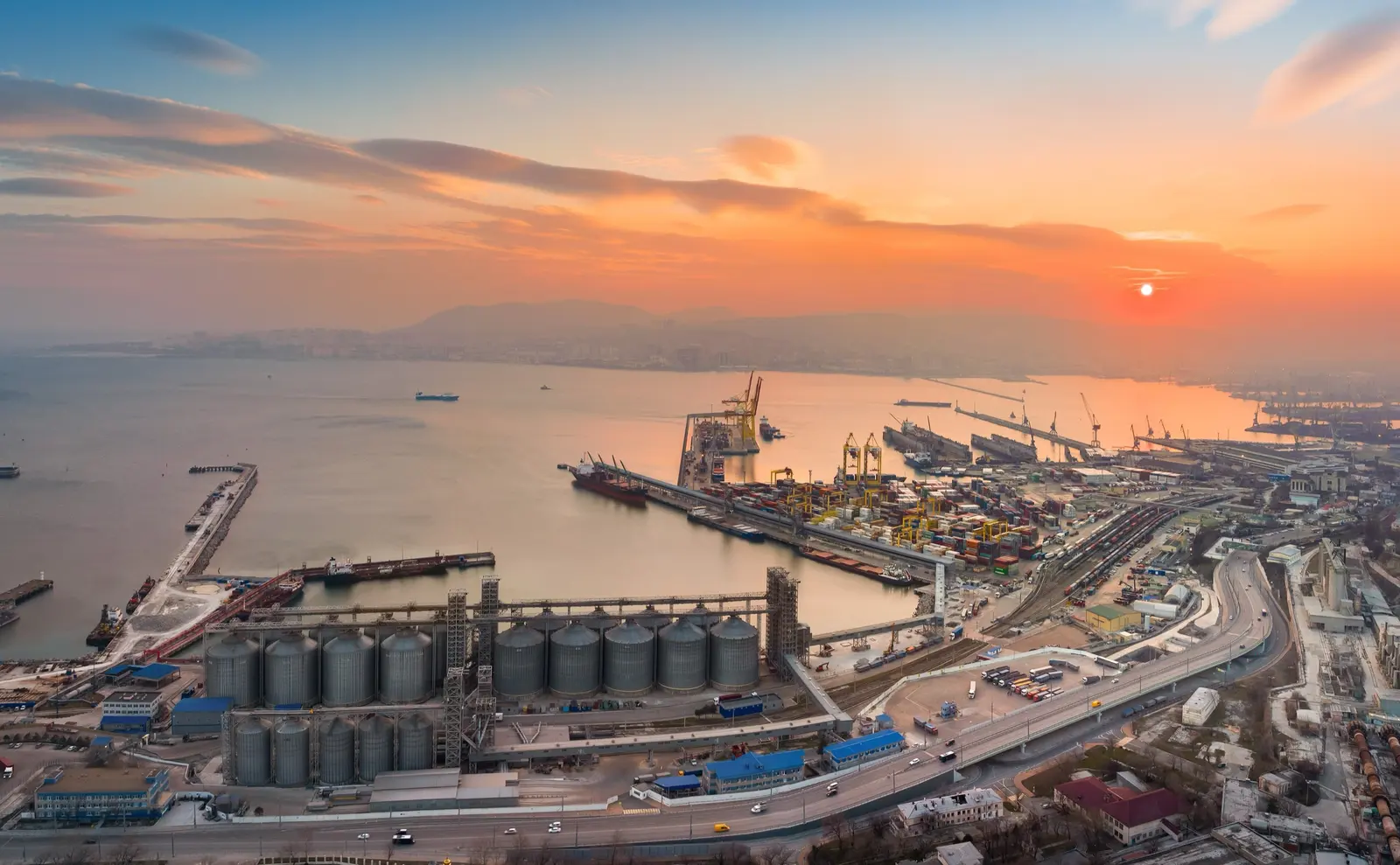
Sea via transshipment is the default for containers. The Baltic range, principally St Petersburg, serves northwest Russia and Moscow; Novorossiysk serves the south. Both require a relay from Southeast Asia.
Rail through China and Kazakhstan is the alternative when your goods are already consolidated in China or can be railed there from Singapore. It is faster than sea on some lanes and slower on others, and it moves in a different documentary environment - rail waybills rather than bills of lading, which changes what a bank will finance.
Air freight from Changi, direct or via Gulf and Turkish hubs, is used for high-value, low-volume consignments - components, samples, equipment spares - where transit time dominates the decision.
Road and short-sea combinations via Turkey and the Caucasus serve smaller consignments and project cargo that cannot be containerised.
- Containers: Singapore - relay hub - St Petersburg or Novorossiysk.
- Rail: consolidation in China - Kazakhstan - Belarus/Russia, with rail waybill documentation.
- Air: Changi - Moscow, or via Dubai/Istanbul with a second carrier.
- Project and breakbulk cargo: specialist operators, case-by-case acceptance, heaviest documentation burden.
What actually moves in each direction
Singapore's role is as much a re-export and bunkering point as an origin. Goods shipped to Russia from Singapore are frequently electronics and components, industrial machinery and spares, food ingredients and additives, specialty chemicals, medical consumables and packaging.
The reverse flow is commodities and materials: energy products, metals and fertilisers, timber and paper, seafood and agricultural goods. Russia is the world's largest palladium producer with 44% of global output (USGS, 2025), a metal that matters to the electronics and autocatalyst supply chains Singapore trades in.
Because Singapore is an entrepot, a large share of what leaves for Russia was not made in Singapore. That matters for rules of origin: the certificate of origin must reflect the actual origin of the goods, not the port of shipment.
Payment is the binding constraint, not freight
Settlement is where most Singapore-Russia trade plans fail. Russian exporters have shifted overwhelmingly away from Western currencies - 86% of Russian exports are now settled in rubles and friendly-country currencies (Bank of Russia, 2025) - and the payment leg of a Singapore transaction rarely runs through a Singapore bank directly.
In practice, parties structure invoicing in a third currency such as AED, CNY or INR, hold accounts with banks in third countries, and use documentary collections or prepayment rather than confirmed letters of credit, which are hard to obtain for these corridors. Agreeing the payment mechanism before the contract, not after, is the single most useful discipline.
On compliance: Singapore applies its own export controls to listed goods and to items that could have military end use, and Russia maintains a list of states taking what it calls unfriendly actions, which affects corporate approvals and account rules for entities from those states. Screen the commodity, the end user and the end use before quoting.
- Agree currency, paying bank and settlement route in writing before signing the supply contract.
- Screen goods against Singapore's export control lists and against the end-user and end-use question.
- Take independent sanctions and export-control advice for each transaction - this is not a one-off exercise.
- Keep an audit trail of screening decisions; banks will ask for it later.
- Do not assume a payment channel that worked last quarter is still open this quarter.
Documents and certification: the checklist
Russian customs works to the EAEU commodity nomenclature, and a mismatch between the HS code on your invoice and the code declared on entry is a common cause of delays and reclassification. Conformity certification under EAEU technical regulations is required for many categories of machinery, electronics, food and consumer goods, and must be arranged before shipment, not at the border.
Food, plant and animal products need phytosanitary or veterinary certification and an approved supplier listing, which is a slow process and should start early.
- Commercial invoice and packing list with consistent HS codes across all documents.
- Bill of lading or air waybill, plus the through-bill covering the relay leg.
- Certificate of origin reflecting actual origin, not port of loading.
- Contract with Incoterms 2020 delivery terms and a currency clause.
- EAC conformity certificates or declarations for regulated product categories.
- Phytosanitary, veterinary or sanitary certificates where applicable.
- Cargo insurance certificate covering the whole routing.
- Singapore export licence where the goods are controlled.
Contracts, currency and disputes
Ruble volatility and the key rate - 14% Bank of Russia key rate (Bank of Russia, Sep 2026) - make long deferred payment terms expensive to carry. Shorten the credit window, price in a currency adjustment mechanism, and consider partial prepayment against a shipping document rather than open account terms.
Choose the arbitration forum with enforcement in mind, not just convenience: a Singapore or Hong Kong award may be difficult to enforce against a Russian counterparty's local assets, while a Russian award may be difficult to enforce elsewhere. Retention of title, inspection at loading and a clear force majeure clause are standard mitigations.
Beyond one shipment: warehousing and local presence
If volumes justify it, the next step is a Russian distribution entity or bonded warehousing. The Free Port of Vladivostok is a working regime with 2,130 projects (KRDV, 2026), and the Arctic Zone counts 1,000 residents with ₽1.1T declared (KRDV, Dec 2025). Special administrative regions host 674 companies (Ministry of Economic Development, 2025) and are used mainly for holding and redomiciliation rather than trading.
On tax, the standard corporate profit tax is 25%, with 0-5% available in special regimes (Federal Tax Service, 2025), and the standard VAT rate has been 22% since 1 January 2026 (Federal Tax Service, 2026). Rates and thresholds change; verify current treatment with a local adviser before modelling. Manufacturing localisation can be structured through a special investment contract - 90 such contracts with ₽2T+ of investment are in place (Government of Russia, 2025).
Note the ownership limits: foreigners cannot own agricultural land and may only lease it, for up to 49 years, and border areas including Sochi, Anapa, Gelendzhik and Novorossiysk are closed to foreign land ownership. Investment in strategic sectors requires government approval under Law 57-FZ. Separately, the financial market is deep enough to be relevant to treasury decisions - 106 licensed investment platforms (Bank of Russia, May 2026) and stock market capitalisation at 19.5% of GDP against a 66% target by 2030 (Bank of Russia, Aug 2026) - but that is a different decision from moving cargo.
This is general information for educational purposes only, not investment, legal or tax advice. Verify every rate, restriction and licensing requirement with a qualified adviser in Singapore and in Russia before acting.
FAQ
Is there a direct shipping service from Singapore to Russia?
Not in the way a Singapore-Shanghai or Singapore-Jebel Ali lane works. Container cargo normally moves through a relay hub in China, the UAE, Turkey or India and then on a carrier that still accepts a Russian port. Some breakbulk and project operators offer more direct arrangements, but acceptance is case-by-case.
Can a Singapore company legally trade with Russia?
Singapore applies its own export controls to certain goods and to items with potential military end use, so the answer depends on the commodity, the end user and the end use. Screen the goods and the counterparty, and take independent legal advice on each transaction. Russia separately maintains a list of states it designates as taking unfriendly actions, which affects corporate approvals and banking for entities from those states.
How do payments usually work?
Increasingly in currencies other than USD and EUR, through banks in third countries, using prepayment or documentary collections rather than confirmed letters of credit. The specific channel changes frequently, so agree it with your bank and your counterparty before signing the supply contract, not after the goods are ready.
What documents does Russian customs require?
A commercial invoice, packing list, transport document, certificate of origin, contract, and EAC conformity certificates for regulated product categories, plus phytosanitary or veterinary certificates for food and agricultural goods. HS codes must match the EAEU nomenclature consistently across all documents.
What are the biggest risks to plan for?
Payment disruption, carrier or transshipment refusal mid-route, classification disputes at customs, and certification that was not obtained before shipment. Each of these is manageable with preparation and each is expensive if discovered after the container has sailed.
Information on this website is not an offer or an individual investment recommendation. Investing involves risk, including the loss of all invested capital. Investing via investment platforms is high-risk and may result in the loss of the entire investment. Figures are sourced from third parties and dated. Investors must comply with the laws of their jurisdiction.