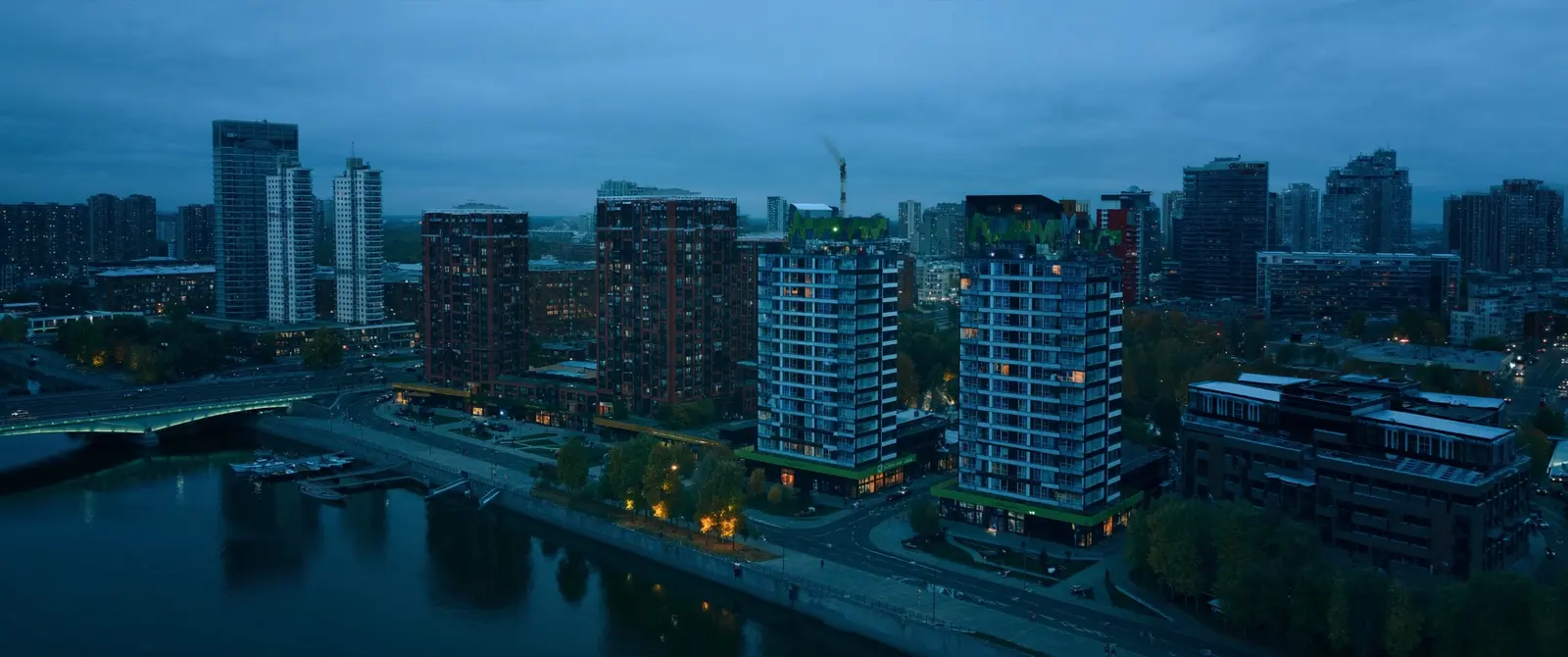
What a foreigner can own in Moscow - and what stays closed
Moscow is the most open part of the Russian property market for foreign buyers. Apartments, non-residential premises, office and retail buildings, warehouses and the land plots underneath them are, as a general rule, available to foreign individuals and to companies with foreign participation. Title is recorded in the Unified State Register of Real Estate (EGRN), and a foreign passport plus a Russian tax number is normally enough to appear as the registered owner.
The exclusions are specific and worth memorising before you look at any object. Agricultural land cannot be owned by foreigners at all - only leased, for up to 49 years. Land in a defined list of border areas is closed to foreign ownership, and that list includes Sochi, Anapa, Gelendzhik and Novorossiysk, so a residential purchase in those municipalities has to be structured differently from one in Moscow. Separately, acquiring a stake in a company operating in a strategic sector requires approval under Law 57-FZ, which can affect deals where the property sits inside a larger industrial or infrastructure business.
There are also procedural asymmetries that depend on the buyer's jurisdiction. Investors from countries designated unfriendly operate under a special regime for transactions and accounts, and certain deals require a government commission decision. This is a compliance matter, not a workaround: the correct move is to take independent legal and compliance advice before signing anything, not after.
- Ownable by foreigners in Moscow: apartments, commercial premises, buildings, and most urban land plots
- Not ownable: agricultural land (lease up to 49 years only)
- Closed to foreign land ownership: border municipalities including Sochi, Anapa, Gelendzhik, Novorossiysk
- Strategic-sector targets: approval required under Law 57-FZ
- Unfriendly-jurisdiction buyers: special account regime and, in some cases, government approval
Three holding structures and what each one costs you
Direct ownership as an individual is the simplest route. You buy in your own name, receive rent as personal income, and sell when you choose. The trade-offs are that personal income tax treatment depends on your tax residency status in Russia, which can change from year to year, and that holding several properties in your own name makes bookkeeping and succession messier.
Holding through a Russian limited liability company (OOO) is the standard route for commercial assets. The company pays corporate profit tax at 25% under the general regime, or 0-5% in certain special regimes (Federal Tax Service, 2025). That headline gap is real but conditional: special regimes come with eligibility tests and obligations, and the rate that applies to a given project has to be confirmed with a tax adviser. A company structure also makes it easier to bring in co-investors and to sell shares rather than the building, but exit from a company can be administratively heavier than selling an apartment.
The third route is indirect: units in a closed-end fund or a property vehicle rather than the asset itself. Russia had 106 licensed investment platforms as of May 2026 (Bank of Russia), and stock market capitalisation stood at 19.5% of GDP against a target of 66% by 2030 (Bank of Russia, Aug 2026). Indirect vehicles give liquidity and a lower entry ticket, but you own a security, not a building - you do not control the asset, and your outcome depends on the manager.
- Individual: simplest, least structuring cost, personal taxation depends on residency
- Russian OOO: 25% corporate profit tax general regime, 0-5% in special regimes (Federal Tax Service, 2025)
- Fund or platform units: liquidity and small tickets, no direct control of the asset
- Choosing between them is a tax and liability decision, not a market-timing decision
The actual sequence of a Moscow transaction
The order of operations matters more than the negotiation. Buyers who reverse steps - sign first, verify later - are the ones who end up in disputes.
Step one is document-level due diligence. Pull a fresh EGRN extract and check the registered owner, the cadastral number, the area, encumbrances, arrests, mortgages and any registered lease or third-party right. For a legal entity seller, add charter documents, the decision of the competent corporate body approving the sale, and a check for arbitration claims that could reach the asset. Step two is physical inspection: building condition, capital repair obligations, utility contracts, arrears on utilities and management fees, and for land, the permitted use category.
Step three is the contract. Price, payment schedule, condition precedent, representations and indemnities, and what happens if registration fails. Step four is settlement: residential deals involving shared ownership require a notary, and both residential and commercial deals are commonly settled through a notary deposit or a bank escrow account that releases funds only after title transfer. Step five is registration with Rosreestr; the transfer is legally complete when the entry appears in EGRN, not when money moves. Step six is handover - readings, keys, access cards, tenant files, and for commercial assets, assignment of existing leases.
Two Moscow-specific points. First, tax on a subsequent sale of certain objects is assessed on cadastral value, so the cadastral valuation of the specific property is worth reading before you negotiate, not after. Second, in the primary residential market, purchases from developers sit inside the shared-equity construction framework with escrow accounts, which changes the risk profile compared with buying from a private seller on the secondary market.
- EGRN extract first, always, and again shortly before signing
- Check encumbrances, arrests, registered leases and utility arrears
- For a corporate seller: charter, corporate approval, arbitration exposure
- Use notary deposit or escrow - never unsecured transfer before registration
- Title passes on Rosreestr registration, not on payment
Taxes and running costs you have to price in
The standard corporate profit tax is 25%, with 0-5% available in special regimes (Federal Tax Service, 2025). The standard VAT rate has been 22% since 1 January 2026 (Federal Tax Service, 2026); this matters for commercial letting where the landlord is VAT-registered and for any transaction treated as a taxable supply. Rates and thresholds change, so any model should be rebuilt with an adviser rather than carried over from an older deal.
On top of income tax sit recurrent costs that foreign buyers routinely underestimate. Property tax is calculated in some cases from cadastral value, with rates set at regional level. Where the land plot is owned, land tax applies. Then there are management company fees, security, utilities, capital repair contributions and, for office and retail assets, fit-out amortisation and vacancy periods. On individuals, personal income tax on rent and on sale depends on residency status and holding period - and that is exactly the kind of parameter that changes, so verify it for your situation.
One practical benchmark for holding cost rather than tax: Moscow office vacancy was 7.6% in Q2 2026 (IBC Real Estate). Vacancy is the single number that most directly drives net operating income in that segment, and it is worth tracking per submarket rather than for the city as a whole.
Segment by segment: where the risk sits
Residential. The primary market is developer-driven with escrow-protected construction, and the secondary market offers older stock where title history, privatisation documents and inheritance chains are the main risks. Moscow residential behaves differently from regional cities because of the depth of end-user demand, but it is not immune to financing costs.
Offices. The professional end of the Moscow market. Tenants are corporates, leases are long, and valuation is driven by rent, lease duration and vacancy - which stood at 7.6% in Q2 2026 (IBC Real Estate). The complexity for a foreign owner is asset management: replacing a departing anchor tenant requires local execution capability, not a spreadsheet.
Warehouses and industrial. Structurally driven by logistics and e-commerce, with fewer, larger tenants. Lease terms are long but tenant concentration risk is high, and a single tenant failure can dominate the asset's income.
Retail. The most operator-dependent segment. Success depends heavily on footfall management and the tenant mix, and it is usually the wrong entry point for a first-time foreign investor who cannot visit the asset regularly.
The interest rate environment frames all of them. The Bank of Russia key rate was 14% in September 2026. A high key rate raises the cost of debt finance, pressures capital values through the discount rate, and shifts the relative attractiveness of cash deposits against property income. It is the single macro variable most worth monitoring in this market.
Payments, currency and repatriating proceeds
Currency and payment logistics decide whether a good asset is actually investable. Settlements in Russia's external trade have shifted heavily: 86% of exports were settled in rubles and friendly-country currencies in 2025 (Bank of Russia), and 88% of retail payments were cashless in the same year. For property, that means ruble-denominated transactions settled through Russian banks are the norm.
The constraint appears on the way out. Investors connected to countries designated unfriendly are subject to a special account regime for transactions, and certain disposals require a government commission decision. The practical consequence is that exit timing is not entirely within the seller's control and should be treated as a project risk with a lead time, not as a routine settlement step. Buyers from friendly jurisdictions face a materially lighter process, and this is one reason FDI origin has shifted - 75% of FDI now comes from friendly countries, against 25% before (UNCTAD via Izvestia, 2025).
Do not attempt to resolve any of this informally. The bank is the gatekeeper and will ask for the source-of-funds chain, the contractual basis and the tax position. Take independent compliance advice in your home jurisdiction and in Russia before the funds move, not during the transfer.
- Assume ruble settlement through a Russian bank as the baseline
- Unfriendly-jurisdiction sellers: special account regime, sometimes government approval
- Build exit lead time into your model as a real cost
- Source-of-funds documentation is requested up front - prepare it before signing
The risks that decide the outcome, and a note on advice
Title and history risk dominates the secondary residential market, where privatisation, inheritance and prior transfers can be challenged. Construction and delivery risk dominates the primary market, even with escrow protection. Currency and repatriation risk sits on top of both for foreign owners. Interest rate risk, illustrated by a key rate of 14% in September 2026 (Bank of Russia), affects both your financing cost and the price a future buyer is willing to pay. Tenant concentration, regulatory change and the simple difficulty of managing an asset in a city you do not live in complete the list.
The workable response is procedural rather than predictive: verify title each time, structure the holding before the purchase rather than after, keep tax and compliance advisers engaged continuously, and stress-test the exit before you enter. Moscow is a deep market with professional counterparties, which helps with quality and hurts with pricing - you are rarely the only buyer who has done the analysis.
This article is general information about how the market and its rules work. It is not investment, tax or legal advice, and it does not take account of your circumstances or jurisdiction.
FAQ
Can a foreign citizen buy an apartment in Moscow?
Yes. Foreign individuals can own apartments and most commercial premises in Moscow and register title in their own name through Rosreestr. The exclusions concern agricultural land, which foreigners may only lease for up to 49 years, and land in listed border municipalities including Sochi, Anapa, Gelendzhik and Novorossiysk. Buyers from countries designated unfriendly also face a special account regime for transactions.
Do I have to travel to Russia to complete the purchase?
Not strictly. A deal can be completed remotely through a notarised power of attorney executed abroad and apostilled, with funds moved through a notary deposit or escrow account. In practice, remote purchases take longer, are harder to police at the inspection stage, and give the buyer less ability to resolve problems at the registration office. Most foreign buyers use local counsel either way.
How is Moscow property taxed?
Corporate profit tax is 25% under the general regime, or 0-5% in special regimes (Federal Tax Service, 2025). The standard VAT rate has been 22% since 1 January 2026 (Federal Tax Service, 2026). Property tax is in some cases based on cadastral value with regional rates, and land tax applies where the plot is owned. Personal income tax for individuals depends on Russian tax residency and holding period. Rates and thresholds change, so confirm the current position with a tax adviser.
Can I take rental income and sale proceeds out of Russia?
Rental income and sale proceeds are transferred under Russian currency control rules. For investors connected to countries designated unfriendly, a special account regime applies and certain disposals require government commission approval, which adds lead time to an exit. The bank handling the transfer will require full source-of-funds and contractual documentation. Treat exit logistics as a project risk and take independent compliance advice before committing capital.
Is buying through a Russian company better than buying directly?
It depends on what you are buying and how you plan to exit. A Russian OOO is standard for commercial assets, allows co-investors and permits a share sale on exit, at the cost of 25% corporate profit tax under the general regime or 0-5% in special regimes (Federal Tax Service, 2025), plus ongoing accounting and reporting. Direct individual ownership is simpler and cheaper to maintain but less flexible for larger or multi-asset holdings.
Information on this website is not an offer or an individual investment recommendation. Investing involves risk, including the loss of all invested capital. Investing via investment platforms is high-risk and may result in the loss of the entire investment. Figures are sourced from third parties and dated. Investors must comply with the laws of their jurisdiction.