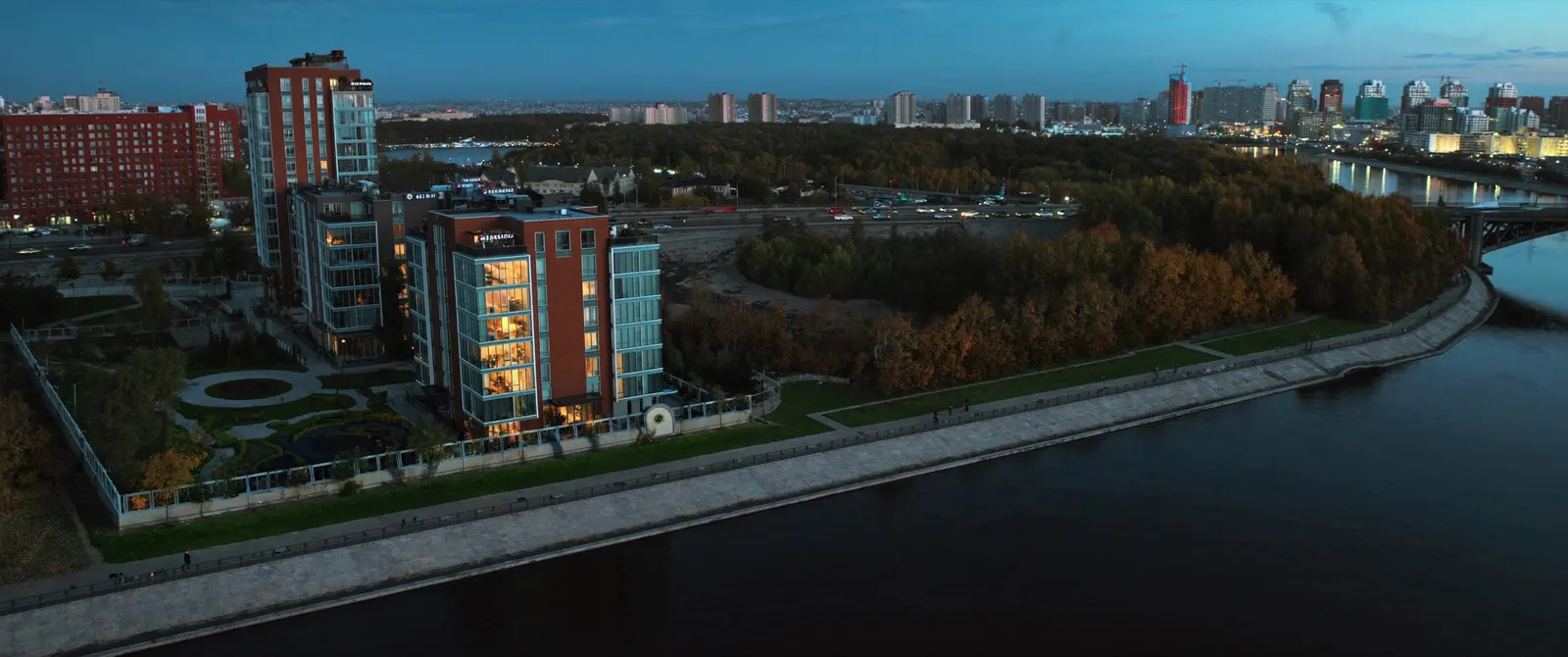
What a Foreigner Can Own in Moscow, and What Is Off Limits
Foreign individuals and foreign companies can own apartments, houses and non-agricultural land in Moscow and register title in their own name. Moscow is not on the list of border territories closed to foreign land ownership, so the restrictions that apply to Sochi, Anapa, Gelendzhik and Novorossiysk do not apply here.
Two categories of buyer face a different process. If you are a citizen of, or a company from, a state that Russia designates as unfriendly, transactions can require government approval and settlement through special account regimes. If you come from a friendly country - the Gulf, China, India, South-East Asia, most CIS states - the path is shorter, although banks still run their own compliance screening. Because the lists change, your country's status must be confirmed by a lawyer at the moment of the deal, not assumed from last year's information.
- Apartments and houses: freehold ownership is available to foreign individuals; title is recorded in the state register (EGRN).
- Non-agricultural land in cities and towns: generally purchasable; zoning and permitted-use rules decide what you may build.
- Agricultural land: foreigners may not own it, only lease it, for up to 49 years.
- Border areas: closed to foreign land ownership - Sochi, Anapa, Gelendzhik and Novorossiysk are the well-known examples.
- Strategic sectors: acquiring a stake in certain companies requires approval under Law 57-FZ.
The Market Backdrop: Rates, Vacancy and What They Signal
The cost of money sets the floor for everything else. The Bank of Russia key rate stood at 14% in September 2026, and mortgage and project finance rates track it. The gap between the yield on a property and the cost of financing it is the number that decides whether a deal works at all.
In commercial real estate, Moscow office vacancy was 7.6% in Q2 2026 (IBC Real Estate), a tight figure by international standards. Treat it as an average: vacancy differs sharply by class, building age and submarket, and the headline number hides that spread.
Payment infrastructure is not the friction point. 88% of retail payments are cashless (Bank of Russia, 2025), and 86% of exports are settled in rubles and friendly-country currencies (Bank of Russia, 2025), which matters when money has to move in or out of the country.
Capital is also shifting in origin: 75% of foreign direct investment now comes from friendly countries, against 25% earlier (UNCTAD via Izvestia, 2025). Public equity remains small relative to the economy - stock market capitalisation was 19.5% of GDP in August 2026, against a target of 66% by 2030 (Bank of Russia) - so real assets compete with a shallow listed market.
Taxes, Fees and Holding Costs: What to Verify
Corporate profit tax is 25%, with 0-5% under special regimes (Federal Tax Service, 2025). VAT has been 22% since 1 January 2026 (Federal Tax Service, 2026). VAT reaches commercial leases and the sale of commercial property in defined cases, while sales of residential apartments to individuals normally sit outside it - but the boundary is technical and depends on the seller's status and the lease structure.
For individuals, the outcome depends on tax residency. Residents and non-residents are treated differently on rental income and on the sale of property, and the holding period affects the result. Rates, exemptions and periods change; they must be confirmed for your own situation by a tax adviser before you sign anything.
On top of tax, budget for recurring costs: corporate property tax assessed on cadastral value for certain commercial objects, land tax, utilities, management company fees and insurance. In Moscow's prime segment, service charges in business-class buildings are a meaningful annual line, not a rounding error.
One planning question drives most of the arithmetic: whether a double tax treaty between your country and Russia is in force and applies to your structure. That determines whether income is taxed once or twice, and it is worth a specialist opinion.
- Confirm your personal income tax position as resident or non-resident before completion.
- Confirm the property tax base for commercial assets: cadastral value or book value.
- Confirm whether VAT applies to your specific lease or sale structure.
- Confirm the treaty position between your home country and Russia.
The Purchase Process, Step by Step
The sequence below is the standard route for a direct purchase of an existing or off-plan property in Moscow. Nothing here replaces a lawyer instructed on your specific deal.
- Define the asset and the holding structure. An individual, a Russian LLC and a foreign company produce different tax, reporting and exit profiles.
- Obtain a Russian tax number (INN) and, if you will operate locally, a bank account. Non-residents can open accounts, but compliance checks take time and vary by bank.
- Commission independent due diligence: an EGRN extract on title, encumbrances, arrests and registered leases; for new builds, the developer's permits and escrow arrangements.
- If buying at construction stage, review the project declaration and escrow mechanism. Completion risk rests with the developer, not with the state.
- Sign the contract. Foreign-language documents need notarised translation. If you will not sign in person, a notarised power of attorney is required.
- Pay. Cross-border transfers from banks in unfriendly jurisdictions are the usual bottleneck; friendly-country routes and ruble accounts clear faster. Keep the payment trail clean for currency control.
- Register title with Rosreestr. Ownership passes only on registration; confirm the current fee and processing time at the moment of filing.
- If you are from an unfriendly state, secure any required government approval before closing. Approvals are transaction-specific and can change the economics of the deal.
Financing, Currency and Getting Money Back Out
Russian banks lend to non-residents selectively, often at a premium or against collateral held inside Russia. With the key rate at 14% (Bank of Russia, September 2026), debt is expensive by regional standards, and most foreign private buyers in Moscow either pay in cash or buy through a Russian entity.
Repatriation deserves attention at the entry stage. Sale proceeds and rental income can be transferred abroad through authorized banks subject to currency control, and holders from unfriendly states operate under special account regimes that may require approvals. The route out is broadly the route in - it is far harder to redesign later than to plan at the start.
On letting, long-term residential leases in Moscow are typically denominated in rubles with a deposit of one to two months. Short-term letting depends on building rules and municipal requirements, so check the specific building rather than assuming a common practice.
Risks and Restrictions Worth Pricing In
Sanctions are a compliance matter, not a workaround matter. The standard approach is independent legal and compliance advice in your own jurisdiction alongside Russian counsel, and a conversation with your bank before you commit funds rather than after.
The risks below are the ones that most often change the outcome of a Moscow transaction for a foreign buyer.
- Approval risk: unfriendly-country buyers may need government consent, and a deal can be blocked or delayed without a clear timeline.
- Currency and repatriation risk: the exit route can be narrowed by regulation after you have bought.
- Liquidity risk: prime apartments and quality offices trade, but secondary stock and large lots can take months to sell.
- Developer risk: off-plan purchases depend on the developer and the escrow regime; there is no state guarantee of completion.
- Compliance friction: bank screening can freeze a transaction for weeks, particularly where several jurisdictions are involved.
- Valuation risk: the same asset is often quoted in rubles by one party and in foreign currency by another, and the gap widens in volatile periods.
Beyond a Single Flat: Institutional and Regional Routes
If direct ownership is unavailable to you or too slow, other regulated doors exist. There were 106 licensed investment platforms in May 2026 (Bank of Russia), which provide structured access to assets without direct title - useful for investors who need a regulated wrapper.
Special administrative regions hosted 674 companies in 2025 (Ministry of Economic Development). These are used mainly for holding structures and redomiciliation rather than for buying apartments, but they matter if you want a Russian corporate vehicle for real estate.
The state also anchors long-term industrial projects through Special Investment Contracts: 90 such contracts covering more than ₽2T of declared investment (Government of Russia, 2025). Regional regimes operate separately - 2,130 projects in the Free Port of Vladivostok (KRDV, 2026) and 1,000 residents in the Arctic Zone with ₽1.1T declared (KRDV, December 2025).
This article is general information, not investment or legal advice. Rules, tax treatment and approval requirements for foreign buyers change frequently and depend on your nationality, residency and the specific asset, so confirm everything with qualified Russian and home-country advisers before acting.
FAQ
Can a foreigner buy an apartment in Moscow?
Yes. Foreign individuals can own apartments and register title in their own name. The differences lie in payment routes and, for citizens of states Russia designates as unfriendly, in approval requirements and special account regimes. Confirm your own status with a lawyer before making an offer.
Can foreigners buy land in Moscow?
Non-agricultural land in Moscow and the surrounding region can generally be purchased by foreigners, subject to zoning and permitted-use rules. Agricultural land cannot be owned - only leased, for up to 49 years. Border areas including Sochi, Anapa, Gelendzhik and Novorossiysk are closed to foreign land ownership.
Do I need to be in Russia to buy property there?
No, but a remote purchase requires a notarised power of attorney, usually notarised and apostilled in your home country, plus a Russian tax number. Signature and registration can then be handled by your representative.
How do foreign investors move money out after selling?
Through an authorized Russian bank, subject to currency control. Holders from unfriendly states operate under special account regimes and may need approvals. Plan the exit structure at the point of purchase, because it is difficult to restructure afterwards.
What taxes does a foreign landlord pay on Moscow property?
Treatment depends on whether you are a Russian tax resident, on how the property is held, and on whether a double tax treaty applies between your country and Russia. Rates and rules change, so a tax adviser should confirm your position in writing before you buy.
Information on this website is not an offer or an individual investment recommendation. Investing involves risk, including the loss of all invested capital. Investing via investment platforms is high-risk and may result in the loss of the entire investment. Figures are sourced from third parties and dated. Investors must comply with the laws of their jurisdiction.