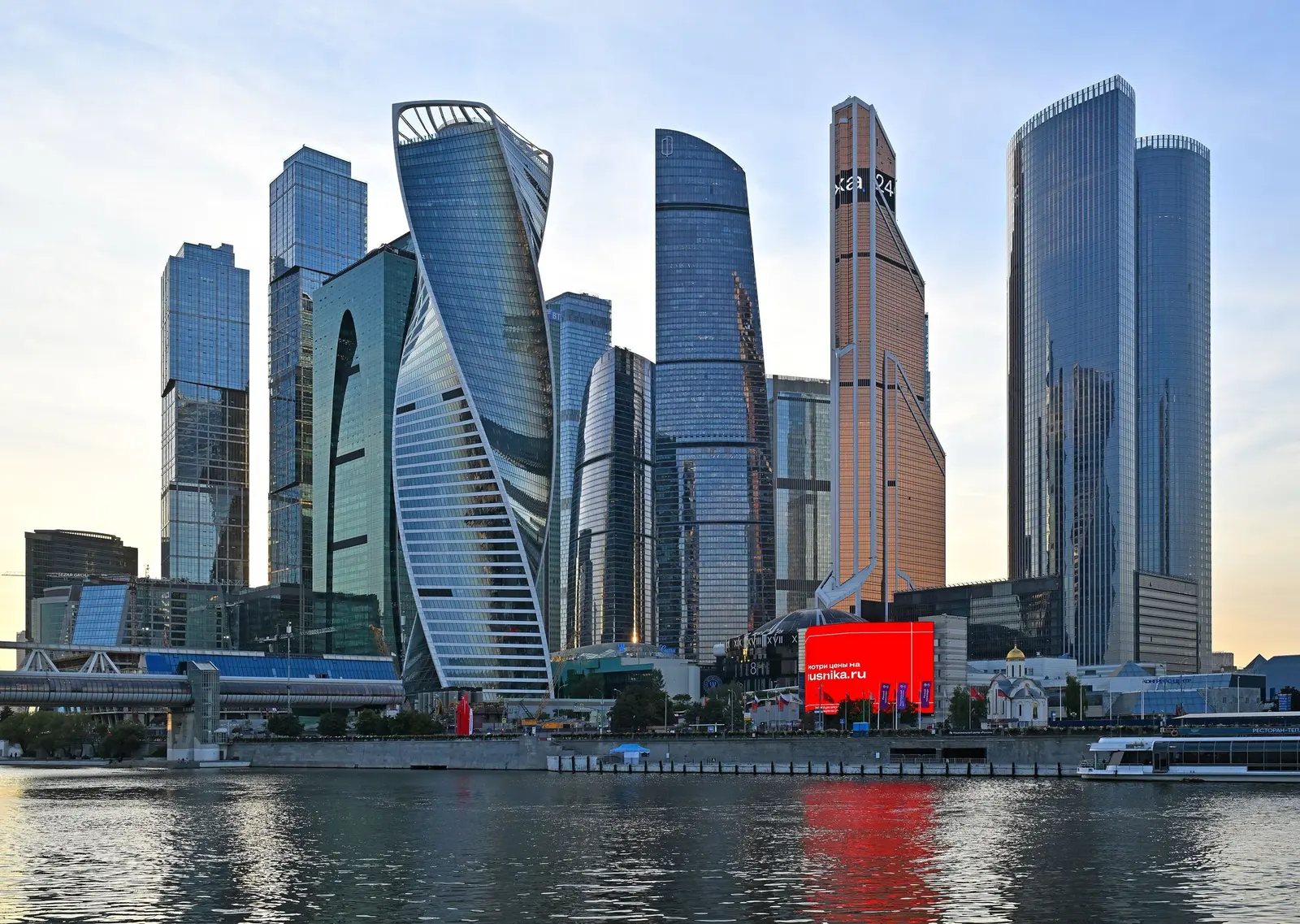
What a foreigner can own outright
Russian civil law does not link property ownership to citizenship for most real estate. A passport holder from the UAE, China, India, Kazakhstan, Armenia or the EU can buy a flat, a non-residential premises, a warehouse, a parking space or an entire building and register the title in the Unified State Register of Real Estate (EGRN) in their own name.
Ownership is registered by Rosreestr, the state registration service. The entry in the register, not the paper contract, is what proves the right. Registration can be filed in person, through a notary or electronically if the buyer has a qualified electronic signature.
There is also the indirect route: a foreigner may acquire 100 percent of a Russian limited liability company that owns the asset. This is common where the buyer wants to avoid disclosing a personal name in the public register, or where an individual purchase would trigger additional checks.
- Flats, houses, commercial premises and buildings: open to foreign individuals, no citizenship test
- Parking spaces, storage units and unfinished construction objects: also registrable
- Shares in Russian companies holding real estate: allowed, but tax and reporting consequences differ
- Title exists only once Rosreestr records it, not when the contract is signed
Where non-citizens hit a hard stop
The main restriction is land. Foreign citizens and foreign legal entities cannot own agricultural land in Russia. They may only lease it, and the lease term for agricultural plots is capped at 49 years. The same rule catches a Russian company whose charter capital is more than half foreign-owned if it wants to own farmland.
Certain territories are closed to foreign land ownership altogether. These include the resort and port areas of Sochi, Anapa, Gelendzhik and Novorossiysk, along with a list of border municipalities and islands. The exact perimeter is set by government decree and has been amended more than once, so a plot's status must be checked against the current list before any deposit is paid.
Separately, Law 57-FZ governs foreign investment in companies operating in strategic sectors - defence, natural resources of federal significance, mass media, telecommunications and others. Buying a building is one thing; buying control of a company that owns a strategic production site requires prior clearance from a government commission, and refusals happen.
- Agricultural land: lease only, up to 49 years, no ownership for foreign persons or majority-foreign companies
- Sochi, Anapa, Gelendzhik, Novorossiysk and listed border areas: closed to foreign land ownership
- Strategic sectors: prior approval required under Law 57-FZ
- Investors from countries designated unfriendly face special account regimes and additional government approvals
The actual purchase sequence
The order of steps matters more than the contract wording. A typical transaction runs as follows.
First, the buyer obtains a Russian tax identification number (INN) and, if buying in person, opens a bank account. Second, the buyer or the agent orders an extract from the EGRN to confirm the seller's title and to reveal encumbrances, arrests, leaseholds and third-party claims. Third, the parties sign a written purchase agreement; for shares in a company, the deal is usually notarised. Fourth, payment is made, ideally through a bank with the amount, purpose and currency documented. Fifth, the agreement and the transfer are submitted to Rosreestr, which records the new owner.
Since 2019 the parties may choose a notarial escrow arrangement, where the money is held by a notary and released only after registration. For buyers paying from abroad this removes the most common source of loss.
Note that the currency of payment and the account used are themselves regulated. A non-resident from an unfriendly country generally cannot simply wire money into an ordinary Russian account; special account types and conversion rules apply.
- INN, then bank account, then EGRN extract, then contract, then payment, then Rosreestr registration
- Registration is the only moment ownership legally changes hands
- Escrow through a notary is the safest payment route for a remote buyer
- Special account regimes apply to buyers from unfriendly countries - verify with a bank before signing
Paying from abroad and compliance
This is where most foreign transactions stall. Payment routes differ sharply depending on where the buyer is resident.
Buyers from friendly jurisdictions - the Gulf states, China, India, Turkey, and the CIS countries including Kazakhstan, Uzbekistan, Armenia, Azerbaijan, Belarus and Kyrgyzstan - generally open a standard Russian bank account and pay in rubles or in a convertible currency through a bank that still handles cross-border transfers. Settlement in rubles and in friendly-country currencies now dominates Russian foreign trade, which reflects how thoroughly the payment infrastructure has been rebuilt around non-Western rails - 86 percent of exports were settled in rubles and friendly-country currencies in 2025, according to the Bank of Russia.
Buyers resident in unfriendly countries face a different regime: special accounts, restrictions on repatriation of proceeds from a sale, and in some cases government approval for the transaction itself. None of this is a reason to use an informal channel. Buyers should take independent legal and compliance advice in their own jurisdiction before transferring anything, and should never rely on an intermediary's assurance that a workaround exists.
- Friendly-country residents: ordinary account opening, fewer approvals
- Unfriendly-country residents: special account types, repatriation limits, possible government approval
- Currency control reporting sits with the bank, but the buyer's documents must support the payment purpose
- Compliance advice should come from an independent adviser, not from the seller's agent
Taxes and ongoing costs
Two taxes follow the property after purchase. Individuals pay annual property tax on cadastral value; companies pay it as a corporate cost. On a sale, the tax treatment depends on how the asset was held - directly by an individual or through a Russian company. Where the asset is held through a company, corporate profit tax is 25 percent, with rates of 0 to 5 percent available in special tax regimes aimed at investment projects.
On new commercial property bought from a developer, VAT applies. The standard VAT rate in Russia rose to 22 percent from 1 January 2026, so any purchase contract signed after that date must state clearly whether the price includes VAT and at what rate. Residential sales to individuals are treated differently, and the boundary between the two depends on the classification of the building.
Rates, thresholds and exemptions in this area change regularly, and the treatment of a non-resident seller can differ from that of a resident. Any projection of net cost should be built with a Russian tax adviser using the law in force at the date of the transaction.
- Corporate profit tax: 25 percent, with 0 to 5 percent in special regimes
- Standard VAT: 22 percent since 1 January 2026
- Annual property tax is levied on cadastral value
- Non-resident and resident sellers can be taxed differently - verify current rules
Buying through a Russian legal entity
Holding real estate through a Russian company is common among foreign investors for three reasons: it is easier to sell the shares later than to re-register a building, it separates the asset from the individual, and it can qualify for investment incentives.
Russia offers several regimes with tax and administrative benefits. Special administrative regions, where 674 companies were registered as of 2025, allow redomiciliation of foreign holding structures and offer a lighter regime for international holdings. Special investment contracts, of which there were more than 90 by 2025 with over 2 trillion rubles of declared investment, fix tax and regulatory conditions for the life of a project. The Free Port of Vladivostok, with 2,130 projects as of 2026, and the Arctic Zone, with 1,000 residents and 1.1 trillion rubles declared as of December 2025, are the main regional vehicles in the Far East and the Arctic.
These regimes are designed for productive investment rather than for holding a single apartment, and each carries obligations on capital, timing and reporting. Eligibility is decided case by case by the relevant ministry or development corporation, not by the buyer alone.
- Share deals replace asset deals and are usually faster to close
- Special administrative regions: 674 companies registered as of 2025
- Special investment contracts: over 90 signed, 2 trillion rubles plus of investment as of 2025
- Free Port of Vladivostok and the Arctic Zone offer regional incentives with capital and timing obligations
What to check before you commit
Title risk in Russia is manageable but real. The EGRN extract is the starting point, not the end of due diligence. The buyer's lawyer should trace the chain of ownership, confirm that the plot's permitted use matches the intended purpose, check for unregistered occupants, and verify that no prior privatisation or restitution claim attaches to the asset.
If the property is bought at the construction stage, the money should move through an escrow account under the shared construction framework, which ties the developer's access to funds to construction milestones. Buying off-plan outside that framework removes the protection entirely.
Finally, plan the exit before the entry. The right to sell, the right to convert proceeds and the right to move money abroad are three separate questions in the current environment, and the answer depends on the buyer's country of residence rather than on the property.
- Trace the full ownership chain, not just the last transaction
- Confirm permitted land use matches the intended purpose
- For off-plan purchases, use escrow under the shared construction framework
- Model the exit and repatriation route before buying, not after
FAQ
Can a foreigner buy an apartment in Russia without a visa or residence permit?
Yes. Ownership is not conditioned on citizenship, visa status or residence permit for standard residential property. The buyer needs an INN and a bank account, and the purchase is registered with Rosreestr in the buyer's name. Practical obstacles come from banking and currency rules, not from property law.
Can non-citizens own land in Russia?
Only in part. Foreign citizens and foreign companies can own land for certain non-agricultural purposes, but they cannot own agricultural land - only lease it, for up to 49 years. Land in border areas, including Sochi, Anapa, Gelendzhik and Novorossiysk, is closed to foreign ownership. Each plot's status must be checked against the current government list.
Do I need government approval to buy property in Russia?
For an ordinary apartment or building, no. Approval under Law 57-FZ is required where the purchase gives a foreign investor control over a company operating in a strategic sector. Buyers from countries designated unfriendly also face special account regimes and, in certain cases, transaction approvals.
Can I pay for Russian property from a foreign bank account?
It depends on the buyer's country of residence and on the bank. Buyers from friendly jurisdictions normally open a Russian account and pay through it. Buyers from unfriendly countries face special account types and conversion rules, and may need approvals. Confirm the payment route with the bank and with an independent compliance adviser before signing.
Is it better to buy property directly or through a Russian company?
Direct ownership is simpler, cheaper to maintain and easier to understand at exit. A Russian company makes sense where the asset is commercial, where the investor wants to sell shares rather than the building, or where an investment regime with special tax treatment applies. The choice changes the tax base, the reporting burden and the exit mechanics.
Information on this website is not an offer or an individual investment recommendation. Investing involves risk, including the loss of all invested capital. Investing via investment platforms is high-risk and may result in the loss of the entire investment. Figures are sourced from third parties and dated. Investors must comply with the laws of their jurisdiction.