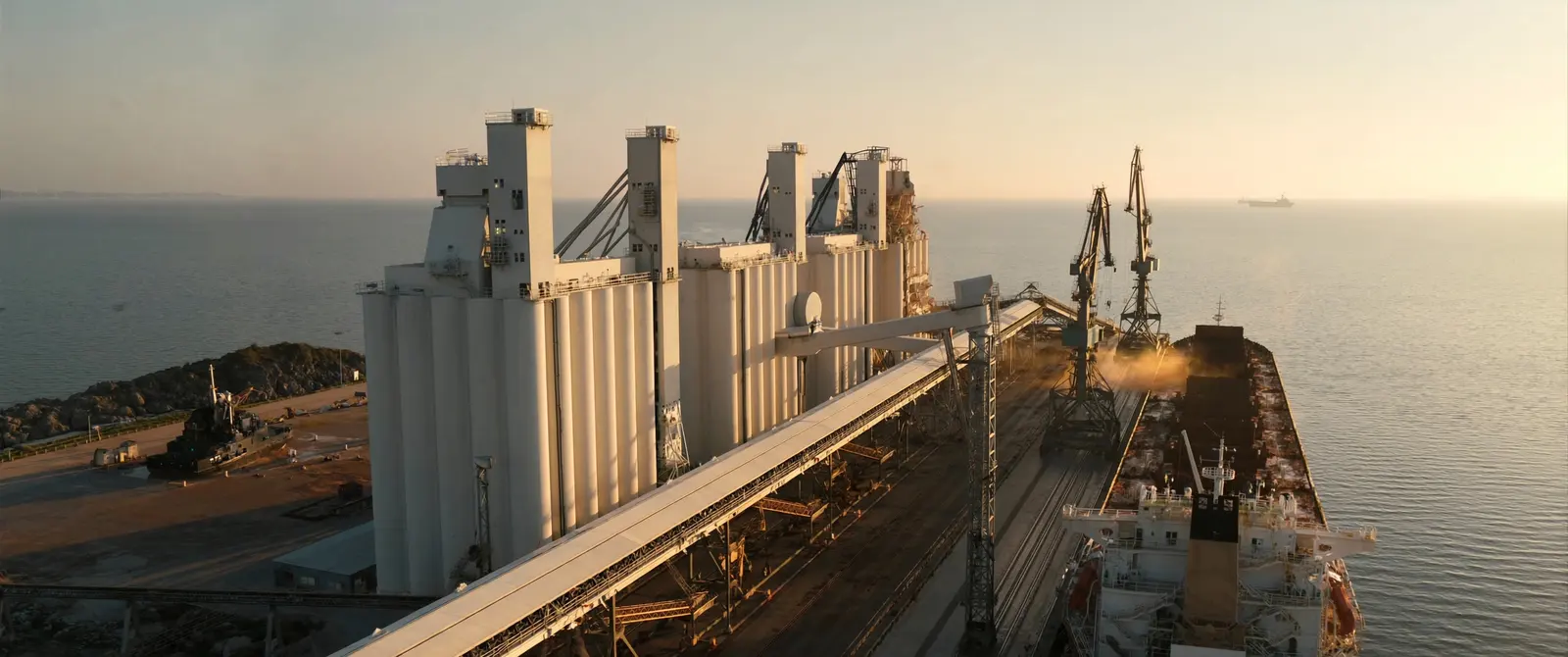
What actually moves between the two markets
The trade is complementary rather than competitive, which is why it persists through difficult banking conditions. Russia supplies inputs Kenya's agricultural economy runs on; Kenya supplies consumer-facing agricultural goods and a limited set of minerals.
On the Russian side, the recurring categories are fertilisers, wheat and other grains, petroleum products and machinery. Kenya's tea and horticulture sectors are intensive fertiliser users, so the import bill is structural rather than opportunistic. On the Kenyan side, the recurring categories are tea, coffee, cut flowers, fresh produce, titanium-bearing minerals and soda ash.
Do not expect headline volumes. In Kenyan trade statistics Russia is a minor partner, well behind China, India, the UAE and the EU, and Kenyan exports to Russia are a small fraction of total exports. The commercial opportunity is therefore usually specific - a single commodity line, a distribution agreement, a processing joint venture - not a broad market entry.
- Russia to Kenya: fertilisers, grains, petroleum products, machinery
- Kenya to Russia: tea, coffee, cut flowers, fresh produce, titanium, soda ash
- Trade is modest in absolute terms and concentrated in a few lines
- Services: tourism and education flows run mainly Kenya to Russia and are under-recorded
Getting paid: settlement routes and the compliance reality
Payment is where most Kenya-Russia transactions stall, not price. Across Russia's export book, 86% of settlements are now made in rubles and currencies of friendly countries (Bank of Russia, 2025). That is an aggregate figure and does not describe any single Kenya corridor, but it explains the direction of travel: fewer dollar routes, more local-currency and third-country routes.
Kenyan banks generally hold dollar correspondent relationships with US and European institutions, and those relationships are the constraint. A Kenyan bank asked to handle a Russia-linked payment will screen the goods, the vessel, the end user and the beneficiary, and it may simply decline rather than carry the relationship risk. Expect documentary requests that go well beyond a normal invoice and bill of lading.
Practical options that exist and are worth discussing with your bank and counsel include settlement in a hard currency at an institution willing to take the exposure, settlement through a third-country intermediary, and ruble-denominated accounts with a Russian bank. Each has accounting, tax and compliance consequences. None of this is something to arrange informally, and it should never be structured to obscure the parties or the goods - take independent compliance advice before the first invoice, not after.
- Agree the payment mechanism before signing the supply contract
- Confirm your Kenyan bank will actually process the corridor, in writing
- Screen the counterparty and the beneficial owners independently
- Keep end-use, logistics and goods classification documentation complete
- Take legal advice on sanctions and export control from both jurisdictions
Investing into Russia from Kenya: the entry routes
A Kenyan investor can hold a Russian operating company directly, through a third-country holding, or through one of the special regimes designed to attract long-term capital. The choice is driven by what the project needs, not by preference.
The first filter is sector. Acquisitions and stakes in strategic sectors require government approval under Law 57-FZ, and this covers a wider list than most first-time investors expect, including subsoil use, certain industrial and defence-adjacent activities and media. Outside that list, a standard locally incorporated limited liability company is the usual vehicle, with the founder able to hold 100%.
For greenfield manufacturing, a special investment contract is the instrument to examine. There were 90 such contracts with more than ₽2T of declared investment as of 2025 (Government of Russia, 2025). They are essentially long-term agreements that stabilise tax and regulatory conditions in exchange for committed capital, and they are negotiated rather than applied for online.
Holding structures can also be domiciled in Russia's special administrative regions, where 674 companies were registered as of 2025 (Ministry of Economic Development, 2025). Regional regimes exist too - 2,130 projects in the Free Port of Vladivostok (KRDV, 2026) and 1,000 residents in the Arctic Zone with ₽1.1T declared (KRDV, Dec 2025) - but those are geographically specific and relevant only if your project is actually there.
- Check Law 57-FZ coverage before negotiating any equity stake
- Standard vehicle: a locally incorporated LLC, 100% foreign-owned where permitted
- Special investment contracts: 90 signed, ₽2T+ declared (Government of Russia, 2025)
- Special administrative regions: 674 companies registered (Ministry of Economic Development, 2025)
- Corporate profit tax is 25%, with 0-5% available in special regimes (Federal Tax Service, 2025)
Land, property and the restrictions that catch people out
Two hard rules must be clear before any property discussion. Foreigners cannot own agricultural land in Russia; the permitted route is a lease of up to 49 years. Separately, a set of border territories is closed to foreign land ownership, and this explicitly includes Sochi, Anapa, Gelendzhik and Novorossiysk. Any proposal that appears to work around either rule is a red flag, not a structuring opportunity.
Outside those limits, legal entities can acquire commercial and residential property, and long leases on industrial land are routine. Title verification is done through an extract from the state register, and it should be ordered independently rather than supplied by the seller or the intermediary.
VAT is now 22% at the standard rate, since 1 January 2026 (Federal Tax Service, 2026), which changes the arithmetic on construction and fit-out budgets. Rates and thresholds in this area change and must be confirmed with an adviser at the point of the transaction.
- Agricultural land: no foreign ownership, lease up to 49 years
- Sochi, Anapa, Gelendzhik, Novorossiysk and other border areas: closed to foreign land ownership
- Commercial and residential property: acquisition permitted for legal entities
- Verify title through an independent state register extract
- Standard VAT 22% since 1 January 2026 (Federal Tax Service, 2026)
Portfolio capital: what market access looks like
Russia's equity market is small relative to the economy and is being deliberately expanded. Capitalisation stood at 19.5% of GDP against a target of 66% by 2030 (Bank of Russia, Aug 2026). That gap is the policy thesis, and it is also the reason to expect structural change in listing and free-float rules over the coming years.
Access for a non-resident runs through licensed intermediaries. There were 106 regulated investment platforms licensed by the Bank of Russia as of May 2026, alongside the conventional broker and depositary channel. Account opening requires identification and, depending on the investor's jurisdiction of residence or incorporation, may fall under a special account regime with additional government approvals. Whether your jurisdiction is on the relevant list is a factual question to check with your bank and counsel - do not assume either way.
The cost of capital matters here. The Bank of Russia key rate was 14% as of September 2026, which supports high yields on rouble debt but raises the bar for equity projects. Note also that tax treatment for a Kenyan investor needs modelling: where no double taxation treaty relief is available, withholding and foreign tax crediting have to be worked through in advance. Confirm the current position with a tax adviser.
- 106 licensed investment platforms (Bank of Russia, May 2026)
- Market capitalisation 19.5% of GDP, target 66% by 2030 (Bank of Russia, Aug 2026)
- Key rate 14% (Bank of Russia, Sep 2026)
- Verify whether your jurisdiction triggers special account and approval requirements
- Model withholding tax before choosing the holding location
The other direction: Russian capital into Kenya
Kenya is attractive to Russian and CIS industrial groups for the same reasons it attracts Gulf and Indian capital: a large consumer market, a working port at Mombasa, membership of the East African Community and a role in the African Continental Free Trade Area. Fertiliser distribution, agri-processing, packaging, ICT, logistics and tourism are the realistic sectors.
Land is the first practical obstacle. Kenya restricts foreign ownership of land, with foreign investors generally holding leasehold rather than freehold, so the structure matters as much as the price. Title searches, rates clearance and county-level approvals all need to be checked locally; a Kenyan advocate's opinion is standard, and worth it.
Financing routes have narrowed. A Russian-owned project in Kenya will find dollar lending from international banks slow and conditional, so expect equity-heavy structures, regional development finance, or Gulf and Asian co-investors. Kenya's own investment promotion framework - export processing zones, special economic zones, public-private partnership pipelines - is the place to look for fiscal terms, and it changes; verify the current incentives with a Kenyan adviser.
- Best-fit sectors: fertiliser distribution, agri-processing, packaging, ICT, logistics, tourism
- Land: foreign investors typically hold leasehold, not freehold - structure first
- Dollar financing is conditional; plan for equity-heavy or co-invested structures
- Check zone and PPP incentives locally, they are revised periodically
A workable sequence before committing capital
The order below reflects where deals usually fail, which is almost always before money moves.
First, define the exact line of business and confirm it is not within the Law 57-FZ strategic list. Second, get a written answer from at least one bank on both sides on whether the payment corridor works for your goods and counterparties. Third, take independent compliance advice covering sanctions and export controls in both jurisdictions. Fourth, choose the holding structure with a tax adviser, including whether treaty relief exists. Fifth, verify land title, zoning and any lease restrictions independently. Sixth, only then negotiate contracts and capital commitments.
This is general information about how the market works, not investment or legal advice. Rules, rates and thresholds in both countries change, and every structure described here needs to be confirmed with a qualified adviser in Kenya and in Russia before you act.
- Confirm sector classification and approval requirements
- Test the payment route in writing with banks on both sides
- Obtain independent sanctions and export control advice
- Model tax on the actual holding structure, not a generic one
- Complete independent title and encumbrance checks on any property
- Only then sign contracts and commit capital
FAQ
Is there a double taxation treaty between Kenya and Russia?
Do not assume one applies to your structure. Where no relief is available, dividends, interest and royalties can face withholding without an offsetting credit, which materially changes the return on a project. Have a tax adviser confirm the current position for your specific residence and vehicle before you choose where to incorporate.
Can a Kenyan company open a bank account in Russia?
Non-residents can hold accounts with Russian banks, but the process is documentary and slow: corporate documents, beneficial ownership disclosure, source-of-funds evidence and, in some cases, additional approvals depending on the jurisdiction involved. Whether a special account regime applies to your country of incorporation is a factual question to check with the bank and counsel. Many investors instead transact through a locally incorporated subsidiary, which simplifies onboarding.
Can foreigners buy property in Russia?
Legal entities can acquire commercial and residential property, subject to two well-known limits: foreigners cannot own agricultural land, only lease it for up to 49 years, and certain border territories, including Sochi, Anapa, Gelendzhik and Novorossiysk, are closed to foreign land ownership. Confirm zoning and encumbrances through an independent state register extract.
How do Kenyan exporters get paid for goods sold into Russia?
Usually in a hard currency through a bank willing to handle the corridor, or in rubles. Kenyan banks screen these transactions against their correspondent banking relationships, and they may decline even where the trade is lawful. Agree the mechanism before signing, get written confirmation from your bank, and take independent compliance advice - do not structure a payment to obscure the parties or the goods.
Is Russia's stock market open to Kenyan investors?
Access is through licensed Russian intermediaries, including 106 regulated investment platforms supervised by the Bank of Russia (May 2026). Practical access depends on your residency and the account regime that applies to it, and on your ability to move funds across borders. Treat market access as a legal and banking question first, an investment question second.
Information on this website is not an offer or an individual investment recommendation. Investing involves risk, including the loss of all invested capital. Investing via investment platforms is high-risk and may result in the loss of the entire investment. Figures are sourced from third parties and dated. Investors must comply with the laws of their jurisdiction.