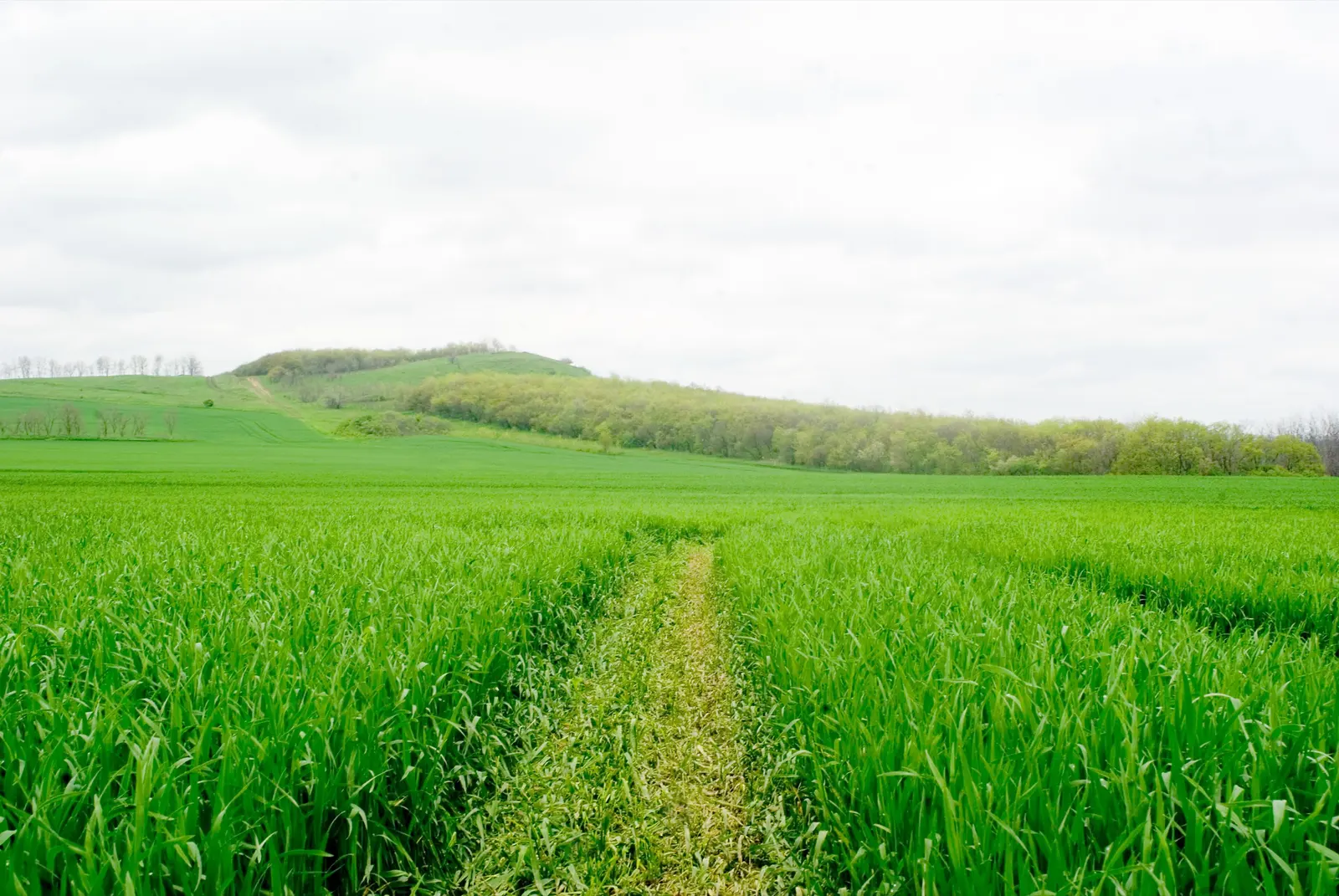
Supply is enormous, and the pool of buyers is small
Price is set where supply meets demand. On the supply side Russia has agricultural land, forest and settlement land across a territory far larger than its population or its farming sector can absorb. On the demand side, buyers cluster in a limited number of places: around Moscow and St Petersburg, the Black Sea and southern farming belt, and near ports and logistics corridors. A plot outside those zones may have a handful of potential buyers in a decade, and illiquidity itself is a discount.
The second demand factor is that land is bought with income it can generate, and outside the export corridors that income is modest. Where a field's realistic earnings are small, its capital value is small. Asking prices in remote districts often sit close to the value of the annual lease, which is the honest benchmark for what the land is worth to a working farmer.
Foreign demand has also changed shape. 75% of FDI now comes from friendly countries, against 25% before (UNCTAD via Izvestia, 2025), so the active cross-border buyers are those with workable payment and legal routes, not the widest possible pool.
A price per hectare is not a price per usable plot
Most quoted Russian land prices are for raw hectares with no improvements. The gap between that number and a plot you can actually build or farm on is where the real cost sits, and it is usually much larger than the land price itself.
The practical differences inside a single district are large enough to make any comparison of headline prices misleading:
- Frontage on a public road versus an access easement across a neighbour's field
- Available electrical capacity and the distance to the nearest substation - connection is frequently the largest single line in the budget
- Gas connection, or the cost of heating without it
- Distance to a settlement with services, labour and a market for produce
- Whether boundaries are surveyed and registered, or only drawn on a Soviet-era plan
- Seasonal access: some plots are reachable by vehicle for only part of the year
- Drainage and soil quality on farmland, which no cadastral document will tell you
The income ceiling: land is worth what it can earn
Farmland value tracks the margin left after inputs, logistics and tax. Grain and oilseed production is export-facing, so distance to a port or a rail loading point moves the margin more than agronomy does. The corporate profit tax is 25%, with 0-5% available in special regimes (Federal Tax Service, 2025), and those regimes can change the arithmetic for a project - but they do not change what a neighbouring farmer will pay to rent the field.
The reliable valuation anchor is the local lease rate for comparable land, capitalised over the years a buyer would hold. Asking prices from owners who are not under pressure to sell tend to run above that anchor, which is one reason transactions are slow.
For an export-oriented agricultural project, payment mechanics matter as much as price: 86% of exports are settled in rubles and friendly-country currencies (Bank of Russia, 2025), which shapes how a foreign partner structures the offtake side.
Who is allowed to buy, and what that does to the price
Legal restrictions remove whole categories of buyers from the market, and that shows up in the price. The rules are not negotiable and should be checked with a Russian lawyer before any deposit.
- Foreign individuals and companies cannot own agricultural land. The workable structure is a lease, up to 49 years.
- Border areas are closed to foreign land ownership, including Sochi, Anapa, Gelendzhik and Novorossiysk.
- Investments touching strategic activities require government approval under Law 57-FZ - relevant where a site sits next to sensitive infrastructure.
- Investors from countries designated unfriendly face special account regimes and additional government approvals, which lengthens any transaction.
- Where foreign control sits behind a Russian company, the agricultural land restriction is still applied in practice. Confirm the current wording and the structuring options with counsel rather than relying on a generic answer.
- Land categories (agricultural, settlement, industry, forest fund, water fund, protected areas) and permitted use are fixed in the register. Building on agricultural land generally requires a change of category or permitted use, a separate administrative process with no guaranteed outcome.
How to check a plot before you believe the price
The order of steps matters, because each one can end the deal cheaply, before money is committed.
- Pull the cadastral extract from EGRN: area, boundaries, category, permitted use, registered encumbrances, mortgages, arrests and leases.
- Match the permitted use to your actual plan. If they do not match, price the change of category into the decision, or walk away.
- Verify physical access: public road frontage or a registered right of way, inspected on the ground.
- Request technical connection terms from the electricity and gas network operators. This number, not the land price, often decides the project.
- Trace the seller's title chain and confirm the plot is not a share in shared ownership requiring a separate allocation procedure.
- Check overlays: water protection zones, forest fund boundaries, sanitary and protected areas.
- For state or municipal land, expect a public auction with a starting price set by an independent valuer, or a lease with subsequent purchase under defined rules.
- For farmland, confirm what the non-use rules require and how actively they are enforced in that district.
Where prices are genuinely lowest, and why
The cheapest land is in districts losing population, far from ports, cities and rail, and in the north and far east where construction and logistics costs are high. The price is low because the cost of connecting the land to the economy is high, not because the land is bad.
Special regimes can change a project's economics without changing land prices: 2,130 projects are registered in the Free Port of Vladivostok (KRDV, 2026), and the Arctic Zone has 1,000 residents with ₽1.1T declared (KRDV, Dec 2025). Those instruments affect taxes and administrative procedure; they do not create a resale market where none exists.
The risks the low price is compensating for
A low price is a signal to look harder, and the discount usually maps onto one of these:
- Illiquidity: resale can take years and the buyer pool may be local and narrow.
- Title defects: unsurveyed boundaries, overlapping claims, inherited shares, informal transfers.
- Compliance risk on farmland where use obligations are not met.
- Infrastructure cost overruns: capacity quoted at one figure, delivered at another after technical conditions are revised.
- Property tax computed from cadastral value, which is periodically revalued and can rise independently of market price.
- Currency and repatriation constraints, which depend on the investor's jurisdiction and are governed by special regimes for some countries.
- No assumption of appreciation. Land in a thin market can stay flat for a long time, and holding costs continue regardless.
FAQ
Is land in Russia actually cheap?
Yes, relative to Western European or Gulf prices, but the comparison is usually unfair. Quoted prices are for unserviced hectares in thin local markets. Once road access, power capacity and permitted use are in place, the all-in cost is a different number, and resale can be slow.
Can a foreigner buy land in Russia?
Settlement and industrial land can generally be bought, subject to restrictions in border areas and strategic sites. Agricultural land cannot be owned by foreigners - the route is a lease of up to 49 years. Investors from countries designated unfriendly also face special account regimes and government approvals, so independent legal advice is essential.
Why is farmland so much cheaper than land near cities?
Because its value is capped by what it can earn after inputs, logistics and tax. A field far from a port or rail point earns little per hectare, so it is worth little per hectare. Land near a city is priced on development potential, which is a different market entirely.
What is the safest way to start?
Order the cadastral extract first, verify category and permitted use, confirm physical access on site, and get technical connection terms before agreeing a price. Treat the land price as one line in a budget that includes connection, survey and legal work.
Does a low land price mean a good investment?
No. A low price reflects thin demand and the cost of making the asset productive. Whether it works depends on the specific project, local lease rates, infrastructure costs and your exit route. This is general information and not investment advice.
Information on this website is not an offer or an individual investment recommendation. Investing involves risk, including the loss of all invested capital. Investing via investment platforms is high-risk and may result in the loss of the entire investment. Figures are sourced from third parties and dated. Investors must comply with the laws of their jurisdiction.