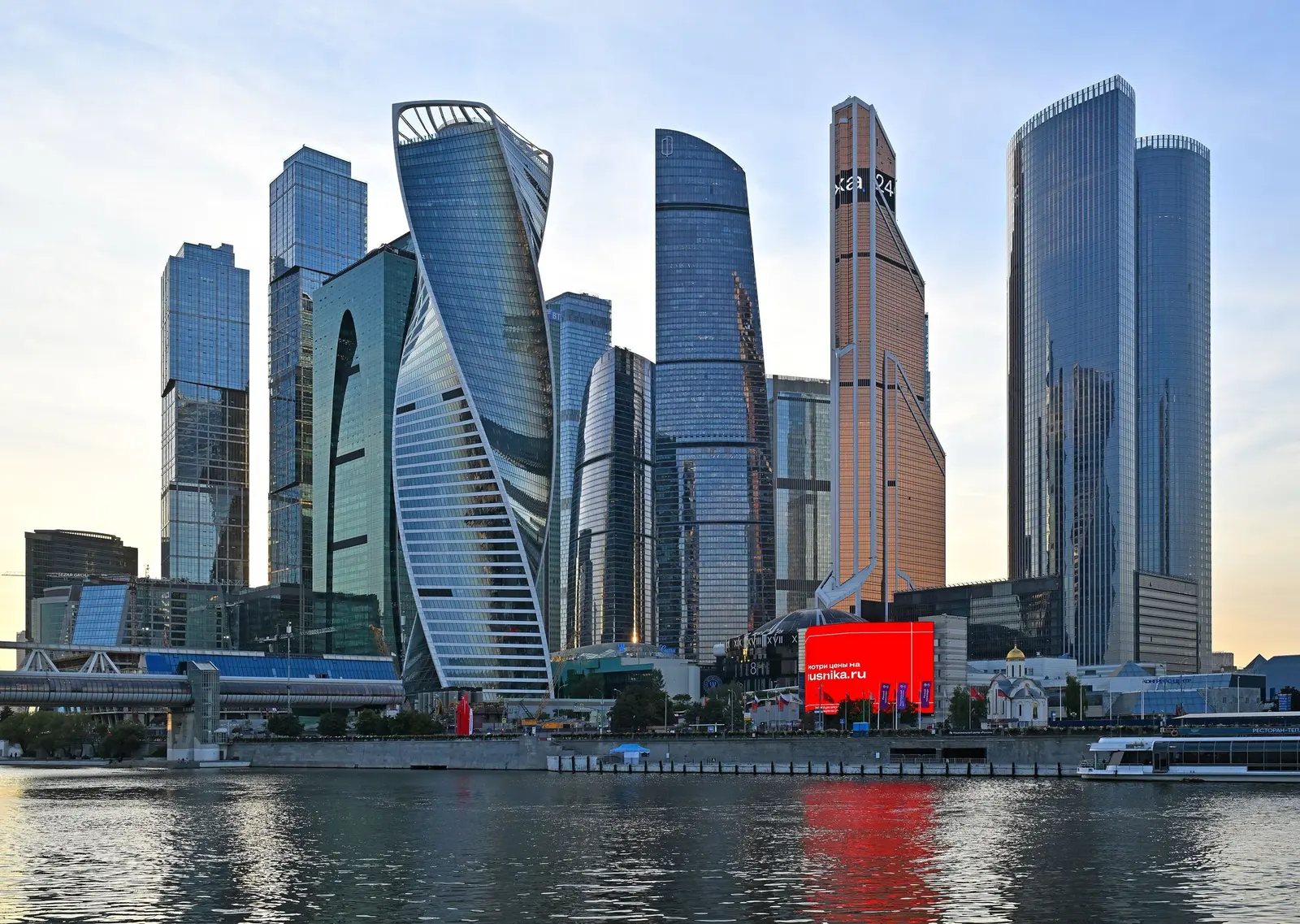
One market, several prices for the same shares
Moscow Exchange (MOEX) is the primary price discovery venue for Russian equities, bonds and derivatives. Two headline indices track largely the same list of large issuers: IMOEX is calculated in rubles, while the RTS Index is calculated in US dollars on the same underlying basket. Because the constituents overlap heavily, a gap between their percentage moves is usually a currency effect, not a disagreement about the companies.
There is no single national 'price' printed anywhere. Each security trades on a specific board with its own ticker, currency and lot size, and some issuers have both ordinary and preferred shares quoted separately. Historically many Russian names also had depositary receipt lines on foreign exchanges, but those venues have largely lost their connection to the domestic price, so a quote seen offshore may reflect something other than the Moscow order book.
- IMOEX: ruble-denominated, the reference gauge for domestic investors.
- RTS: dollar-denominated, so it moves with both shares and the ruble exchange rate.
- Sector and thematic indices exist alongside the main ones and are calculated on narrower baskets.
- Ordinary and preferred shares of the same company can trade at materially different levels.
Where the number actually comes from
During the trading day the price you see is simply the last trade, or the best bid and offer sitting in the electronic order book. That is not the same as a price you can transact at, particularly in size. The official closing price is normally determined in a separate closing auction at the end of the main session, which concentrates liquidity into a single matching event and is the figure used for index calculation, fund valuation and margin.
MOEX also runs an evening session after the main close. Liquidity there is thinner, spreads are wider and the prints are not always treated as the official close by every data provider. If you compare two websites and see different numbers for the same day, the difference is usually explained by which session and which auction the provider treats as final.
- Last trade price: a historical print, not a tradable offer.
- Best bid and best ask: the only two prices at which you can realistically act right now.
- Official close: set by the closing auction, used for valuation and index levels.
- Evening session prints: real trades, but with less depth behind them.
Reading a quote without being misled
A serious reading of any Russian equity quote involves four fields, not one: ticker and board, currency, bid-ask spread, and volume or turnover. When a foreign investor sees an attractive level on a screen, the first question is whether the spread and the typical daily turnover can absorb the intended order without moving the price. In a market whose capitalisation is 19.5% of GDP against a Bank of Russia target of 66% by 2030 (Bank of Russia, Aug 2026), free float in many names is limited and single orders can visibly shift quotes.
Settlement timing, lot sizes, tick sizes and trading calendars are set by the exchange and your broker, and they change from time to time. Treat them as operational details to confirm with the intermediary before the first trade rather than as constants you can assume.
- Check the currency of quotation before comparing two prices.
- Check the spread: it is a real cost paid on entry and exit.
- Check average turnover over weeks, not the volume of one session.
- Check whether the ticker is a main board line or a secondary one.
What moves Russian share prices
The single most important domestic variable for valuation is the Bank of Russia key rate, which stood at 14% (Bank of Russia, Sep 2026). A high policy rate lifts the discount rate applied to future cash flows and raises the relative appeal of ruble deposits and bonds, which compresses equity multiples. When the rate path changes, the whole index tends to re-rate before individual company fundamentals change at all.
Company-level drivers are equally concrete: dividend policy and payout ratios, export commodity prices, the ruble exchange rate, and the scale of foreign participation. Russia is the world's largest palladium producer with 44% of global output (USGS, 2025), so metals and energy prices feed directly into the earnings of the largest index constituents. On the flow side, 75% of FDI now comes from friendly countries against 25% before (UNCTAD via Izvestia, 2025), which changes who is on the other side of the trade and how positions are funded.
- Policy rate and the expected path of it.
- Dividend decisions and the free cash flow behind them.
- Commodity prices and export volumes.
- Ruble exchange rate and the cost of hedging it.
- Investor base composition and available liquidity.
The currency layer foreign investors cannot ignore
Because RTS is quoted in dollars and IMOEX in rubles, the two indices can move in opposite directions on the same day. A foreign investor holding ruble-denominated shares carries both market risk and currency risk, and the currency component has frequently been the larger of the two. Hedging instruments exist but have their own cost and counterparty considerations, and the available set of instruments is narrower than in major Western markets.
Payment channels have also changed structurally. 86% of exports are settled in rubles and friendly-country currencies (Bank of Russia, 2025), which reflects a system that no longer depends primarily on dollar and euro rails. Practically, this means subscription, redemption and dividend flows may arrive in rubles and require conversion through a bank with the right correspondent relationships, at a rate set by that bank rather than by a global market.
- Decide explicitly whether you are taking ruble exposure or hedging it.
- Confirm which currency your broker will credit dividends and sale proceeds in.
- Ask about conversion spreads before, not after, the first transaction.
- Remember that index performance in dollars and in rubles answers different questions.
Access routes and the compliance reality
Retail and institutional access runs through licensed brokers and, increasingly, through regulated investment platforms, of which 106 were licensed as of May 2026 (Bank of Russia, May 2026). Digital infrastructure is mature: 88% of retail payments are cashless (Bank of Russia, 2025), and account opening, trading and reporting are largely online for clients who clear onboarding.
The restrictions are real and specific. Investors from countries designated unfriendly face special account regimes and government approvals for many transactions, and holding structures are not interchangeable with those in other markets. Acquisitions in strategic sectors require approval under Law 57-FZ. Sanctions exposure is a matter for independent compliance counsel, who should review your nationality, residency, bank, custodian and currency of funding before you open anything. Nobody at the trading venue will do that analysis for you.
- Broker or licensed investment platform: the entry point for exchange access.
- Custody arrangements: confirm where securities are actually held.
- Tax withholding on dividends and capital gains: confirm the treaty position with an adviser.
- Strategic sector transactions: approval required under Law 57-FZ.
- Unfriendly-country investors: special account regimes and approvals apply.
A short checklist before you trust a quote
Treat every displayed number as a starting point for verification rather than a fact. The sequence below takes minutes and prevents most practical errors.
Confirm the ticker and board on the exchange website, confirm the currency, compare the bid-ask spread with the average spread over recent sessions, check turnover in the name, and note whether the print is from the main session or the evening session. Then check that your broker will actually let you settle that trade given your residency and the account regime that applies to you.
This article is general information about how Russian market prices are formed and quoted. It is not investment, tax or legal advice, and it does not recommend any security, index or transaction. Rates, thresholds and access rules change; verify the current position with a qualified adviser and your broker before acting.
- Ticker, board and currency verified on the exchange.
- Spread and turnover checked against recent averages.
- Session and auction identified.
- Settlement and account regime confirmed with the broker.
- Compliance position reviewed by independent counsel.
FAQ
What is the MOEX Russia Index and what does its level mean?
It is a capitalisation-weighted index of the largest and most liquid shares traded on the Moscow Exchange, calculated in rubles. The absolute level is an index point value, not a currency amount; what matters for comparison is the percentage change over a chosen period and the currency it is measured in.
Why do IMOEX and RTS sometimes move differently?
They track substantially the same basket but are calculated in different currencies. IMOEX is ruble-denominated and RTS is dollar-denominated, so the ruble exchange rate sits between them. A strong ruble can lift the dollar index while the ruble index is flat, or the reverse.
Can a foreign investor buy Russian shares today?
Access depends on your nationality, residency, bank and custodian. Investors from countries designated unfriendly face special account regimes and government approvals, and strategic sector deals require clearance under Law 57-FZ. Some foreign brokers no longer offer direct access. Confirm your own position with independent compliance counsel before opening an account.
Where do I find official closing prices?
The Moscow Exchange publishes trading results and index values, and licensed brokers and data providers redistribute them. Third-party websites may differ because they treat the evening session or a different auction as final. For valuation or reporting purposes, use one consistent, documented source.
Is the price on the screen the price I will get?
No. A displayed last price is a completed trade, not an offer. Your executable price is the opposite side of the order book, adjusted for spread, size and any commission or conversion cost. In less liquid names the difference can be significant.
Information on this website is not an offer or an individual investment recommendation. Investing involves risk, including the loss of all invested capital. Investing via investment platforms is high-risk and may result in the loss of the entire investment. Figures are sourced from third parties and dated. Investors must comply with the laws of their jurisdiction.