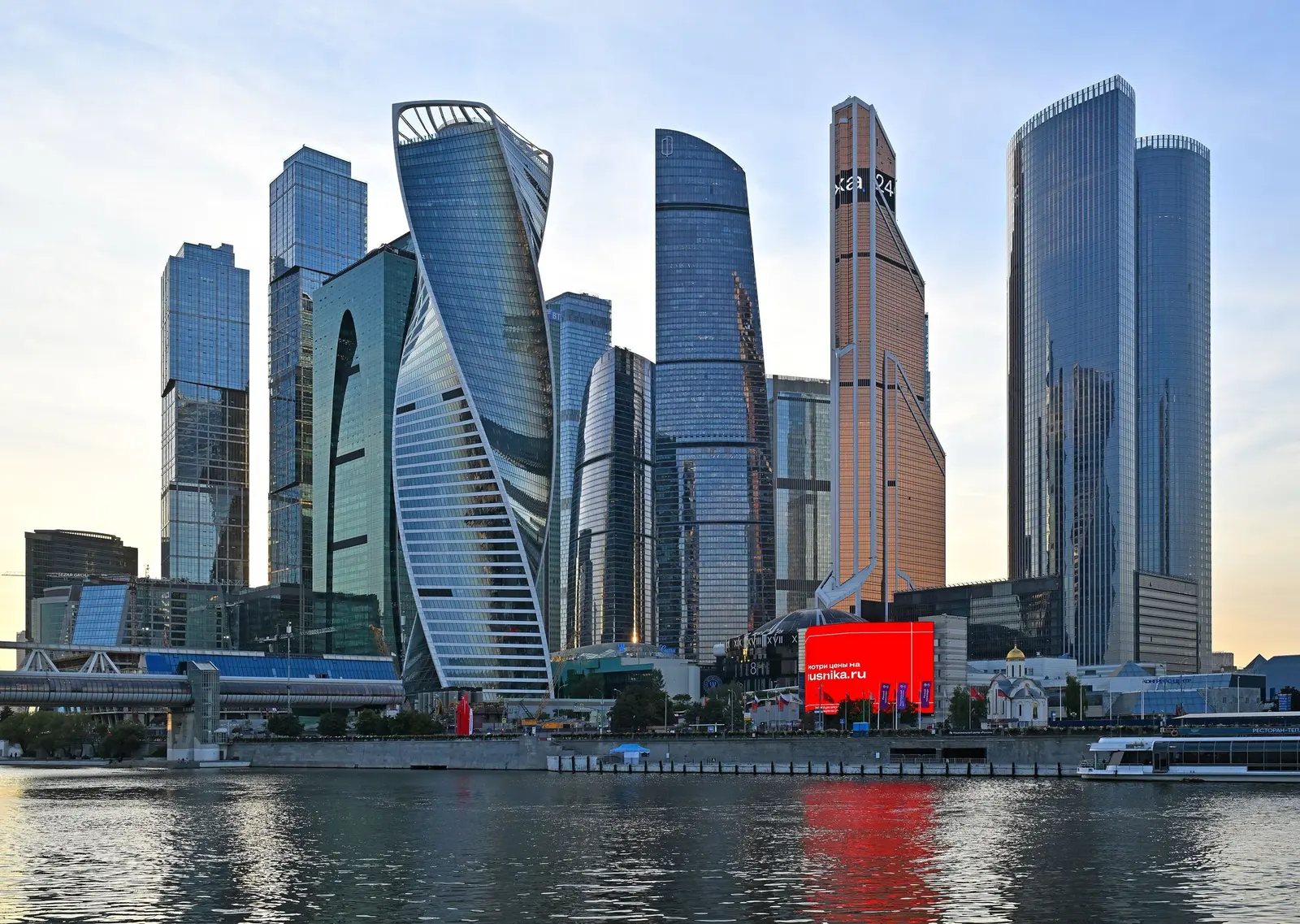
What MOEX is and how it is organised
Moscow Exchange (MOEX) is a single trading venue group with separate markets for equities, federal and corporate bonds, derivatives, currencies and money-market instruments. A broker that is a trading member gives you one account that can reach several of these markets, which is why most foreign investors come in through a broker rather than directly.
The exchange itself does not hold your assets. Trading is matched on MOEX, clearing is handled by the group's clearing centre, and the central securities depository keeps the official register of ownership. Your broker's own depository sits between you and that register. Understanding this chain matters because it determines who you can call when something goes wrong.
Size gives useful context. Stock market capitalisation stood at 19.5% of GDP in August 2026, against a Bank of Russia target of 66% by 2030. That gap is the honest description of the market: substantial, liquid in a limited number of names, and still far from the depth of larger emerging markets.
- Equities, OFZ government bonds, corporate bonds, derivatives, FX and money market on one venue
- Clearing and central depository are separate legal entities from the exchange
- Your broker's depository is the layer you actually deal with day to day
- Market capitalisation was 19.5% of GDP in August 2026, with a 66% target for 2030 (Bank of Russia)
Which access route applies to you: residency decides
The first filter is not how much you invest but where you are resident and where your money comes from. Investors from countries designated unfriendly face special account regimes and, in some cases, government approval before transactions or withdrawals. Investors from friendly jurisdictions, including CIS, Gulf, Chinese and Indian residents, generally use the standard brokerage route.
So the practical starting point is a written answer from a licensed Russian broker and an independent compliance adviser on two questions: which type of account you are eligible to open, and what restrictions apply to moving proceeds out. Do not rely on forum threads or on a broker's sales desk for that answer.
The ordered path is: select a broker or a regulated investment platform, complete KYC and AML checks with certified translations of your documents, open a brokerage account and the linked custody account, fund it by bank transfer, convert currency, then trade. Each step has its own documentary requirement and its own processing time.
- Residency and source of funds drive the account regime, not the size of the ticket
- Friendly-country investors typically use standard brokerage accounts
- Investors from unfriendly states face special account regimes and possible approvals
- There were 106 licensed investment platforms in May 2026 (Bank of Russia), but these are regulated platforms, not exchange membership
- Always get the account-eligibility answer in writing before transferring money
The instruments foreign investors actually use
Ruble sovereign debt (OFZ) and large corporate bonds are the most common entry point for foreign institutional money, because the yield curve is directly tied to the Bank of Russia key rate, which stood at 14% in September 2026. That level makes ruble fixed income attractive on carry, and equally makes the currency and refinancing risk the central part of the analysis.
On the equity side, liquidity concentrates in a relatively small group of large issuers in oil and gas, metals and mining, banking, telecoms, retail and transport. Many of these are export earners, which matters because 86% of Russian exports were settled in rubles and friendly-country currencies in 2025 (Bank of Russia), reducing the mismatch between revenue and reporting currency.
Dividends are a core part of the equity case for many issuers, but the tax withheld on dividends depends on your personal or corporate residency and on the applicable double-tax treaty, and the mechanics of paying a foreign holder depend on the account regime and the custody chain. Treat the net figure as something to confirm with a tax adviser before, not after, you buy.
- OFZ and corporate bonds: direct exposure to the key rate cycle
- Blue-chip equities: concentrated liquidity, heavy export orientation
- Derivatives: available for hedging currency and index exposure through a trading member
- Special administrative regions hosted 674 companies in 2025 (Ministry of Economic Development), relevant when you check an issuer's domicile
- Dividend withholding and payment mechanics must be confirmed for your specific residency
How an order becomes a settled position
When your broker executes an order, the trade is matched on MOEX, cleared through the group's clearing centre, and then recorded in the central depository and mirrored in your broker's depository records. Equities settle on the exchange's short post-trade cycle, while other instruments may follow a different timetable. Ask your broker for the current cycle per instrument rather than assuming one applies to everything.
The cash leg runs in parallel. Your account is ruble-denominated for most instruments, so foreign currency has to be converted, either on the exchange's FX market through your broker or at a bank. The rate you get, the conversion spread and the timing of the conversion are all negotiable points worth checking in the fee schedule.
Keep the chain short and documented. A single broker, a single custody account and clear statements make tax reporting at home and any future transfer of assets far simpler than a structure built through several intermediaries.
- Execution on MOEX, clearing by the group's clearing centre, records at the central depository
- Your broker's depository statement is your practical proof of ownership
- Settlement cycles differ by instrument - confirm each one
- Currency conversion is a separate cost line, not a rounding error
- Retain contract notes and statements for home-country tax filing
What actually moves MOEX prices
The key rate is the single most powerful variable. At 14% in September 2026 (Bank of Russia), the discount rate applied to future earnings is high, which tends to compress equity valuations while making bonds competitive against stocks. Any change in the rate expectation moves both asset classes, often in opposite directions.
Taxation of corporate earnings feeds straight into valuations. The standard corporate profit tax is 25%, with rates of 0-5% available in certain special regimes (Federal Tax Service, 2025), so two companies with identical revenue can produce very different after-tax cash flow depending on which regime applies to them.
Then come the market-specific factors: free float and liquidity concentrated in a handful of names, dividend policy and its reliability, the share of revenue earned in foreign currency, and the practical constraints on foreign participation that affect who else is on the other side of your trade. Foreign direct investment data offers a rough signal of direction here: 75% of FDI now comes from friendly countries, against 25% previously (UNCTAD via Izvestia, 2025).
- Key rate at 14% in September 2026 sets the valuation backdrop for both bonds and equities
- Profit tax of 25%, or 0-5% in special regimes, changes after-tax earnings materially
- Liquidity is deep in a few large names and thin elsewhere
- Dividend reliability and free float vary widely between issuers
- FDI composition has shifted heavily toward friendly jurisdictions
Restrictions that shape what you can own
Some limits are structural and apply to foreigners regardless of residency. Foreigners cannot own agricultural land; the maximum is a lease of up to 49 years. Border areas, including Sochi, Anapa, Gelendzhik and Novorossiysk, are closed to foreign land ownership. If a company's value depends on land assets in those categories, the restriction sits inside your investment whether or not you notice it.
Acquiring control in sectors classified as strategic requires approval under Law 57-FZ. This applies to equity stakes, not just to real estate, and the threshold depends on the sector and the transaction structure. Any position large enough to carry influence should be screened against this before, not after, the trade.
On top of that come the residency-based regimes already described: special accounts and government approvals for investors from unfriendly states. None of this is a reason to avoid analysis of the market, but all of it belongs in the first page of your notes rather than in a footnote.
- Agricultural land: no foreign ownership, lease up to 49 years
- Sochi, Anapa, Gelendzhik and Novorossiysk are closed to foreign land ownership
- Strategic sectors require approval under Law 57-FZ for control acquisitions
- Unfriendly-state investors face special account regimes and approvals
- Screen the asset's underlying land and sector classification before valuing it
A due-diligence checklist before you open anything
Work through the following in order, and stop at the first step that produces an unsatisfactory answer. Confirm your account eligibility in writing with a licensed broker and an independent compliance adviser. Confirm the settlement cycle, fee schedule and currency conversion spread per instrument. Confirm the dividend or coupon payment route and net withholding for your residency. Confirm whether the issuer's assets touch agricultural land, closed border areas or strategic-sector approvals. Confirm how you would exit and repatriate, including the time and documentation involved.
Run the same check on the counterparty as on the asset: broker licence, membership of the exchange, depository arrangements, and the quality of statements you will receive. A cheap commission is not a substitute for a clear custody chain.
Finally, size positions against liquidity rather than against conviction. In a market where capitalisation is 19.5% of GDP and a small number of names carry most of the turnover, an exit in a stressed market is a different exercise from an entry in a calm one.
This article is general information, not investment or legal advice. Rates, thresholds and account rules change, and your position depends on facts specific to you.
Common questions from foreign investors
The questions below come up repeatedly from investors in the Gulf, China, India, South-East Asia and the CIS. The short answers point to where the real work sits.
FAQ
Can a foreigner open an account and trade on MOEX?
Yes, through a licensed Russian broker or a regulated investment platform. The route depends on your residency and source of funds: investors from friendly jurisdictions generally use standard brokerage accounts, while investors from countries designated unfriendly face special account regimes and possible government approvals. Confirm eligibility in writing with a broker and an independent compliance adviser before transferring money.
What is the MOEX Russia Index?
It is the main ruble-denominated equity index of the Moscow Exchange, tracking the largest and most liquid Russian listed companies. It is heavily concentrated in a limited number of issuers, so index-level moves are often driven by a handful of names in oil and gas, metals and mining, and banking rather than by the market as a whole.
How are dividends paid to foreign holders of Russian shares?
The issuer pays through the depository chain, with tax withheld at source according to your residency and the applicable double-tax treaty. The exact net amount and the mechanics of receiving it depend on your account regime and your broker's custody arrangements. This should be confirmed with a tax adviser for your specific situation, not assumed from the headline dividend yield.
Is MOEX liquid enough for a foreign institution?
Liquidity is genuine but concentrated. Large-cap equities and federal bonds trade in meaningful size, while second-tier names can be difficult to exit without moving the price. Position sizing should be based on average daily turnover in the specific instrument, and on how that turnover behaved during past periods of stress, not on headline market capitalisation.
What is the biggest structural risk in the Russian market?
The interaction of a high policy rate, restricted foreign participation and a narrow set of liquid instruments. The key rate stood at 14% in September 2026, which compresses equity valuations and makes the cost of being wrong higher. Add residency-based account restrictions and sector approval rules, and the practical constraint is often not price but access and exit.
Information on this website is not an offer or an individual investment recommendation. Investing involves risk, including the loss of all invested capital. Investing via investment platforms is high-risk and may result in the loss of the entire investment. Figures are sourced from third parties and dated. Investors must comply with the laws of their jurisdiction.