What happened at the session
According to the Government of Russia portal (government.ru), the meeting took place at the Coordination Centre of the Government and reviewed the cooperative chains, management models and support measures behind three national projects. Mishustin framed the work as modernisation and expansion of production capacity, creation of domestic technologies and the launch of knowledge-intensive products that previously had no domestic equivalent.
The food security project was illustrated by the Timiryazev genomic centre, where research institutes, universities and companies are building a digital selection platform that shortens the standard time needed to develop new plant varieties and hybrids by roughly a factor of three. Output of feed additives, amino acids, enzymes and starter cultures is being expanded in Tatarstan and in the Belgorod, Voronezh, Moscow, Tula and Yaroslavl regions, among others.
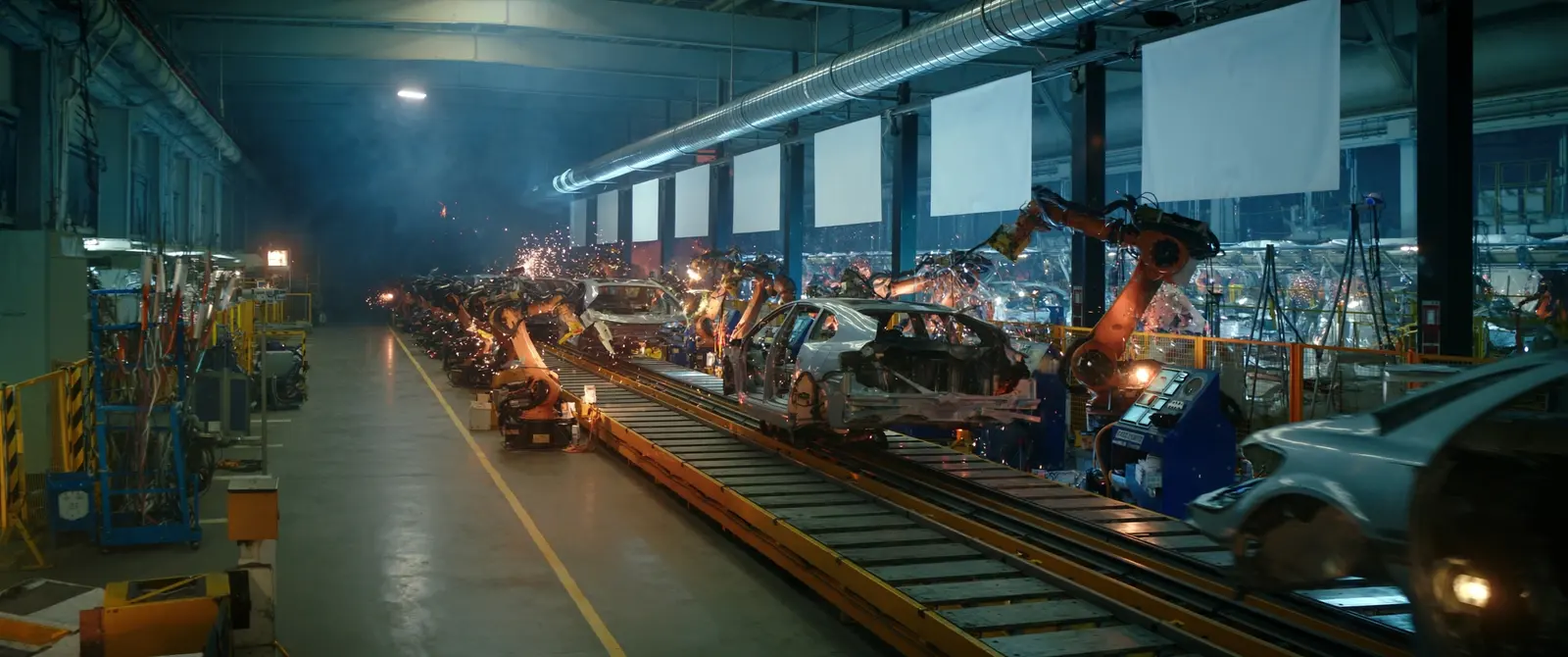
On transport mobility, the government cited the second serial Arctic gas tanker built at the Zvezda shipyard in Primorsky Krai, which has entered service on the Northern Sea Route, and the assembly of car bodies for the first three electric trains for high-speed rail. In aviation, certification testing continues on the updated MC-21 and other models, while the Il-114 regional aircraft and the PD-8 engine for the Superjet have confirmed compliance with mandatory requirements. On unmanned aviation systems, the government said the number of components entered in the Russian registry grew sharply over the first nine months of 2026 and that higher value-added output is rising.
- Three national projects reviewed: food security technology, transport mobility, unmanned aviation systems
- Breeding timelines for new varieties shortened by roughly a factor of three via the Timiryazev genomic centre platform
- Second serial Arctic gas tanker from the Zvezda yard in Primorsky Krai now on the Northern Sea Route
- Car bodies for three high-speed electric trains already manufactured; MC-21 certification tests ongoing
- Il-114 and PD-8 engine confirmed compliant with mandatory requirements
- Mishustin asked for detailed review of cooperation chains and measures to sustain momentum
What it means for foreign investors
The session is a signal about where state attention and support are directed in manufacturing: agricultural technology and food ingredients, transport engineering and shipbuilding, civil aviation and unmanned systems. For foreign companies these are demand-side pointers for equipment, components and technology partnerships, not a description of any specific offer or instrument.
The fiscal framework that applies to such projects is set out in tax rules: a 25% corporate profit tax, with 0-5% available in special regimes (Federal Tax Service, 2025), and a standard VAT rate of 22% since 1 January 2026 (Federal Tax Service, 2026). Longer-term support has been channelled through special investment contracts, of which 90 had been signed with total investment above RUB 2 trillion (Government of Russia, 2025). In Primorsky Krai, where the Zvezda shipyard cited at the session operates, the Free Port of Vladivostok regime covers 2,130 projects (KRDV, 2026).
Financing conditions matter for capital-intensive industrial projects: the Bank of Russia key rate stood at 14% in September 2026 (Bank of Russia, Sep 2026), which affects the cost of project finance. Investors should also note the restrictions that apply regardless of the sector's priority status. Strategic sectors require approval under Law 57-FZ. Investors from countries designated unfriendly face special account regimes and government approvals. Foreigners cannot own agricultural land and may lease it for up to 49 years, which is directly relevant to agribusiness and food-technology projects. Border areas including Sochi, Anapa, Gelendzhik and Novorossiysk are closed to foreign land ownership.
- Profit tax 25%, with 0-5% in special regimes (Federal Tax Service, 2025)
- 90 special investment contracts, above RUB 2 trillion of investment (Government of Russia, 2025)
- Free Port of Vladivostok: 2,130 projects (KRDV, 2026)
- Key rate 14% (Bank of Russia, Sep 2026) shapes project finance costs
- Strategic sectors: approval under Law 57-FZ
- Agricultural land: no foreign ownership, lease up to 49 years
What to check next
The session reviewed implementation and asked ministries to keep to approved schedules, so the practical detail for investors will sit in the underlying programme documents and in the specific support instruments a project applies for. Any rate, threshold or deadline mentioned in discussion should be treated as subject to change and verified with a qualified adviser before it is used in a business case.
Companies should confirm which national project a proposed activity falls under, whether the activity is treated as strategic under Law 57-FZ, and what corporate structure and account arrangements apply to their jurisdiction of origin. Where localisation is planned, the terms of special investment contracts and of regional regimes should be checked directly with the administering bodies. Independent compliance advice on restrictions and on counterparty screening is recommended as a matter of course.
This is general information, not investment or legal advice.
- Verify current rates, thresholds and deadlines with an adviser
- Confirm whether the activity is strategic under Law 57-FZ
- Check regional regime terms and special investment contract conditions directly
- Obtain independent compliance advice on restrictions and counterparties
FAQ
Did the session introduce new incentives for foreign investors?
No. The Government of Russia portal describes a strategic session reviewing the implementation of three existing national projects: food security technology, transport mobility and unmanned aviation systems. Support instruments such as special investment contracts and special tax regimes exist within the tax and investment framework, and their terms change, so they must be verified with an adviser.
Can a foreign company supply components into these programmes?
Participation is possible in principle through a local entity or contractual arrangement, but it depends on the specific sector and on restrictions. Strategic sectors require approval under Law 57-FZ, and investors from countries designated unfriendly face special account regimes and government approvals. Independent legal and compliance advice is recommended before committing.
Can a foreign investor own agricultural land for a food-technology project?
No. Foreigners cannot own agricultural land in Russia and may lease it for up to 49 years. Non-agricultural sites follow separate rules, and border areas including Sochi, Anapa, Gelendzhik and Novorossiysk are closed to foreign land ownership.
Sources
Information on this website is not an offer or an individual investment recommendation. Investing involves risk, including the loss of all invested capital. Investing via investment platforms is high-risk and may result in the loss of the entire investment. Figures are sourced from third parties and dated. Investors must comply with the laws of their jurisdiction.