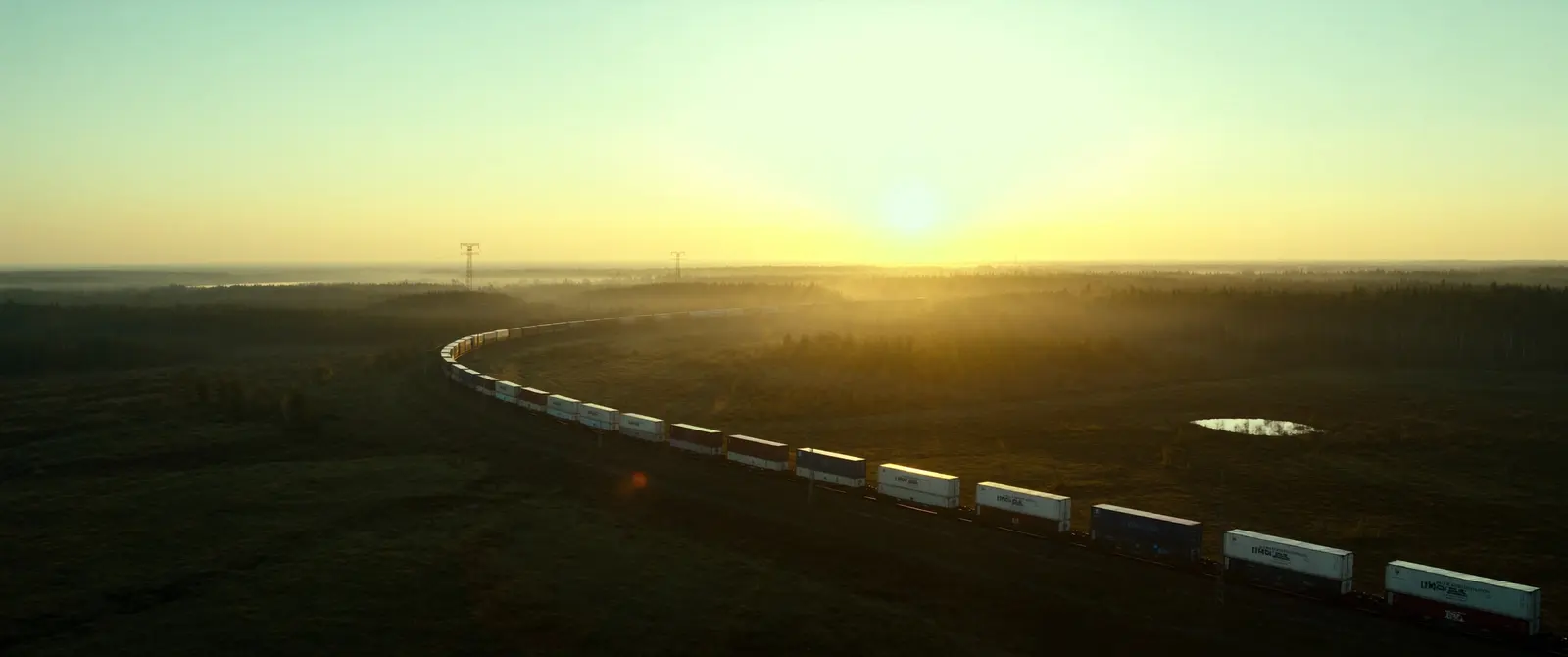
Three routes in, and what each one actually gives you
Portfolio investment is the simplest entry. A foreign investor opens a brokerage account with a licensed Russian broker, converts currency and buys shares of listed oil and gas companies on the Moscow Exchange. You get price exposure and dividends, no operational control, and liquidity that is real but thinner than in London or Singapore. Settlement and repatriation terms depend on whether your country is treated as friendly or unfriendly under Russian currency rules, which is the single most important variable before you open anything.
Direct project investment means taking a stake in a joint venture, farm-in or operating company holding a subsoil licence. This is where Law 57-FZ applies if the licence is of federal significance, and where the approval calendar, not the commercial negotiation, sets the timeline. Farm-in terms in oil are conventionally structured as carried interest during exploration, then cost recovery from production, and Russian practice follows that template.
Non-equity participation is the route most Gulf, Chinese and Indian industrial companies actually use. Drilling services, seismic, coiled tubing, pumps, compressors, catalysts, refining technology, EPC contracting, tanker and storage logistics, insurance and trading all require no equity approval. You invoice in rubles, dirhams, yuan or rupees, and you avoid the strategic-sector review entirely. Note that 75% of FDI into Russia now comes from friendly countries, against 25% before (UNCTAD via Izvestia, 2025) - the non-equity and friendly-jurisdiction routes are where the activity has moved.
- Portfolio: brokerage account, no approval under 57-FZ, full liquidity subject to market depth.
- Direct equity: government approval, long timeline, board and management conditions often attached.
- Non-equity: no equity approval, faster, revenue in hard or friendly currencies, no upside in the reserve itself.
What is actually listed, and what you are buying
The listed oil complex splits into roughly three groups. First, vertically integrated majors with upstream production, refining and retail fuel networks - these give you the whole chain, which cushions you when crude falls but refining margins weaken. Second, mid-sized upstream producers with a narrow asset base and no refining; these are the most levered to the export price net of the export discount. Third, service, transport and refining names, which behave like industrials more than like commodity producers.
What you are buying is exposure to a price set outside Russia, filtered through a fiscal system that captures a large share of the upside through mineral extraction tax and export-linked duties. The parameters of that system are revised regularly, so model the tax line as a variable, not a constant, and re-run it with an adviser before every reporting season.
Liquidity and market depth are a structural issue across the whole Russian equity market: capitalisation stood at 19.5% of GDP against a target of 66% by 2030 (Bank of Russia, Aug 2026). The oil sector is the most liquid part of that market, but position sizing still matters more than it would in a developed market index.
- Check free float, not just market cap - state ownership levels vary widely by company.
- Check the dividend policy text, not the last dividend paid; several companies revise payout ratios.
- Check which assets sit in which legal entity - subsidiaries can carry the licences, not the parent.
- Check the depositary structure before assuming your shares are held the way you expect.
Law 57-FZ: the approval sequence, in order
Law 57-FZ governs foreign investment in companies of strategic importance, which includes subsoil users holding licences of federal significance. The practical order of operations is as follows.
Step one: establish whether the target is a strategic company. The government maintains a published list of such entities, and a target can qualify through its licence type even if it is not on that list. This determination is a legal question, so it should be made by Russian counsel, in writing, before you sign anything binding.
Step two: structure the transaction, including whether you are acquiring control, a blocking stake, or a minority position, and through which holding vehicle. Structure matters, because certain licence categories restrict foreign control outright rather than merely requiring a filing.
Step three: file with the Government Commission for Control over Foreign Investment. The filing covers the buyer's ownership chain up to the ultimate beneficiary, and undisclosed nominees are the most common cause of delay or rejection.
Step four: the Commission approves, approves with conditions, or refuses. Conditions commonly touch board representation, management appointment rights, access to technical data and confidentiality. These conditions can outlive the transaction and bind later buyers of your stake.
Step five: post-closing reporting and ongoing compliance with the conditions. Separately, investors from countries designated unfriendly face special account regimes and additional government approvals for transactions in Russian assets - this is a parallel layer, not an alternative to 57-FZ, and it is routine to require independent compliance advice before any transfer of funds.
- Timeline is driven by the filing, not by valuation negotiation.
- Ultimate beneficial ownership must be fully transparent.
- Conditions attached to approval transfer with the asset, not with you.
Incentives designed to pull capital into the sector
Russia offers several contractual instruments that fix tax and regulatory conditions for the life of a project, and these are actively used in petrochemicals, refining and oilfield equipment manufacturing. The special investment contract is the main one: 90 such contracts had been signed, covering more than ₽2 trillion of declared investment (Government of Russia, 2025). It stabilises the fiscal terms you signed up to, which is exactly what a long-payback refinery or catalyst plant needs.
Special administrative regions allow a foreign holding company to redomicile into a Russian onshore jurisdiction while keeping its corporate form and internal governance. There were 674 companies registered in special administrative regions (Ministry of Economic Development, 2025). For a Gulf or Asian investor already holding Russian assets through a foreign structure, this is a governance and reporting simplification rather than a tax arbitrage.
The Arctic Zone regime is relevant if your business touches northern oil and gas logistics, service bases or field infrastructure: 1,000 residents had registered with ₽1.1 trillion declared (KRDV, Dec 2025). On the Pacific side, the Free Port of Vladivostok covers ship repair, bunkering, storage and port services, with 2,130 projects registered (KRDV, 2026) - useful for a services company following oil flows eastward.
Across all of these, income tax under special regimes can range from 0 to 5%, compared with the standard 25% corporate profit tax (Federal Tax Service, 2025). Eligibility conditions are specific and are periodically amended, so the applicable rate has to be confirmed project by project.
- Special investment contract: stabilises fiscal terms, suited to long-payback processing assets.
- Special administrative region: redomiciliation of a holding structure, not a tax scheme.
- Arctic Zone and Free Port of Vladivostok: fit service, logistics and port-adjacent operators.
Cash flow, taxes and getting money out
The cost of capital you will be competing against is visible: the Bank of Russia key rate stood at 14% (Bank of Russia, Sep 2026). That sets the hurdle any ruble-denominated project has to clear, and it makes domestic debt financing expensive for your joint venture as well as for your local partner.
The tax framework to model: 25% corporate profit tax, reduced to 0-5% under certain special regimes (Federal Tax Service, 2025), and a standard VAT rate of 22% since 1 January 2026 (Federal Tax Service, 2026). Mineral extraction and export-linked levies on oil are set by separate rules with their own parameters and are revised periodically - treat them as a moving input, not a fixed number.
On the money movement side, 86% of Russian exports are now settled in rubles and friendly-country currencies (Bank of Russia, 2025), which means invoices, refunds and service payments with counterparties in friendly jurisdictions generally clear without a dollar leg. Retail payment infrastructure is mature, with 88% of retail payments cashless (Bank of Russia, 2025), but that says nothing about cross-border corporate transfers, which follow currency-control rules and bank-level compliance screening.
Dividend repatriation is the point where jurisdiction matters most. Investors from countries designated unfriendly face restricted account regimes, and dividends can be credited to accounts with constrained movement rather than freely transferred abroad. Even for friendly-jurisdiction investors, the practical timeline depends on the paying company, its bank and the documentation of the underlying ownership chain. Budget for this in months, not weeks.
- Key rate 14% (2026) is your baseline cost of capital for ruble project finance.
- Profit tax 25%, with 0-5% under qualifying special regimes (2025).
- VAT 22% since 1 January 2026 (2026).
- Export settlement is overwhelmingly in rubles and friendly currencies (2025).
If you are investing from the Gulf, China, India, Kazakhstan
From China, the established pattern is equipment, drilling services, EPC and refining technology supplied into Russian projects, with revenue in yuan and ruble. This is the lowest-friction route because it needs no equity approval, and it is upgradable: a supplier who has delivered reliably on three contracts is a credible joint-venture partner later. If you do want equity, expect the 57-FZ process to apply to any upstream asset of significance.
From India, the natural entry point is the downstream and trading side rather than upstream equity. Indian refiners are established buyers of Russian crude, and the logical extensions are processing joint ventures, catalyst and equipment supply, and storage or blending arrangements. For an Indian family office considering listed exposure, the constraint is not permission but operational: broker onboarding, currency conversion and repatriation documentation.
From the UAE and the wider Gulf, holding structures and free-zone vehicles remain the standard way to hold Russian assets, and the special administrative region regime (674 companies, Ministry of Economic Development, 2025) is the onshore alternative worth comparing. Gulf investors also tend to come in through trade and logistics, storage and insurance-adjacent activity rather than exploration equity.
From Kazakhstan, the EAEU framework simplifies goods movement, customs and labour mobility, but it does not remove the investment approval requirement for strategic assets. A Kazakh investor should treat the 57-FZ analysis as identical to any other non-Russian investor and check EAEU rules separately for the trade leg.
One restriction applies to everyone and is easy to trip over: foreigners cannot own agricultural land, only lease it, for up to 49 years, and a set of border areas - including Sochi, Anapa, Gelendzhik and Novorossiysk - is closed to foreign land ownership. If your project involves a land plot, screening that comes before the deal, not after.
- China and India: services, equipment and offtake first, equity second.
- Gulf: compare a foreign holding structure against an onshore special administrative region vehicle.
- Kazakhstan: EAEU trade advantages do not shortcut strategic-sector approval.
- Everyone: land ownership restrictions can invalidate an otherwise sound project site.
Risk map: where oil investments in Russia actually go wrong
Commodity and price risk is the obvious one, but the less obvious component is the export discount and the cost of freight, insurance and payment routing. Two producers with identical lifting costs can post very different netbacks depending on how their barrels reach a buyer.
Fiscal risk is the second: extraction and export-linked levies are revised periodically, and a change can move a project's net present value more than a modest move in the oil price. Build the model so the tax line can be flexed independently.
Governance risk is the third. State ownership levels vary by company, dividend policies are revised, and the interests of a minority foreign holder are not always aligned with those of a controlling shareholder. Read the charter and the dividend policy, not the press release.
Compliance risk is the fourth and now the most consequential. Secondary sanctions exposure, bank-level screening, correspondent banking refusals and insurer restrictions can each stop a transaction that is commercially agreed and legally permitted. This requires independent compliance advice from counsel qualified in your own jurisdiction, and you should not proceed on the basis of what a counterparty tells you about their own status.
Approval risk is the fifth: a filing can be approved with conditions that hollow out the value of control, or refused without a detailed public explanation. That risk is priced by how early you engage counsel and how clean your ownership chain is.
Liquidity and exit risk completes the picture: the depth of the listed market is limited relative to developed markets, and selling a direct stake in a strategic asset requires a buyer who can pass the same approval process you did. Plan the exit at entry.
This article is general information about how the mechanisms work. It is not investment, tax or legal advice, and it is not a recommendation to buy, sell or hold anything. Rates, thresholds, approval procedures and currency rules change, and every investor's position is different - verify everything with a qualified adviser in your own jurisdiction and in Russia before acting.
- Netback risk: discount, freight, insurance and payment routing.
- Fiscal risk: extraction and export-linked levy parameters are revised periodically.
- Approval risk: conditions can remove the substance of control.
- Compliance risk: secondary exposure can stop a permitted deal.
- Exit risk: your buyer must pass the same review you did.
FAQ
Can a foreigner buy shares in Russian oil companies?
Yes, in principle, through a licensed Russian broker and the Moscow Exchange. The practical constraint is your jurisdiction of residence. Investors from countries designated unfriendly face special account regimes and additional approval requirements for transactions in Russian assets, which affects both buying and repatriating proceeds. Confirm your own classification with a broker and counsel before funding an account.
Do I need government approval to invest in a Russian oil project?
If the target holds a subsoil licence of federal significance, it is likely a strategic company under Law 57-FZ and you need approval from the Government Commission for Control over Foreign Investment. Some licence categories prohibit foreign control outright rather than merely requiring a filing. The determination is a legal question and should be answered in writing by Russian counsel before you sign a binding document.
How are dividends from Russian oil companies taxed and repatriated?
Dividends are paid out of profit already taxed at the corporate level, and withholding depends on the applicable double tax treaty and on how your jurisdiction is classified under Russian currency rules. Repatriation for investors from unfriendly jurisdictions is subject to restricted account regimes. For friendly-jurisdiction investors the transfer is usually possible but documentation-heavy. Timelines are measured in months.
What tax rate applies to an oil-related investment project?
The standard corporate profit tax is 25%, with rates of 0-5% available under certain special regimes such as special investment contracts and special administrative regions (Federal Tax Service, 2025). VAT is 22% since 1 January 2026. Oil-specific extraction and export-linked levies sit on top and are set by separate rules that are revised periodically. Treat all of these as items to be confirmed with a tax adviser for your specific project.
What is the fastest way for a foreign company to participate in Russian oil?
Non-equity participation. Supplying equipment, drilling and seismic services, catalysts, refining technology, EPC contracting or logistics requires no investment approval, can be invoiced in friendly currencies, and builds the track record that makes a later joint venture credible. Equity in an upstream asset is the slowest route because it runs through the 57-FZ approval process before anything else can close.
Information on this website is not an offer or an individual investment recommendation. Investing involves risk, including the loss of all invested capital. Investing via investment platforms is high-risk and may result in the loss of the entire investment. Figures are sourced from third parties and dated. Investors must comply with the laws of their jurisdiction.