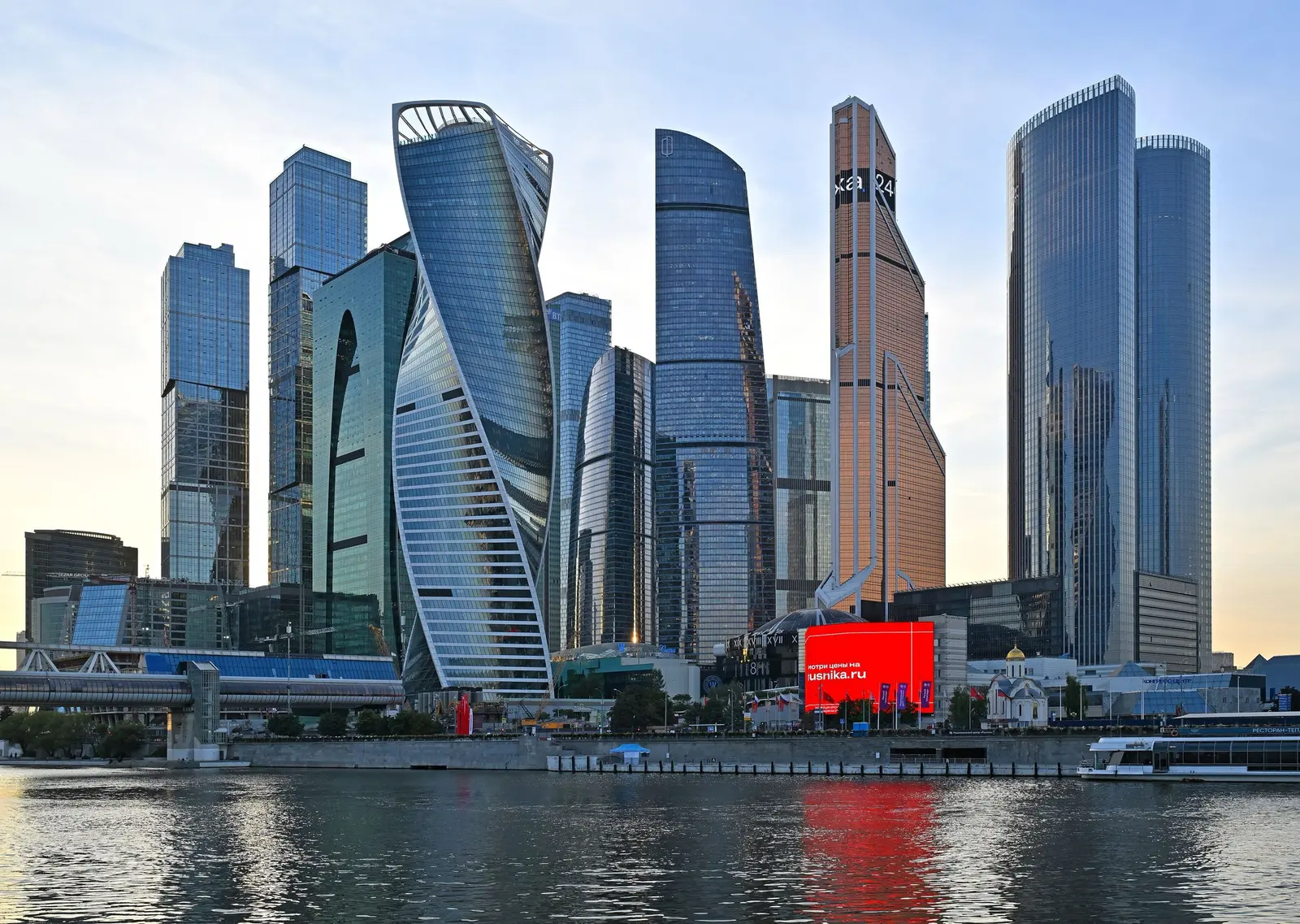
Which instruments are open to a foreign investor
The Moscow Exchange is the single main venue for equities and bonds in Russia. An investor with an account at a licensed Russian broker can, in principle, buy the same exchange-traded instruments as a local resident: shares, federal loan bonds, corporate bonds, exchange-traded funds and gold.
Scale matters for expectations. Stock market capitalisation stood at 19.5% of GDP (Bank of Russia, Aug 2026), against a regulatory target of 66% by 2030. A market of that size concentrates liquidity in a limited number of large names, so position sizing and exit planning carry more weight than they would in a deeper market.
- Shares: the main and standard segments of the Moscow Exchange.
- Bonds: federal loan bonds and corporate issues, the segment most directly sensitive to the central bank policy rate.
- Funds and metals: exchange-traded funds and precious metals through exchange instruments.
- Access: through a licensed Russian broker or a licensed investment platform, not directly across the exchange.
The three routes in, and who can use each one
There are three practical routes: a non-resident brokerage account at a Russian broker, a Russian investment platform, or a fund structure domiciled in your own country that allocates to Russian assets. The first two give you direct title to the securities; the third gives you exposure without a Russian account but adds a fee layer and, often, a wider tracking difference.
Regulated investment platforms are a distinct licensed category. There were 106 licensed investment platforms registered as of May 2026 (Bank of Russia, May 2026). They are usually simpler to open, but they offer a narrower instrument menu than a full brokerage account.
- Russian broker, non-resident account: widest instrument access, full compliance onboarding, custody through a Russian depositary.
- Licensed investment platform: lighter onboarding, narrower universe, workable for straightforward exposures.
- Fund or structured product from your home jurisdiction: no Russian account needed, but check what it actually holds and how it repatriates.
- Retail tax wrappers built around Russian tax residency are generally not available to non-residents. Confirm your own eligibility rather than assuming.
Your account regime is decided by your country of residence
The single most important variable is not the instrument, it is where you are tax resident and where the money comes from. Investors from jurisdictions designated unfriendly to Russia operate under a special account regime and, for many transactions, require government approval. That is a compliance fact rather than a market view, and it changes the mechanics of buying, selling and receiving income.
Investors from friendly jurisdictions - the Gulf, China, India, South-East Asia and most CIS states - face fewer of those gates. The shift is visible in the flow data: 75% of foreign direct investment now comes from friendly countries, against 25% before (UNCTAD via Izvestia, 2025).
- Check the current status of your country of citizenship and tax residence before opening anything.
- Strategic sectors require approval under Law 57-FZ. A stake in certain companies can be blocked even when the trade itself is small.
- Do not rely on informal workarounds. Take independent compliance advice from a firm licensed in your own jurisdiction and keep the paper trail complete.
Moving money in and out
Settlement infrastructure inside Russia has been rebuilt around the ruble and the currencies of friendly countries: 86% of exports are settled in rubles and friendly-country currencies (Bank of Russia, 2025). Domestic retail payment rails are effectively digital, with 88% of retail payments cashless (Bank of Russia, 2025).
Cross-border transfer remains the hard part. Expect to document the source of funds, the purpose of the payment and the economic substance of the transaction. Repatriation of sale proceeds and dividends follows currency-control rules that depend on your residency status, and the timeline is not something a broker can promise in advance.
- Ask the receiving broker upfront which currencies it accepts and through which correspondent banks.
- Confirm that your sending bank has a working channel to your region before you commit capital.
- Keep evidence of every transfer, contract and instruction. It is the file you will need at exit, not at entry.
Taxes, fees and what you actually keep
Corporate profit tax is 25%, with 0-5% rates in special regimes (Federal Tax Service, 2025). The standard VAT rate is 22% since 1 January 2026 (Federal Tax Service, 2026). Those are headline rates applying to companies. What an individual or a fund pays on dividends and capital gains is a separate question, set by domestic withholding rules and, where one exists, an applicable double tax treaty.
Treaty relief is rarely automatic. It normally requires a certificate of tax residence from your home country, submitted to the broker or the paying company before the payment date. Missing that step usually means withholding at the higher domestic rate, followed by a refund process that can take months.
- Broker commission and exchange fee, quoted per trade and per instrument.
- Depositary and custody fees on the holding, not on the trade.
- Currency conversion spread, often the largest hidden cost for a non-resident.
- Tax rates and thresholds change. Confirm your position with advisers in both jurisdictions.
What actually moves the market
The policy rate is the dominant variable for ruble assets. A key rate of 14% (Bank of Russia, Sep 2026) sets a high bar: money-market instruments and short bonds compete directly with equity risk, and rate decisions move the whole curve rather than a single sector.
Beyond rates, three things matter for a foreign holder: dividend policy at the large caps, commodity exposure, and corporate redomiciliation. Russia is the world's largest producer of palladium, with 44% of world output (USGS, 2025), so metals exposure is a real theme rather than a rounding item.
- 674 companies are registered in special administrative regions (Ministry of Economic Development, 2025), a structural change in where Russian issuers are domiciled.
- 90 special investment contracts cover more than ₽2T of declared investment (Government of Russia, 2025).
- For domestically driven names, cycle data such as the 7.6% Moscow office vacancy (IBC Real Estate, Q2 2026) is often a better leading signal than macro headlines.
The practical order of operations
Sequence matters more than speed. Each step below is a gate: if one is unresolved, the next becomes a guess rather than a decision.
- 1. Define the mandate in writing: instruments, maximum position sizes, liquidity assumptions and exit conditions.
- 2. Confirm your compliance position: country of tax residence, that country's status in Russia, and whether any government approval is required.
- 3. Choose the route: Russian broker, licensed investment platform, or a fund in your home jurisdiction.
- 4. Open the account and complete KYC. Expect requests for source of funds, tax residence certificates and full corporate documents if you invest through a company.
- 5. Agree the funding and repatriation channel with both the sending bank and the receiving broker before the first transfer.
- 6. Confirm the tax treatment of dividends and gains with advisers in both jurisdictions and file treaty documents in advance.
- 7. Execute through the broker, hold through the depositary chain, and reconcile positions and cash monthly.
- 8. Review annually: the regulatory perimeter, the tax position and the liquidity of every name you hold.
- This is general information about how the Russian market is structured and regulated. It is not investment, legal or tax advice and does not recommend any security or transaction. Rates, rules and restrictions cited here change, and should be verified with qualified advisers before you act.
FAQ
Can a foreigner open a brokerage account in Russia and buy shares?
In principle, yes. Licensed Russian brokers open non-resident accounts, and the Moscow Exchange is the venue for shares and bonds. The practical constraint is your jurisdiction of tax residence: investors from countries designated unfriendly operate under a special account regime and often need government approval for transactions, while investors from friendly jurisdictions face fewer gates.
Do I need to be a Russian tax resident to invest?
No, but residency determines which accounts and tax wrappers you can use. Retail investment accounts built around Russian tax residency are generally not available to non-residents. Non-residents can hold ordinary brokerage accounts, but the withholding tax on dividends and gains, and any treaty relief, depends on your personal position.
What does it cost to trade on the Moscow Exchange?
Budget for broker commission, the exchange fee, depositary and custody fees, currency conversion costs and possibly market data. Each broker quotes its own schedule and costs vary by instrument and volume. There is no single industry rate to quote, so compare total cost of ownership rather than headline commission.
How do I get money out of Russia?
Through a bank and a broker that can document the transaction. Expect source-of-funds checks and currency-control paperwork, and expect the timeline to depend on your residency status and the route used. No broker can promise a settlement date for a cross-border repatriation in advance.
Is the Russian market liquid enough for a foreign investor?
Liquidity is concentrated in the largest names. Market capitalisation was 19.5% of GDP (Bank of Russia, Aug 2026), against a 66% target for 2030, which means many listed companies trade in modest volumes. Size positions to what you can realistically exit, not to what you can enter.
Information on this website is not an offer or an individual investment recommendation. Investing involves risk, including the loss of all invested capital. Investing via investment platforms is high-risk and may result in the loss of the entire investment. Figures are sourced from third parties and dated. Investors must comply with the laws of their jurisdiction.