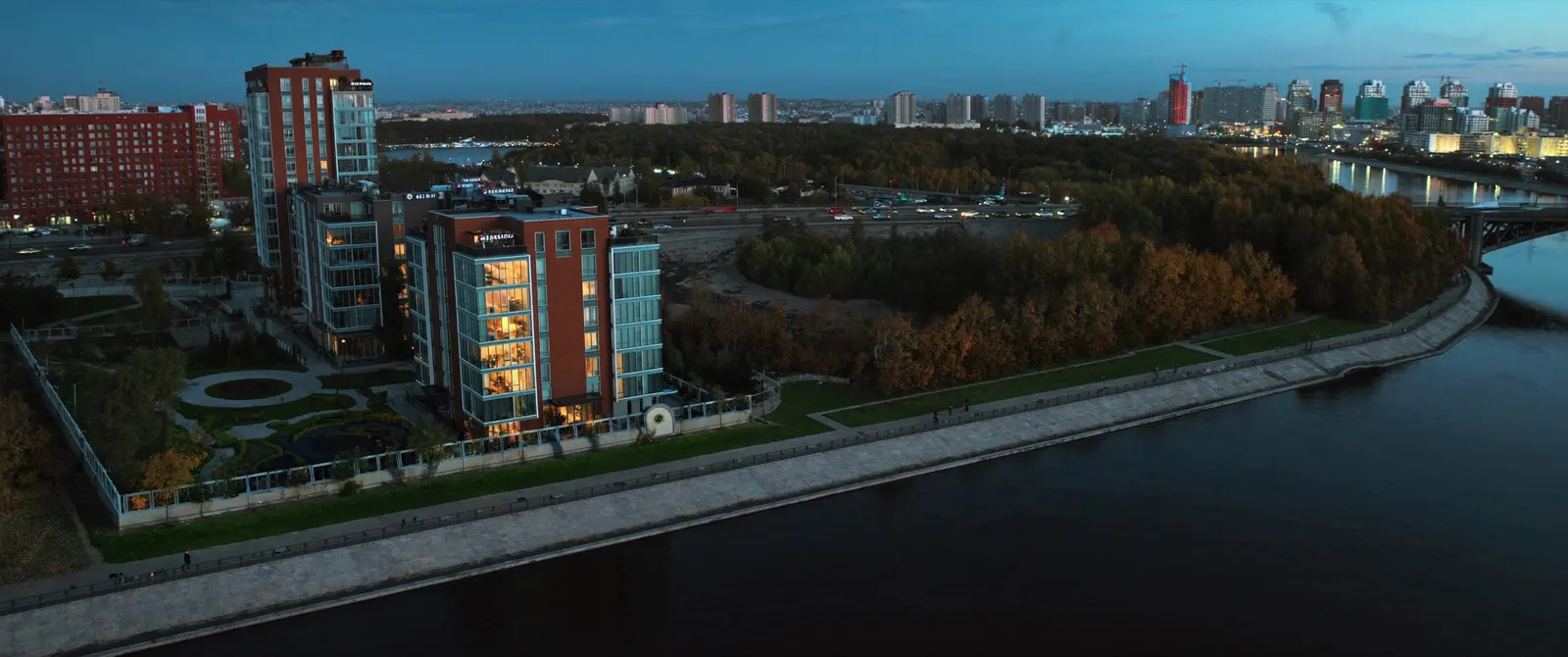
What a foreigner can own outright
Russian law does not prohibit a foreign citizen from owning residential or non-residential premises. A flat, a room, a house, a warehouse, an office unit or a commercial building can be bought and registered in the name of a foreign individual or a foreign legal entity. Ownership is recorded in the Unified State Register of Real Estate (EGRN), and the title is protected the same way as for a Russian owner.
The distinction that matters is between owning a building and owning the plot under it. In practice most urban purchases are structured as premises in a building, where the land is held by the building's owners collectively or leased, so the land restriction does not bite. Buying a standalone house usually means buying the plot as well, and there the rules change.
- Foreign individuals can own flats, houses and commercial premises
- Foreign legal entities can own non-residential and residential real estate
- Ownership is registered in EGRN and is enforceable in Russian courts
- Buying property does not by itself grant residency, a residence permit or a visa
The land rules: agriculture, plots and closed territories
Land is the area where foreign ownership is genuinely constrained. Foreign citizens, stateless persons and companies with foreign participation cannot own agricultural land at all. The permitted route is a lease, and the maximum term for agricultural land is 49 years. This is a structural limit, not a formality, and it applies regardless of how the deal is packaged.
A separate set of restrictions covers border and strategically sensitive areas. Land in these zones is closed to foreign ownership, and the list includes Sochi, Anapa, Gelendzhik and Novorossiysk among other border territories. A foreign buyer cannot register a plot there, and structures built on closed land cannot be used to work around the rule. Before any plot purchase, the specific cadastral district must be checked against the current closed-territory list, because the perimeter is set by government acts that are updated from time to time.
- Agricultural land: lease only, up to 49 years, no ownership for foreigners
- Border and closed zones: no foreign land ownership, including Sochi, Anapa, Gelendzhik and Novorossiysk
- Land under an apartment building is not bought separately by the flat owner
- Closed-zone lists change, so verify the exact cadastral quarter with a Russian lawyer before signing
Does your country of origin change the rules?
It does. Russia divides foreign states into categories, and investors whose country is designated unfriendly operate under a stricter regime than investors from friendly jurisdictions. In practice this affects how you pay, which accounts you can use, and whether a transaction needs prior approval from a government commission. Buyers from the Gulf, China, India, Turkey, South-East Asia and the CIS generally fall outside that stricter regime, but bank-level compliance still applies to everyone.
Where a transaction requires approval, the approval is obtained before the deal closes, not after. A signed contract that has not cleared the required procedure can leave the buyer with funds transferred and no registrable title.
- Investors from unfriendly states face special account regimes and government approvals
- Approval, where required, must be obtained before closing, not retroactively
- Acquisition of stakes in strategic companies is separately regulated under Law 57-FZ
- Bank compliance checks apply to all buyers regardless of citizenship
The purchase process, step by step
The sequence is fairly standard and the state registration step is what actually transfers ownership. A private written agreement between buyer and seller does not create a title.
First, the buyer obtains a Russian tax identification number (INN) and opens a Russian bank account. Second, the property is checked: an EGRN extract confirms the owner, the encumbrances, the arrests and the cadastral data. Third, the parties sign a purchase agreement in written form; in some cases, such as buying a share in a property, notarisation is mandatory. Fourth, the documents are submitted to Rosreestr, usually through a bank or a notary, and the state duty is paid. Fifth, Rosreestr registers the transfer and issues a new EGRN extract naming the buyer as owner.
Payment is normally made through a Russian bank account, and the money movement is traceable. Retail payments in Russia are now overwhelmingly cashless, 88% as of 2025 according to the Bank of Russia, so a large cash element in a property deal will attract attention from the bank and from the tax authority.
- Get an INN and a Russian bank account first
- Order a fresh EGRN extract before signing anything
- Written purchase agreement; notarisation required in certain share deals
- State registration in Rosreestr is what creates the title
- Keep the payment trail clean and documented
Paying from abroad and moving money in
Cross-border payment is the practical bottleneck, not the legal right to buy. Transfers from foreign banks into Russia depend on the sending bank, the currency and the correspondent chain, and a payment can be delayed or returned without explanation. Settlements have shifted heavily toward national currencies: 86% of Russian exports were settled in rubles and friendly-country currencies in 2025, according to the Bank of Russia, and the same infrastructure is what private buyers end up using.
For buyers from unfriendly jurisdictions, funds typically have to pass through a special account type, with the bank acting as the gatekeeper. Expect to document the source of funds, the purpose of the payment and the identity of the ultimate beneficial owner if a company is buying.
- Open the Russian account before you commit to a deadline in the contract
- Build in time for a failed or returned first transfer
- Be ready to document source of funds and beneficial ownership
- Currency conversion and bank commission should be priced into the budget
Holding costs, resale and exit
Owning property in Russia carries recurring costs: corporate property tax where the owner is a company, land tax where land is owned, utilities, management company fees and, for commercial assets, fit-out and vacancy costs. Office vacancy in Moscow stood at 7.6% in Q2 2026 according to IBC Real Estate, which is a useful reference point for anyone underwriting a rental exit in the capital.
On resale, the tax position of a non-resident differs from that of a resident, and the holding period needed for relief from personal income tax is longer for non-residents. The rates and thresholds are revised periodically, so they must be confirmed with a Russian tax adviser at the time of the sale. Corporate sellers pay profit tax, where the standard rate is 25% and special regimes can apply at 0-5% according to the Federal Tax Service for 2025. VAT has been at a standard rate of 22% since 1 January 2026, which matters for commercial property deals structured as a sale of a business rather than an asset.
- Non-residents generally face a less favourable resale tax position than residents
- Standard profit tax is 25%; special regimes may apply at 0-5%
- Standard VAT has been 22% since 1 January 2026
- Rental yields must be modelled net of management, tax and vacancy
The five checks that prevent most losses
Most bad outcomes in foreign property purchases in Russia come from the same short list of omissions, not from exotic legal problems. Work through these before money moves.
This article is general information about how the rules work. It is not investment or legal advice, and it is not a recommendation to buy any asset. Rules, closed-territory lists and tax parameters change, so confirm the current position for your specific case with a qualified Russian lawyer and tax adviser.
- Confirm the cadastral district is not a closed border zone
- Confirm the seller's title and check for arrests, pledges and third-party claims
- Confirm whether your citizenship triggers an approval or a special account requirement
- Confirm the payment route works before you sign a deadline into the contract
- Confirm the exit: who the likely buyer is, and what tax applies on resale
FAQ
Can a foreigner buy an apartment in Russia?
Yes. A foreign individual can buy and register an apartment, a house or commercial premises in Russia. The restriction applies to land, closed border territories and strategic assets, not to ordinary residential premises.
Can foreigners own land in Russia?
Not agricultural land, which can only be leased, with a maximum term of 49 years. Land in closed border areas, including Sochi, Anapa, Gelendzhik and Novorossiysk, cannot be owned by foreigners at all. Other plots may be purchasable depending on the zone and the buyer's status, and each case needs to be checked.
Does buying property give a foreigner a residence permit in Russia?
No. Property ownership does not by itself create a right to reside. Residence and immigration status are governed by separate rules, and ownership is not a qualifying ground in itself.
Can a foreigner get a mortgage in Russia?
Some Russian banks lend to foreign borrowers, but terms depend on residency, income documentation and the bank's compliance policy. Borrowing costs track the Bank of Russia key rate, which stood at 14% in September 2026, and the rate you are offered will be set by the lender.
Can a buyer from an unfriendly country still purchase property in Russia?
In many cases yes, but through a stricter regime: special account arrangements for payments and, where applicable, prior approval from a government commission. The process takes longer and should be planned with a Russian lawyer from the outset.
Information on this website is not an offer or an individual investment recommendation. Investing involves risk, including the loss of all invested capital. Investing via investment platforms is high-risk and may result in the loss of the entire investment. Figures are sourced from third parties and dated. Investors must comply with the laws of their jurisdiction.