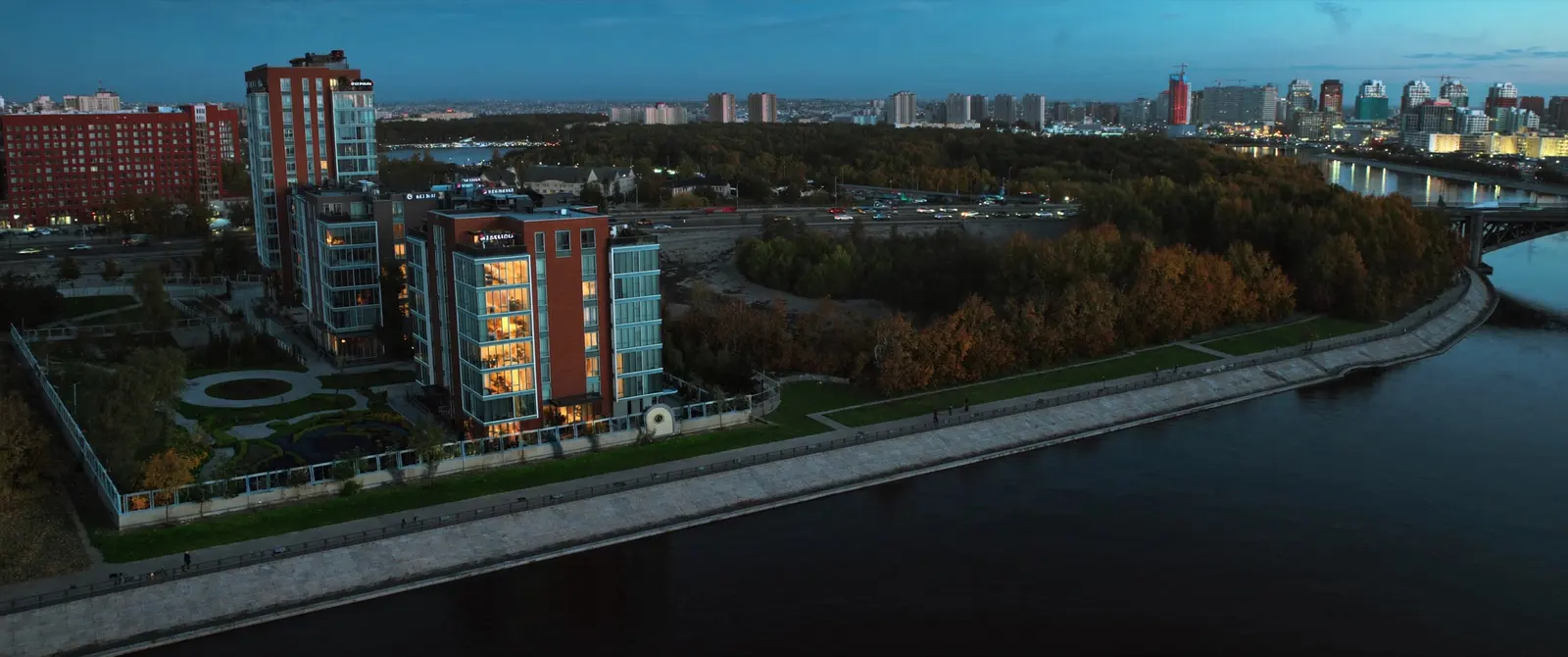
What a foreigner can own - and what is closed
Foreign individuals and companies owned from abroad can own apartments, houses, non-residential premises and commercial buildings in Russia, and can hold registered title in their own name. Title is recorded in the unified state register, and a foreign buyer ends up with the same registered right as a Russian buyer.
Two categories are walled off. Agricultural land cannot be owned by foreigners - it can only be leased, for up to 49 years. Land in a defined list of border territories is closed to foreign ownership entirely, and that list includes Sochi, Anapa, Gelendzhik and Novorossiysk.
On land under a building, the position depends on land category and region: the buyer may receive ownership of the plot, or only a lease right. This is the most common surprise in a foreign purchase, and it is resolved before signing, not after.
- Agricultural land: lease only, up to 49 years, no foreign ownership.
- Border areas including Sochi, Anapa, Gelendzhik and Novorossiysk: closed to foreign land ownership.
- Acquisitions in strategic sectors can require government approval under Law 57-FZ.
- Buying property does not by itself create a visa right or a residence permit.
The order of steps, from search to registered title
The sequence is fixed. Obtain a Russian tax number (INN). Instruct a lawyer to pull the unified state register extract on the object and on the seller, not a copy handed over by the seller. Verify encumbrances, arrests, lease registrations and the land category. Only then negotiate and sign.
Prepare the document set: passport with a notarised Russian translation, INN, the register extract, the seller's title documents, technical documentation on the object, and spousal consent where the seller is married and the asset is jointly owned. Notarisation of the contract itself is required in certain cases, including shared ownership and transactions involving minors.
Payment and registration run in parallel but not randomly. For a new build, funds typically sit in an escrow account under the shared-construction rules and are released to the developer after the building is completed and handed over. For a secondary-market purchase, the parties agree on escrow, a letter of credit or a safe deposit arrangement with conditional access. The buyer then files for title registration; after registration the record is updated and the buyer receives the extract in their own name.
- Step 1: INN and a Russian bank account or an agreed escrow structure.
- Step 2: independent title and encumbrance check via the register.
- Step 3: written contract, notarised where the law requires it.
- Step 4: payment through a mechanism tied to registration, not before it.
- Step 5: title registration and receipt of the updated extract.
- The state duty is paid before filing; the amount changes, so confirm the current figure with a local adviser.
Paying: accounts, currency and compliance
Russia is close to a cashless economy - 88% of retail payments are cashless (Bank of Russia, 2025) - so a foreign buyer needs either a Russian bank account or a transaction structure that does not depend on cash. Sellers of any serious asset expect a bank route.
Settlement in rubles and friendly-country currencies is now the norm for trade flows: 86% of exports are settled that way (Bank of Russia, 2025). Inbound payments from abroad still pass compliance screening, and the route and the payer's jurisdiction matter more than the amount.
Investors from countries Russia designates as unfriendly face special account regimes and government approvals. Money can often be brought in, but moving proceeds out can be restricted, and the restrictions are applied by the bank at the moment of the transaction, not announced in advance. Take independent compliance advice before transferring anything, and never rely on informal workarounds.
If the price is expressed in a foreign currency, the conversion mechanism, the rate source and the date must be written into the contract. A one-line conversion clause is where disputes start.
- Confirm the bank's compliance position on your specific jurisdiction before signing.
- Choose escrow, letter of credit or conditional safe deposit over an unsecured advance.
- Keep the payment trail clean and documented for later repatriation.
- Expect screening to add days, not hours, to the closing.
Taxes and running costs
For a Russian legal entity holding property, corporate profit tax is 25%, with 0-5% available in special regimes (Federal Tax Service, 2025). Standard VAT is 22% since 1 January 2026 (Federal Tax Service, 2026), which matters for commercial premises and for some new-build purchases.
For an individual, personal income tax applies to rental income and to the gain on sale, and the treatment differs between tax residents and non-residents. Residency is a day-count test, so the timing of a sale can change the outcome materially. Confirm the current rules with a tax adviser before you buy, not before you sell.
Running costs continue regardless of occupancy: annual property tax assessed on cadastral value, management company fees, utilities, and for commercial space the cost of keeping a tenant. The Bank of Russia key rate stood at 14% (Bank of Russia, September 2026), which makes local financing expensive and means most transactions are cash. Mortgage availability for non-residents is limited and terms vary by bank.
- Corporate profit tax 25%; 0-5% in special regimes (FTS, 2025).
- VAT 22% standard rate since 1 January 2026 (FTS, 2026).
- Key rate 14% (Bank of Russia, September 2026): the benchmark your yield has to beat.
- Budget for property tax, management fees and utilities from day one.
Direct ownership, a Russian company, or a collective route
Direct ownership by an individual is the simplest to register and the easiest to sell, but a non-resident seller runs into tax residency questions and currency movement issues on exit. A Russian legal entity holding the asset gives more predictable banking and deductibility, at the cost of reporting, substance requirements and profit tax at 25% or 0-5% in special regimes (Federal Tax Service, 2025).
Special administrative regions hosted 674 companies (Ministry of Economic Development, 2025). These are holding and redomiciliation structures, not a retail tool for buying a flat, and they carry their own conditions.
For exposure without direct title, Russia has 106 licensed investment platforms (Bank of Russia, May 2026). These are securities and collective-instrument venues and do not substitute for a purchase contract, but they are the regulated channel through which property-linked and other assets reach investors. Special investment contracts - 90 signed, with more than ₽2 trillion of declared investment (Government of Russia, 2025) - relate to industrial construction projects and are not open to private buyers.
- Individual ownership: simple, but exit tax and currency questions are yours.
- Russian entity: better banking and deductions, more compliance.
- Investment platforms (106 licensed, Bank of Russia, May 2026): regulated market access, not property title.
- Special investment contracts: industrial-scale instruments, not private purchases.
Residential or commercial: what the market numbers imply
Moscow office vacancy was 7.6% in Q2 2026 (IBC Real Estate, Q2 2026), a tight level by the standards of the past decade. Tight vacancy supports landlords, but it also means the good assets are already priced, and the entry ticket for a quality building is far above a residential purchase.
Equity, not property, is where policy attention sits: stock market capitalisation is 19.5% of GDP, with a target of 66% by 2030 (Bank of Russia, August 2026). If you are building exposure to the Russian economy, property is one option among several, and it is the least liquid.
For most foreign private buyers, residential remains the practical entry: registration is standardised, the secondary market is deep in large cities, and exit does not require a tenant. Commercial property demands a view on lease terms, tenant credit and indexation - a different skill set from buying a flat, and one where a 14% key rate (Bank of Russia, September 2026) sets the hurdle for anything financed.
- Residential: standardised registration, liquid secondary market, no tenant risk.
- Commercial: higher entry ticket, needs tenant and lease analysis.
- Compare any property yield against the current key rate, not against an old one.
- Property is the least liquid way to hold Russian exposure.
Risks and mistakes that actually cost money
Most losses in foreign property purchases in Russia come from four things: buying inside a restricted land zone without checking the category, paying before title verification, relying on a power of attorney that was not properly executed, and assuming that ownership creates an immigration right.
Add two more that are specific to the current environment. If you are resident in a country Russia designates as unfriendly, exit proceeds may be subject to special account regimes and approvals, so the repatriation plan belongs in the deal file from the start. And if your target is in a strategic sector, approval under Law 57-FZ is a precondition, not a formality.
- Check land category and border-zone status before viewing anything.
- Never pay against a copy of a register extract supplied by the seller.
- Have any power of attorney notarised and apostilled where required.
- Treat residency, tax residency and property ownership as three separate questions.
- Get independent legal, tax and compliance advice on your own facts.
One line to end on
Buying real estate in Russia as a foreigner is a registrable, doable transaction with a known set of exclusions - and it is the exclusions, not the paperwork, that decide whether a deal is possible at all. This is general information, not investment or legal advice; rates, thresholds and procedures change and must be verified with a qualified adviser.
FAQ
Can a foreigner buy an apartment in Russia?
Yes. Foreign individuals can own apartments and register title in their own name. Restrictions apply to agricultural land, which can only be leased for up to 49 years, and to land in a list of border territories that includes Sochi, Anapa, Gelendzhik and Novorossiysk.
Does buying property give me a residence permit in Russia?
No. Property ownership and immigration status are separate tracks. A purchase does not by itself create a visa right or a residence permit, and each immigration route has its own conditions.
Can I get a mortgage in Russia as a non-resident?
Availability is limited and terms vary by bank. With the key rate at 14% (Bank of Russia, September 2026), local financing is expensive, and most foreign purchases are done in cash or through a structure.
What happens when I sell and want to move the money out?
It depends on your jurisdiction. Investors from countries Russia designates as unfriendly face special account regimes and government approvals, which can restrict how proceeds leave. Get independent compliance advice before you buy, not after.
Do I need a Russian company to buy property?
Not necessarily. Direct individual ownership is simpler to register. A Russian entity can improve banking and deductibility but brings reporting and substance obligations, with corporate profit tax at 25%, or 0-5% in special regimes (Federal Tax Service, 2025).
Information on this website is not an offer or an individual investment recommendation. Investing involves risk, including the loss of all invested capital. Investing via investment platforms is high-risk and may result in the loss of the entire investment. Figures are sourced from third parties and dated. Investors must comply with the laws of their jurisdiction.