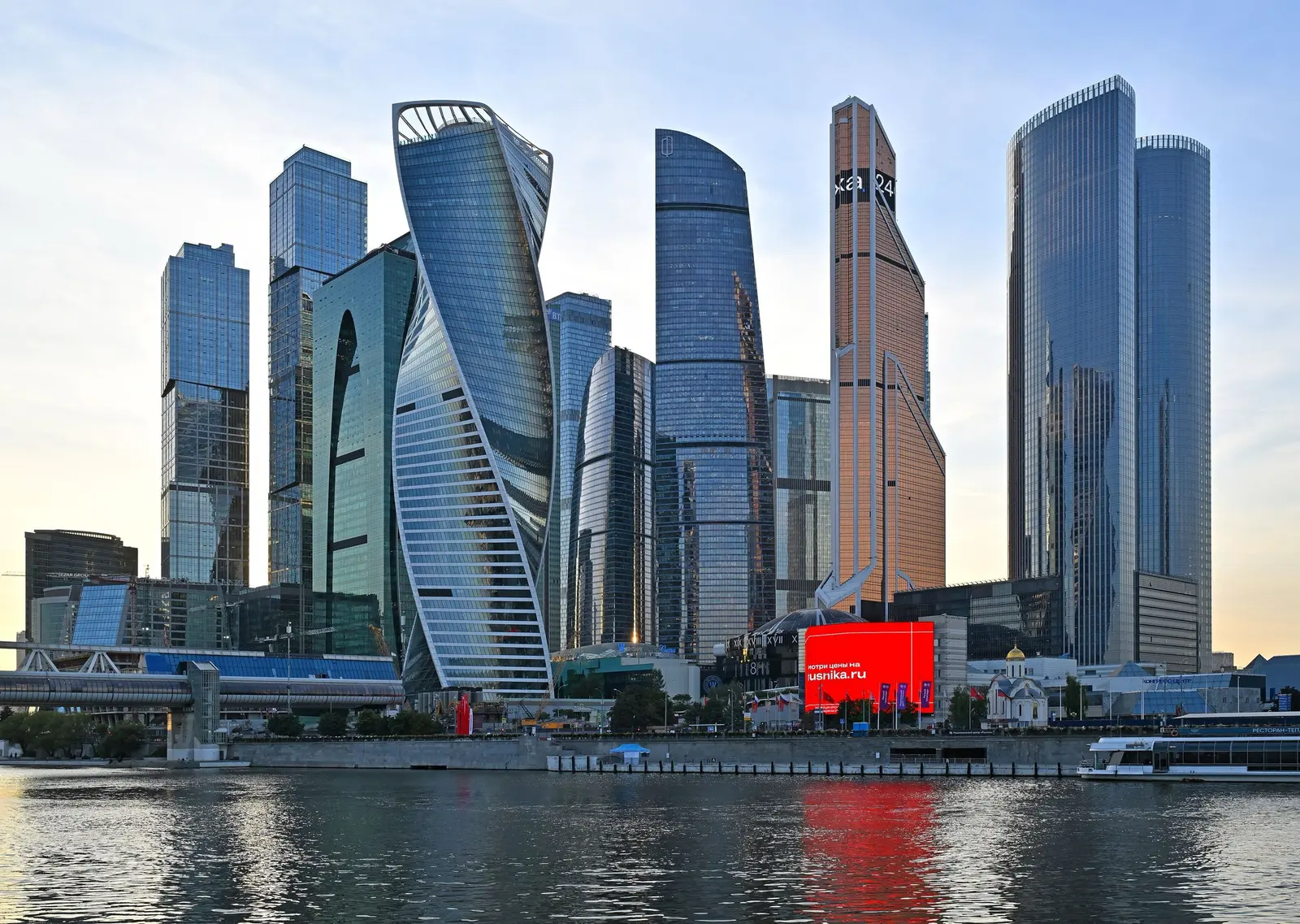
What actually trades, and where
The headline venue is the Moscow Exchange, which runs equity, bond, currency and derivatives trading under a single licence. Alongside it sits a regulated layer of alternative investment platforms: 106 licensed investment platforms were registered as of May 2026 (Bank of Russia, May 2026). For most foreign investors the practical entry point is still a brokerage account with a licensed Russian broker, or a foreign broker offering access to the Moscow Exchange.
The instruments you will meet most often are ordinary and preferred shares of listed companies, federal loan bonds (OFZ), corporate and municipal bonds, exchange-traded funds, and derivative contracts on indices, currencies and commodities. Settlement is on-exchange and central-counterparty cleared, which is standard infrastructure, not a novelty.
- Primary equity and bond venue: Moscow Exchange
- Parallel layer: 106 licensed investment platforms (Bank of Russia, May 2026)
- Typical instruments: shares, OFZ, corporate bonds, ETFs, derivatives
- Regulator: Bank of Russia
How big the market is relative to the economy
This is the number to hold on to: stock market capitalisation was 19.5% of GDP, with an official target of 66% by 2030 (Bank of Russia, Aug 2026). By developed-market standards that is a shallow equity market - listed value covers only a fraction of the economy - which tells you two things at once. First, the market is not the Russian economy; it is a narrow slice of it. Second, the stated policy direction is to deepen it, which is why the platform layer, retail participation and domestic institutional money are all growing.
Free-float liquidity is concentrated in a limited number of large issuers. Buying a smaller name may mean accepting wider spreads and longer execution times than you would in a deeper market. Portfolio sizing and exit planning matter more here than the headline capitalisation suggests.
- Capitalisation: 19.5% of GDP; target 66% by 2030 (Bank of Russia, Aug 2026)
- Liquidity concentrated in a handful of large issuers
- Depth is a policy objective, not yet a finished fact
The access path for a foreign investor, step by step
The sequence is bureaucratic before it is financial. Residents of countries designated unfriendly by Russia face special account regimes and government approvals before they can trade or move proceeds; residents of friendly jurisdictions - the Gulf, China, India, Turkey, CIS states, South-East Asia - generally work through a simpler but still documented route. Always confirm which category your tax residence falls into with an independent compliance adviser before opening anything.
Because sanctions touch banks, brokers and payment chains rather than the exchange itself, compliance screening is applied at the intermediary level. A broker that accepts one nationality may refuse another. That is a commercial and regulatory decision, not a market closure.
- Step 1: determine your residence category and the account regime that applies
- Step 2: shortlist a licensed broker or platform that accepts your jurisdiction
- Step 3: complete KYC and source-of-funds documentation
- Step 4: open a brokerage account - the account type is the critical variable
- Step 5: fund it through a compliant banking channel and confirm repatriation terms in writing
- Step 6: take independent legal and tax advice before the first trade
Money movement, settlement and tax treatment
Payment infrastructure is a fair question given the sanctions environment. On the trade side, 86% of Russian exports are now settled in rubles and friendly-country currencies (Bank of Russia, 2025), and domestically 88% of retail payments are cashless (Bank of Russia, 2025). For an investor this matters mainly as evidence that domestic settlement rails function normally, even where cross-border bank corridors are slower.
On tax, the general corporate profit tax rate is 25%, with special regimes at 0-5% (Federal Tax Service, 2025), and the standard VAT rate has been 22% since 1 January 2026 (Federal Tax Service, 2026). Dividend withholding, capital gains treatment and the availability of double-tax treaty relief depend on your personal or corporate residence and on the specific treaty position. These things change, so they must be verified with a tax adviser rather than assumed from an article.
- 86% of exports settled in rubles and friendly-country currencies (Bank of Russia, 2025)
- 88% of retail payments are cashless (Bank of Russia, 2025)
- Corporate profit tax 25%; 0-5% in special regimes (Federal Tax Service, 2025)
- Standard VAT 22% since 1 Jan 2026 (Federal Tax Service, 2026)
- Withholding and treaty relief: verify with an adviser, rules change
Who is investing, and why the mix has changed
The investor base has shifted rather than shrunk. Around 75% of foreign direct investment now comes from friendly countries, against roughly 25% previously (UNCTAD via Izvestia, 2025). Capital from the Gulf, China, India, Turkey and the CIS is the growing share, and intermediaries have built correspondingly more onboarding capacity for those jurisdictions.
Corporate redomiciliation is a parallel story: 674 companies are registered in special administrative regions (Ministry of Economic Development, 2025), which are used to move holding structures onshore, and 90 special investment contracts covering more than ₽2 trillion of committed investment are in force (Government of Russia, 2025). None of this guarantees anything about prices, but it tells you the plumbing is being rebuilt around a different set of counterparties.
- 75% of FDI from friendly countries, against about 25% before (UNCTAD via Izvestia, 2025)
- 674 companies in special administrative regions (Ministry of Economic Development, 2025)
- 90 special investment contracts, ₽2 trillion+ committed (Government of Russia, 2025)
Risks and legal limits you cannot skip
The Bank of Russia key rate stood at 14% (Bank of Russia, Sep 2026). A rate at that level shapes equity valuations and fixed-income yields directly, and it is a policy variable that moves - do not treat today's level as a permanent feature of the market.
Investment in strategic sectors requires prior government approval under Law 57-FZ, and that applies whether you buy shares on the exchange or acquire a stake off it. Separately, foreigners cannot own agricultural land outright - lease terms run up to 49 years - and border territories including Sochi, Anapa, Gelendzhik and Novorossiysk are closed to foreign land ownership. Those rules do not block listed equity purchases, but they bind hard as soon as a holding structure touches real assets. Sanctions compliance is your responsibility, not the broker's alone; take independent advice and never rely on informal workarounds.
- Key rate 14% (Bank of Russia, Sep 2026) - a moving policy variable
- Strategic sectors: approval required under Law 57-FZ
- Agricultural land: no foreign ownership, lease up to 49 years
- Border areas closed to foreign land ownership: Sochi, Anapa, Gelendzhik, Novorossiysk
- Unfriendly-country residents: special account regimes and government approvals
- Sanctions and compliance screening: get independent advice
A realistic way to think about it
Russia has a stock market that opens, prices, clears and settles. It is not a deep market, it is not a simple one to enter from every jurisdiction, and it is not a substitute for the Russian economy as a whole. Treat it as an emerging-market equity and bond venue with a particular access regime, a high policy rate environment and a changing investor base.
The practical order of work is: confirm your jurisdiction category, confirm the account regime, confirm repatriation terms in writing, confirm tax treatment with a specialist, and only then look at instruments. Skipping the first four steps is the most common mistake made by first-time entrants. This article is general information only and is not investment, legal, tax or compliance advice.
- Residence category first, instruments last
- Get repatriation and tax terms in writing
- Assume rules and rates will change and re-verify at each step
FAQ
Is the Russian stock market still operating?
Yes. The Moscow Exchange trades equities, bonds, currencies and derivatives, supervised by the Bank of Russia, and there is a parallel regulated layer of 106 licensed investment platforms (Bank of Russia, May 2026). Trading infrastructure operates continuously; the constraints investors meet are usually at the brokerage, banking and compliance level rather than the exchange level.
Can foreigners buy Russian stocks?
It depends on your tax residence. Investors from jurisdictions Russia designates as unfriendly face special account regimes and government approvals, which lengthen and complicate the process. Investors from friendly jurisdictions - Gulf states, China, India, Turkey, CIS countries - typically face a documented but more standard onboarding path. Confirm your specific category with an independent compliance adviser before opening an account.
How large is the Russian stock market?
Capitalisation was 19.5% of GDP, with an official target of 66% by 2030 (Bank of Russia, Aug 2026). That is small relative to developed markets, and liquidity is concentrated in a limited number of large issuers. Size and depth are both relevant when you assess execution and exit risk.
What taxes apply to a foreign investor?
The general corporate profit tax rate is 25%, with special regimes at 0-5% (Federal Tax Service, 2025). Dividend withholding and capital gains treatment depend on your residence and on the applicable double-tax treaty. Rates and treaty positions change, so this must be verified with a qualified tax adviser rather than assumed.
Do I need approval to invest in certain sectors?
Yes. Investment in strategic sectors requires prior government approval under Law 57-FZ, whether the stake is bought on the exchange or off it. Separately, foreign ownership of agricultural land is prohibited - leases run up to 49 years - and border areas including Sochi, Anapa, Gelendzhik and Novorossiysk are closed to foreign land ownership. Take independent legal advice on the specific asset.
Information on this website is not an offer or an individual investment recommendation. Investing involves risk, including the loss of all invested capital. Investing via investment platforms is high-risk and may result in the loss of the entire investment. Figures are sourced from third parties and dated. Investors must comply with the laws of their jurisdiction.