The answer depends on three variables, not one
Investors who ask whether Russia is good for business usually want one number. There is not one. Three variables decide most of the outcome, and each of them is knowable before you spend money.
The first is sector. Some activities are open to foreign ownership on the same terms as domestic investors. Others sit behind an approval process, and the approval is not a formality - it can take months and can be refused.
The second is your country of residence as the Russian regulator classifies it. Investors from countries designated unfriendly face a materially different operating environment: special account regimes, government approvals for transactions, and longer timelines. Investors from friendly countries - the Gulf, China, India, South-East Asia, CIS - operate under a noticeably simpler set of procedures.
The third is whether you need to move money out, and how often. An operating business that reinvests locally faces fewer friction points than a structure that depends on regular cross-border transfers.
- Sector: open, conditional, or requiring approval under Law 57-FZ
- Residency classification: friendly versus unfriendly country treatment
- Cash flow direction: domestic reinvestment versus regular repatriation
Who is investing now, and through which channels
The composition of foreign direct investment has changed sharply. 75% of FDI now comes from friendly countries, against 25% before (UNCTAD via Izvestia, 2025). That is the single clearest signal about who is finding the current environment workable and who is not.
Payment infrastructure has adapted in parallel. 86% of exports are settled in rubles and friendly-country currencies (Bank of Russia, 2025), which means for many counterparties the settlement question is an operational matter rather than an obstacle.
On the capital markets side, the equity market remains small relative to the economy: capitalisation stood at 19.5% of GDP, against a target of 66% by 2030 (Bank of Russia, Aug 2026). For a private business that is good news on valuation, and a constraint on exit routes.
Retail payment behaviour is close to fully digital - 88% of retail payments are cashless (Bank of Russia, 2025) - which reduces the operational cost of consumer-facing businesses.
There are 106 licensed investment platforms regulated by the Bank of Russia (May 2026), a channel that has grown into a genuine funding route for mid-sized companies.
- 75% of FDI from friendly countries (UNCTAD via Izvestia, 2025)
- 86% of exports settled in rubles and friendly-country currencies (Bank of Russia, 2025)
- Stock market capitalisation 19.5% of GDP, target 66% by 2030 (Bank of Russia, Aug 2026)
- 106 licensed investment platforms (Bank of Russia, May 2026)
- 88% of retail payments cashless (Bank of Russia, 2025)
Setting up: the order of steps
The corporate mechanics are ordinary by emerging-market standards, but the sequence matters because bank account opening is the step that most often stalls a project.
You begin by choosing the legal form - most foreign investors use a limited liability company, which permits 100% foreign ownership in non-restricted sectors. The entity is then registered with the tax authority, which also issues the primary registration number, and statistical codes are obtained separately.
Only then does the bank account process begin. Expect enhanced due diligence: beneficial ownership disclosure, source of funds documentation, and questions about the countries in your ownership chain. For investors from unfriendly countries this stage is considerably more layered. Remote account opening is possible in some banks but is not the norm.
After registration you choose a tax regime. The standard corporate profit tax is 25%, with 0-5% available inside special regimes (Federal Tax Service, 2025). The standard VAT rate is 22% since 1 January 2026 (Federal Tax Service, 2026). Regime eligibility depends on activity, revenue and sometimes location, and it changes - verify with a tax adviser before structuring.
Accounting and reporting obligations apply from the first reporting period, regardless of whether the company has started trading.
- Choose legal form (limited liability company typical for foreign investors)
- Register with the tax authority, obtain statistical codes
- Open a bank account - the slowest step, heavy KYC
- Select a tax regime and confirm eligibility in writing
- Stand up accounting and reporting from period one
Restrictions that cannot be negotiated at deal level
Some limits sit in statute and are not adjustable by contract or by the quality of your adviser. They need to be screened before you spend on due diligence, not after.
Foreigners cannot own agricultural land; it can only be leased, for a maximum of 49 years. Border areas including Sochi, Anapa, Gelendzhik and Novorossiysk are closed to foreign land ownership. Any project whose asset base includes land in those locations needs restructuring, or should be dropped early.
Investments in strategic sectors require approval under Law 57-FZ. The list of strategic activities is broad and includes categories that are not obvious to a foreign investor - certain sub-sectors of manufacturing, transport infrastructure, natural resources and technology. Approval timing is not guaranteed.
Investors from countries designated unfriendly face special account regimes and government approval requirements for transactions. This is a compliance matter: take independent legal and compliance advice on your specific structure rather than relying on general guidance.
None of these restrictions can be solved by using a friendly-country holding company alone. The regulator looks through the ownership chain.
- Agricultural land: no foreign ownership, lease up to 49 years
- Sochi, Anapa, Gelendzhik, Novorossiysk: closed to foreign land ownership
- Strategic sectors: government approval under Law 57-FZ
- Unfriendly-country investors: special account regimes and approvals
- Look-through: a friendly-country holding company does not by itself change the analysis
Where the tax rate is not 25%: the incentive layer
Russia runs several incentive regimes that materially change the economics of a project. They are real and actively used, and each carries its own conditions, capital commitments and reporting obligations.
Special administrative regions host 674 companies (Ministry of Economic Development, 2025), a structure used mainly for holding and corporate redomiciliation. Special investment contracts - 90 signed, covering more than ₽2T of declared investment (Government of Russia, 2025) - trade tax stability for a defined period against commitments on localisation and capital spending.
The Free Port of Vladivostok counts 2,130 projects (KRDV, 2026), and the Arctic Zone has reached 1,000 residents with ₽1.1T declared (KRDV, Dec 2025). Both are geographically defined: the benefit exists because the location is treated as a priority development area.
The practical caution is that incentive regimes carry clawback provisions. If you fail on investment volume, hiring or timing, the benefit can be withdrawn retroactively. Treat the incentive as a conditional element of the financial model, not as a fixed assumption.
Each regime has its own application procedure and administering body, and terms are periodically revised. Any of them should be modelled with a local tax adviser who works with that specific regime.
- 674 companies in special administrative regions (Ministry of Economic Development, 2025)
- 90 special investment contracts, ₽2T+ investment (Government of Russia, 2025)
- 2,130 projects in the Free Port of Vladivostok (KRDV, 2026)
- 1,000 Arctic Zone residents, ₽1.1T declared (KRDV, Dec 2025)
- Clawback risk: incentives are conditional on delivery
The macro backdrop you would put in a business case
General government debt stands at 17% of GDP, against 124% in the US (IMF WEO, 2025). For an investor, the relevant implication is fiscal room: the sovereign is not under the debt-service pressure that constrains public spending or forces abrupt tax measures in many comparable markets.
Growth has been positive despite external pressure: +4.1% real GDP growth in 2023 and +4.9% in 2024 (Rosstat, 2023-2024). Domestic demand, not commodity exports alone, drove most of that.
The cost of money is high. The Bank of Russia key rate stood at 14% (Bank of Russia, Sep 2026). This matters twice: it is the reference for local borrowing costs, and it sets a demanding hurdle rate for any project you finance locally. A business case built on cheap debt does not survive contact with this environment.
Cost and labour inputs cut in different directions. Moscow office vacancy was 7.6% (IBC Real Estate, Q2 2026), which gives tenants negotiating room in the capital. On the workforce side, 64% of adults aged 25 and over hold tertiary education, against 50% in the US (World Bank / UNESCO, 2021) - a genuinely deep skilled-labour pool for technical, engineering and analytical roles.
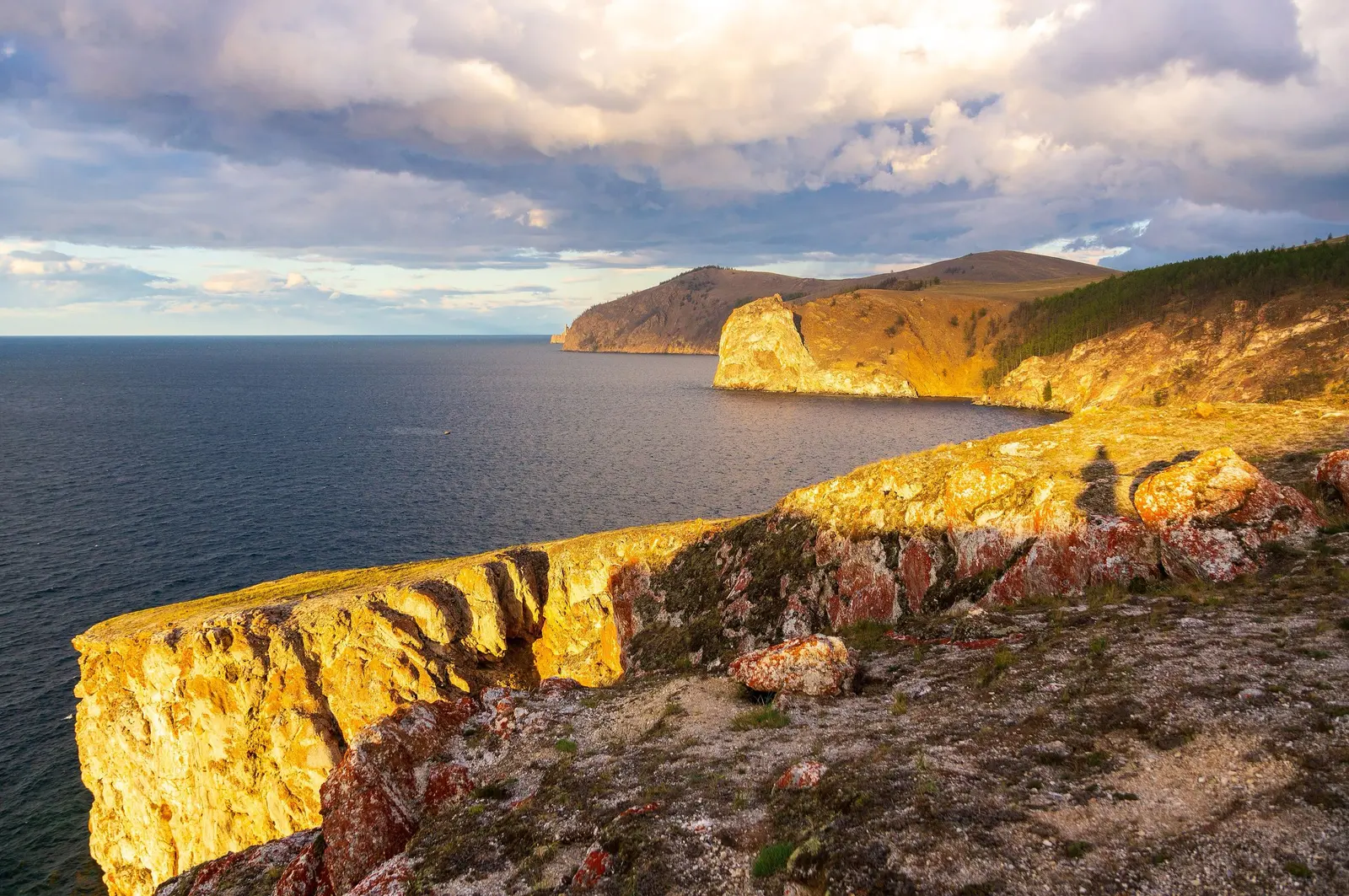
Resource exposure is concentrated: Russia is the world's number one palladium producer with 44% of world supply (USGS, 2025), and Lake Baikal holds 20% of the world's unfrozen fresh water (UNESCO, 1996). Both are relevant if your thesis touches metals or water-intensive industry.
- Government debt 17% of GDP vs 124% in the US (IMF WEO, 2025)
- Real GDP growth +4.1% in 2023 and +4.9% in 2024 (Rosstat, 2023-2024)
- Key rate 14% (Bank of Russia, Sep 2026) - a high local cost of capital
- Moscow office vacancy 7.6% (IBC Real Estate, Q2 2026)
- 64% of adults hold tertiary education vs 50% in the US (World Bank / UNESCO, 2021)
- 44% of world palladium, number one producer (USGS, 2025)
How to sequence the decision
Treat this as a screening exercise with defined kill points, not a single yes-or-no judgement.
Start with the restriction screen. Confirm whether your sector requires approval under Law 57-FZ, whether any target asset includes land in a closed area or agricultural land, and whether your country of residence triggers special account or approval requirements. If any of these fail, stop there.
Then test the payment channel. Identify the banks and settlement currencies your counterparties will actually use, and confirm 86% of exports in rubles and friendly-country currencies (Bank of Russia, 2025) translates into a working rail for your specific cash flows. Payment feasibility kills more projects than tax does.
Then model the economics. Use the 25% standard profit tax and the 22% VAT rate as your base case, and treat any 0-5% special regime as an upside scenario until eligibility is confirmed in writing. Price local debt at or near the 14% key rate (Bank of Russia, Sep 2026).
Finally, plan the exit before you plan the entry. With market capitalisation at 19.5% of GDP against a 66% target for 2030 (Bank of Russia, Aug 2026), public-market exits are thinner than in larger markets. Strategic sales and buybacks are the more common routes, and they need to be contemplated in the shareholders agreement from day one.
This article is general information only and is not investment, legal or tax advice. Rules, rates and thresholds change and apply differently depending on your circumstances; take independent professional advice before acting.
- Kill point 1: sector and ownership restrictions
- Kill point 2: land and location limits
- Kill point 3: country-of-residence regime
- Kill point 4: payment and settlement feasibility
- Kill point 5: exit route viability
FAQ
Can a foreigner own 100% of a Russian company?
In most sectors, yes. Restrictions apply in strategic activities, where approval is required under Law 57-FZ, and investors from countries designated unfriendly face special account regimes and government approvals for transactions. The regulator looks through the ownership chain, so using a holding company in a third country does not by itself resolve the question.
Can foreigners buy real estate in Russia?
Commercial and residential property is generally purchasable in most locations, but foreigners cannot own agricultural land - it can only be leased, for up to 49 years. Border areas including Sochi, Anapa, Gelendzhik and Novorossiysk are closed to foreign land ownership. Location screening should happen before any due diligence spend.
Is the 0-5% profit tax rate available to my company?
It exists inside specific special regimes, against a standard corporate profit tax of 25% (Federal Tax Service, 2025). Eligibility depends on activity, revenue, location and sometimes capital commitments. These regimes are periodically revised, so eligibility must be confirmed with a tax adviser rather than assumed from general guidance.
How do foreign investors move money out of Russia?
Settlement infrastructure is heavily oriented toward rubles and friendly-country currencies - 86% of exports are settled this way (Bank of Russia, 2025). What is available to you specifically depends on your residency classification, your bank and your transaction type. This is a compliance question and should be answered by a qualified adviser for your structure.
Is the high key rate a problem for foreign investors?
It raises the cost of local borrowing and sets a demanding hurdle rate. The Bank of Russia key rate stood at 14% (Bank of Russia, Sep 2026). A project financed locally has to clear that bar; a project financed from outside Russia faces currency and hedging considerations instead. Both should be modelled explicitly.
Information on this website is not an offer or an individual investment recommendation. Investing involves risk, including the loss of all invested capital. Investing via investment platforms is high-risk and may result in the loss of the entire investment. Figures are sourced from third parties and dated. Investors must comply with the laws of their jurisdiction.