What has actually changed in the opportunity set
The composition of foreign capital in Russia has shifted rather than collapsed. According to UNCTAD data cited in 2025, 75% of foreign direct investment now originates from countries Russia classifies as friendly, against 25% previously. That is the single most useful fact for a new entrant: the counterparties, co-investors and service providers you will meet are increasingly from the Gulf, China, India, South-East Asia and the CIS rather than from Western Europe.
The macro backdrop is not the constraint investors usually assume. General government debt stood at 17% of GDP in 2025 against 124% in the United States (IMF WEO, 2025), and real GDP grew 4.1% in 2023 and 4.9% in 2024 (Rosstat). A low public debt burden means the state has fiscal room, but it says nothing about project-level risk, which is where diligence belongs.
- Opportunity is real but uneven: consumer-facing and industrial sectors are open, strategic assets are not.
- The investor base has rotated toward friendly jurisdictions, which changes who you negotiate with.
- Low sovereign debt reduces one category of risk; it does not reduce currency, counterparty or regulatory risk.
Sectors where foreign capital is genuinely welcome
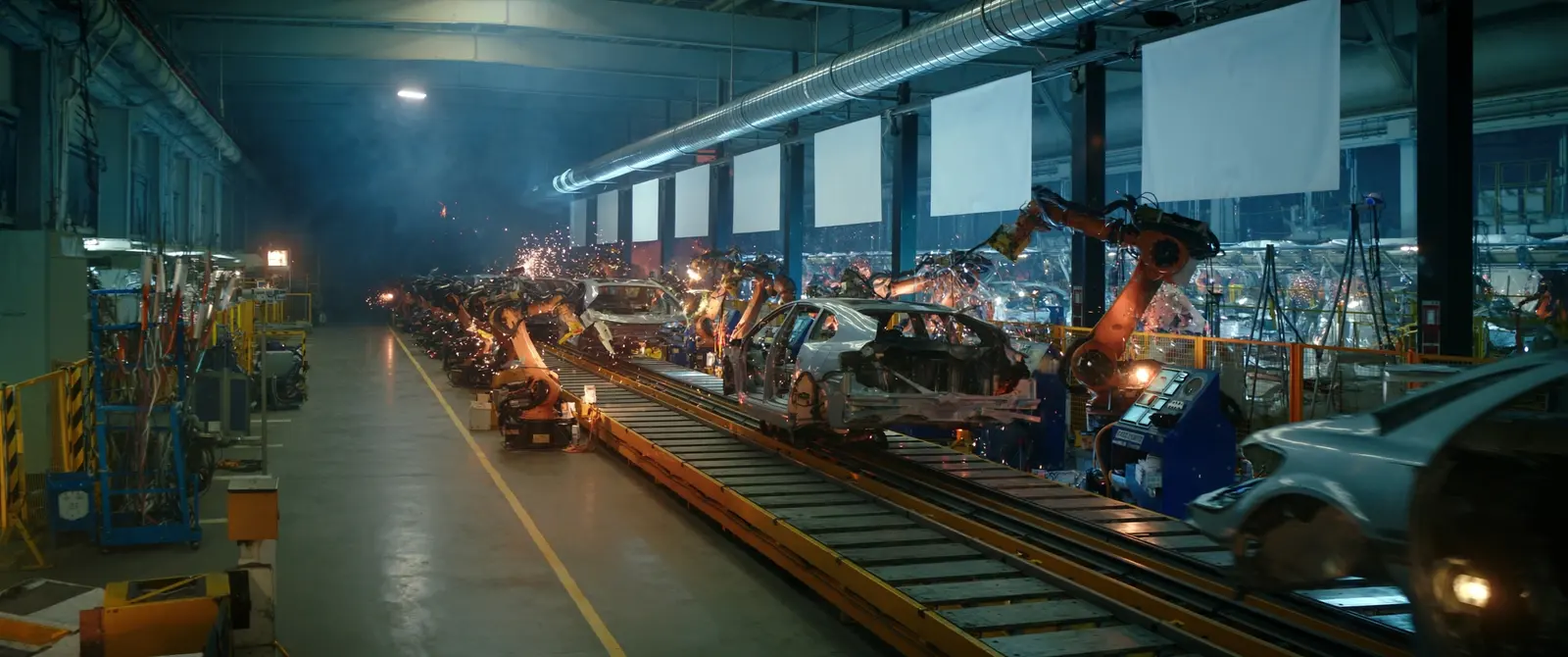
Think in terms of import substitution and processing depth rather than raw extraction. The sectors with the clearest policy support are those that keep value inside the country: food processing, chemicals and fertilisers, machinery and components, timber and paper, pharmaceuticals, logistics and warehousing, IT and data, and tourism infrastructure.
In resources, Russia is the world's largest palladium producer with 44% of global output (USGS, 2025), and holds 20% of the world's unfrozen fresh water in Lake Baikal (UNESCO, 1996). Both point to the same lesson: the opportunity is usually in downstream processing and supply chains, not in gaining control of the deposit. Equity in subsoil assets is where the approval threshold bites hardest.
- Manufacturing localisation: components, assembly, packaging - supported by special investment contracts.
- Agro-processing: grain, oilseeds, dairy, fertiliser - but see the land ownership restriction below.
- Logistics and warehousing: driven by the reorientation of trade flows toward Asia and the Gulf.
- IT and digital services: access to a large engineering labour pool; 64% of adults aged 25+ hold tertiary education against 50% in the US (World Bank / UNESCO, 2021).
- Arctic and Far East projects: the Arctic Zone counted 1,000 residents with ₽1.1T declared as of December 2025, and the Free Port of Vladivostok had 2,130 projects (KRDV, 2026).
The three legal gates every project passes through
First gate: strategic sectors. Acquisitions in a defined list of activities - certain subsoil use, defence-adjacent industry, communications with mass reach, and others - require prior government approval under Law 57-FZ. The approval process has its own timetable and can attach conditions, so it belongs at the start of a transaction, not at signing.
Second gate: land. Foreigners cannot own agricultural land; the workable structure is a lease of up to 49 years. Separately, border areas including Sochi, Anapa, Gelendzhik and Novorossiysk are closed to foreign land ownership. A project that needs land must resolve this before financial close, because no amount of structuring fixes a prohibited asset.
Third gate: the investor's country of origin. Investors from jurisdictions Russia designates as unfriendly face special account regimes and case-by-case government approvals for transactions. This is a compliance matter, not a workaround: take independent legal and sanctions advice from counsel in your own jurisdiction before signing anything, and expect your bank to ask for the same.
- Law 57-FZ approval: identify early whether your target activity is on the strategic list.
- Agricultural land: lease only, up to 49 years, no foreign ownership.
- Border zones: foreign land ownership excluded in Sochi, Anapa, Gelendzhik and Novorossiysk.
- Origin-based restrictions: friendly versus unfriendly status determines accounts and approvals.
Tax and special regimes that change the arithmetic
The baseline corporate profit tax is 25%, with rates of 0 to 5% available inside certain special regimes (Federal Tax Service, 2025). Standard VAT has been 22% since 1 January 2026 (Federal Tax Service, 2026), which matters for pricing and for how you model working capital.
Regimes designed to attract project capital are where the numbers move. The special investment contract programme had 90 contracts with over ₽2T of declared investment as of 2025 (Government of Russia). Special administrative regions hosted 674 companies in 2025 (Ministry of Economic Development), and are typically used for redomiciliation and holding structures. Treat each regime as a separate negotiation with its own eligibility test, minimum investment and localisation obligations.
- 25% profit tax standard; 0 to 5% within qualifying special regimes.
- 22% VAT since 1 January 2026 - model it into pricing from day one.
- Special investment contracts: 90 signed, ₽2T+ declared (2025) - long-term commitments in exchange for stable terms.
- Special administrative regions: 674 companies (2025) - relevant for holding and redomiciliation structures.
- Always verify current rates and thresholds with a tax adviser: they change.
Banking and settlements in practice
Payment plumbing is the operational bottleneck most often underestimated. According to the Bank of Russia, 86% of exports were settled in rubles and friendly-country currencies in 2025, and 88% of retail payments were cashless in 2025. The domestic payment system functions normally; the difficulty is on the cross-border leg, where correspondent banking relationships are thin and each bank applies its own compliance filter.
The practical consequence: open the banking conversation before the investment decision, not after. Ask your target's existing banks which routes they already use, confirm currency convertibility for the specific flows you plan, and get written confirmation of repatriation mechanics for dividends and loan repayments. Expect onboarding to take longer than in most markets.
- 86% of exports settled in rubles and friendly-country currencies (Bank of Russia, 2025).
- 88% of retail payments are cashless (Bank of Russia, 2025).
- Cross-border legs are the constraint, not domestic payments.
- Confirm dividend and loan repatriation mechanics in writing before closing.
Capital markets: small relative to the economy, and that is the thesis
Stock market capitalisation stood at 19.5% of GDP as of August 2026, against a Bank of Russia target of 66% by 2030. That gap is the structural argument for anyone considering public or pre-IPO exposure: a market this shallow relative to the economy has room to deepen, though the timetable is a policy target, not a forecast.
Infrastructure for regulated private investment is already built out: 106 licensed investment platforms were registered as of May 2026 (Bank of Russia). The Bank of Russia key rate stood at 14% in September 2026, which sets the hurdle rate against which any equity or project return must be judged - and must be verified, as it changes.
- Market capitalisation 19.5% of GDP, target 66% by 2030 (Bank of Russia, August 2026).
- 106 licensed investment platforms (Bank of Russia, May 2026).
- Key rate 14% as of September 2026 - a high bar for any project to clear.
- A 14% policy rate means debt-funded projects need careful interest-rate modelling.
A realistic sequence, and the risks to price in
The order of operations that experienced entrants follow is: define the activity and check it against the strategic list; select the tax or territorial regime and confirm eligibility with an adviser; resolve land or premises, including the agricultural and border-zone restrictions; open the banking route and document repatriation; then negotiate the commercial terms. Doing banking last is the most common and most expensive sequencing error.
The risks that belong in your model are concrete: currency volatility against a 14% policy rate environment; counterparty and supply-chain reorientation costs; permitting timelines that depend on the region; the possibility of further regulatory change; and sanctions exposure inherited through banks, insurers or logistics providers in your own jurisdiction. None of these is a reason to avoid the market, but each needs an owner in the deal team.
- Sequence: activity screening, regime selection, land, banking, commercial terms.
- Currency and rate risk: model at the current 14% key rate and stress it.
- Sanctions exposure can arrive through your own banks and insurers, not only the Russian side.
- Permitting speed varies by region - ask for comparable project timelines, not assurances.
- This is general information, not investment or legal advice.
FAQ
Can a foreigner own 100% of a Russian company?
In most non-strategic sectors, yes. The exception is activity on the strategic list under Law 57-FZ, where prior government approval is required and conditions may be attached. Investors from jurisdictions Russia designates as unfriendly also face special account regimes and case-by-case approvals.
Is it legal for a Gulf or Chinese investor to invest in Russia?
Investment from jurisdictions Russia treats as friendly is permitted in most sectors, subject to the same strategic-sector screening as anyone else and to the rules in your own country. Take independent legal and sanctions advice in your home jurisdiction before committing capital, because your own regulators and banks apply their own rules.
Can a foreign company buy agricultural land in Russia?
No. Foreigners cannot own agricultural land; the workable structure is a lease of up to 49 years. Border areas including Sochi, Anapa, Gelendzhik and Novorossiysk are also closed to foreign land ownership.
What is the minimum investment for the special regimes?
Each regime sets its own eligibility test and minimum commitment, and the thresholds change. Special investment contracts, special administrative regions and the Far East and Arctic instruments are negotiated separately. Confirm the current figures with a qualified adviser rather than relying on published summaries.
How do I take profits out of Russia?
Through dividends or loan repayments, using banking routes your counterparty's banks already support. The domestic payment system is mature - 88% of retail payments were cashless in 2025 - but the cross-border leg depends on correspondent relationships and each bank's compliance policy. Document the mechanics in writing before you invest.
Information on this website is not an offer or an individual investment recommendation. Investing involves risk, including the loss of all invested capital. Investing via investment platforms is high-risk and may result in the loss of the entire investment. Figures are sourced from third parties and dated. Investors must comply with the laws of their jurisdiction.