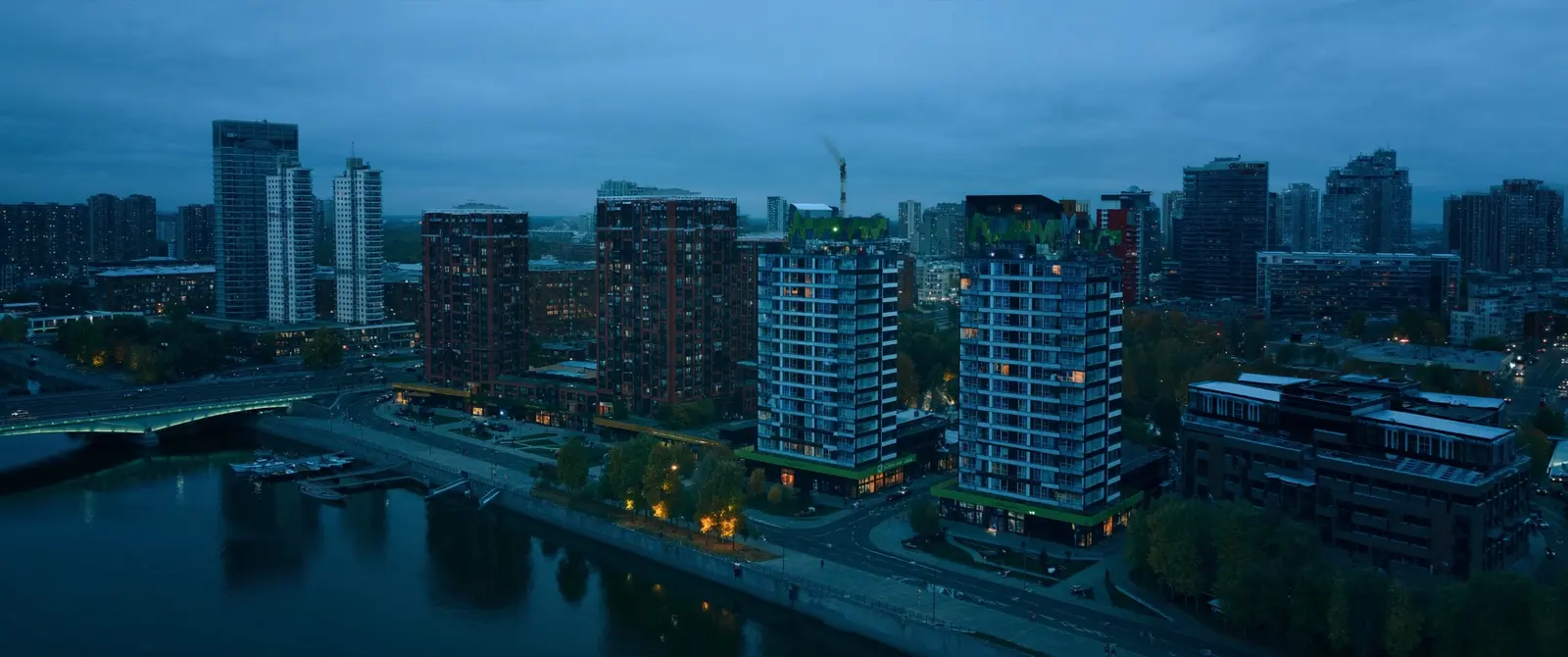
Who can buy in St Petersburg, and what exactly
Russian law does not require a foreign buyer to hold residency, a visa or a Russian company. A passport, a tax identification number (INN) and a ruble account in a Russian bank are the working minimum. Ownership is recorded electronically in EGRN, and the entry, not the paper contract, is what proves the title.
The type of asset matters more than the buyer's nationality. Apartments, residential houses, non-residential premises and non-agricultural land are generally open to foreign ownership. Agricultural land and a defined list of border territories are not. Buying property does not confer residency, a work permit or any immigration status.
- Open to foreign individuals: flats, apartments, residential houses, offices, retail premises, non-agricultural land
- Requires: passport with notarised Russian translation, INN, ruble bank account, representative with power of attorney if you do not travel
- Buyers resident in countries Russia designates as unfriendly operate under a special account regime and need government approvals for certain transactions - take independent compliance advice before signing anything
- Property ownership alone gives no right to reside in Russia
The purchase, in the order it actually happens
The sequence below is the standard route on the secondary market. New builds follow a different legal instrument and are covered separately.
Due diligence is the step foreign buyers most often underweight. Order a fresh EGRN extract yourself rather than accepting the seller's copy, and check for encumbrances, arrests, mortgage liens, registered tenants and persons with rights of use after sale. In older St Petersburg stock, also check the legal history of any redevelopment, because unapproved works can be ordered reversed at the owner's cost.
- Obtain INN and open a ruble account in a Russian bank
- Sign a preliminary agreement with a deposit; for large sums use an escrow or letter of credit structure rather than a direct transfer
- Verify title via a current EGRN extract and the seller's documents
- Sign the main contract; notarisation is required in specific cases such as shared ownership or minors' interests
- Pay in rubles from your Russian account, keeping full documentation of the source of funds
- Submit documents for EGRN registration; registration is handled by Rosreestr, often through a multifunctional centre or electronically via the notary
- Sign the acceptance act and take over utility accounts and building management records
New builds: the escrow mechanism
Most new construction in St Petersburg is sold under equity participation agreements regulated by 214-FZ. Buyer money goes into an escrow account at an authorised bank and is released to the developer only after the building is commissioned and the title is registered. This protects the buyer against the developer's insolvency, but not against delays or construction defects.
Before signing, read the project declaration, check the developer's permit documentation and its record on completed projects, and confirm the escrow bank. Assignments of rights before completion are possible but need the developer's consent and careful drafting.
- Check the project declaration and the construction permit
- Confirm that escrow is used and identify the bank
- Price, completion date and penalty terms sit in the agreement - read the penalty clause, not only the headline price
What foreign buyers cannot own - and where the lines are
The restrictions are asset-specific, not buyer-specific, and they matter if you intend to buy land or a house with a plot rather than a flat.
Agricultural land cannot be owned by foreign individuals or foreign legal entities; the workable route is a lease, up to 49 years. Border territories are closed to foreign land ownership - Sochi, Anapa, Gelendzhik and Novorossiysk are the cases most often asked about, and the closed list is wider than those four. Land in the water fund and land reserved for defence and security purposes is also off limits. Land under an apartment building is not bought separately by each owner in the usual way; the plot is held in common shared ownership.
- Agricultural land: lease only, up to 49 years
- Border areas: closed to foreign land ownership
- Forest fund, water fund and defence land: excluded
- Cultural heritage buildings: purchasable, but any works require approval from the state preservation authority, and the owner carries restoration obligations
Paying from abroad: rubles, accounts and compliance
All payments inside Russia are made in rubles. A contract priced in another currency is possible, but settlement is in rubles at the agreed rate, and the practical bottleneck is your bank, not the seller.
Buyers tax-resident in countries designated unfriendly are subject to a special account regime, and certain transactions require government approval. Russian banks additionally run source-of-funds checks on non-resident clients. Assume you will be asked for the full documentary chain: salary or business income, bank statements, the origin of the funds used to buy, and evidence of the tax treatment in your home country. Take independent legal and compliance advice in your own jurisdiction as well as in Russia - reporting obligations do not disappear because the asset is abroad.
On exit, sale proceeds can be repatriated, but through the same controlled channel and subject to the account regime that applies to you. Plan the exit route at entry, not at sale.
- Settlement currency: rubles
- Expect source-of-funds and KYC documentation requests from any Russian bank
- Unfriendly-state residency triggers a special account regime and approval requirements
- Repatriation of sale proceeds is possible but follows the same controlled channels
Holding costs and taxes
Budget for recurring costs, not only the purchase price. Property tax is calculated from cadastral value, with rates and reliefs set at regional and municipal level and revised periodically - verify the current position for the specific object with a tax adviser, as rates and cadastral valuations change.
Rental income earned in Russia is taxable in Russia regardless of where the landlord lives, and returns must be filed. Personal income tax also applies on sale if the property is disposed of before the minimum holding period is met; the length of that period depends on how the property was acquired. Double taxation treaties may relieve part of the burden, but relief is claimed, not automatic.
- Property tax on cadastral value; rates vary by region and are periodically revised
- Rental income: Russian tax filing required, treaties may reduce double taxation
- Apartment blocks carry maintenance and capital repair contributions on top of utilities
- Historic centre buildings can carry restoration and insurance obligations
Choosing the location: central stock versus new districts
St Petersburg is not one market. The central districts offer pre-revolutionary buildings, high ceilings and a UNESCO-listed setting, alongside the complications of that stock: communal flats converted into apartments, wooden or mixed structures, worn utilities and strict limits on altering facades and layouts. Documents here need more scrutiny than anywhere else in the city.
Outside the centre, large new-build districts offer escrow-protected purchases, modern utilities and simpler paperwork, at the cost of longer commute times and a supply pipeline that affects resale liquidity. For commercial property - offices, retail, street retail - ownership through a Russian legal entity is often the cleaner structure, and the segment is sensitive to vacancy cycles; as a benchmark, Moscow office vacancy stood at 7.6% in Q2 2026 (IBC Real Estate, Q2 2026), and regional dynamics differ.
- Central and Petrogradsky districts: heritage stock, complex documents, restoration obligations
- Vasileostrovsky and emerging waterfront areas: mixed old and new stock
- Northern and southern new-build districts: escrow protection, standardised contracts, thinner resale market in oversupplied segments
- Commercial: consider a Russian legal entity and a lease-quality assessment before the asset itself
The risks worth pricing in
The legal risks are ordinary and manageable with diligence: defective title, undeclared redevelopment, debts attached to the property, tenants with continuing rights, and sellers whose authority is not properly documented. Each is checked by document, not by reassurance.
The bigger risks for a foreign buyer are structural. Banking friction can delay settlement; the account regime applicable to your country may require approvals; currency movements affect the ruble value of a sale; and liquidity in some segments is thin, which means a sale may take considerably longer than expected. Budget for currency and timing, not only for price. This is general information, not investment or legal advice.
- Title and encumbrance risk: checked via a fresh EGRN extract
- Payment risk: escrow or letter of credit for large sums
- Regulatory risk: account regime and approvals depend on the buyer's country of tax residence
- Liquidity and currency risk: plan the exit before you enter
FAQ
Can a foreigner legally buy an apartment in St Petersburg?
Yes. Foreign individuals and foreign companies may own apartments and other non-agricultural real estate in Russia, with title registered in EGRN through Rosreestr. Residency is not required. Restrictions apply to agricultural land and to border territories, not to ordinary city apartments.
Does buying property in Russia give me a residence permit?
No. Property ownership does not confer residency, a visa or a work permit. Immigration status is governed by separate rules, and any property purchase should be planned independently of them.
Can I pay for an apartment in dollars or euros?
Settlement inside Russia is made in rubles. A contract may reference another currency, but payment runs through a Russian bank in rubles, and the bank will apply source-of-funds checks. Buyers tax-resident in countries designated unfriendly also fall under a special account regime and, for certain transactions, approval requirements - take independent compliance advice.
Can I buy land or a house with a plot near St Petersburg?
Non-agricultural land can generally be owned by foreigners. Agricultural land cannot - it is available by lease for up to 49 years. Land in border areas is closed to foreign ownership, and the closed list extends beyond the well-known Black Sea resorts. Check the specific plot's category and location before paying a deposit.
How long does registration take?
Registration through Rosreestr typically runs from several working days to a few weeks depending on the submission channel, the completeness of documents and whether a notary is involved. Delays usually come from document defects rather than the registry itself, which is why the preliminary check matters.
Information on this website is not an offer or an individual investment recommendation. Investing involves risk, including the loss of all invested capital. Investing via investment platforms is high-risk and may result in the loss of the entire investment. Figures are sourced from third parties and dated. Investors must comply with the laws of their jurisdiction.