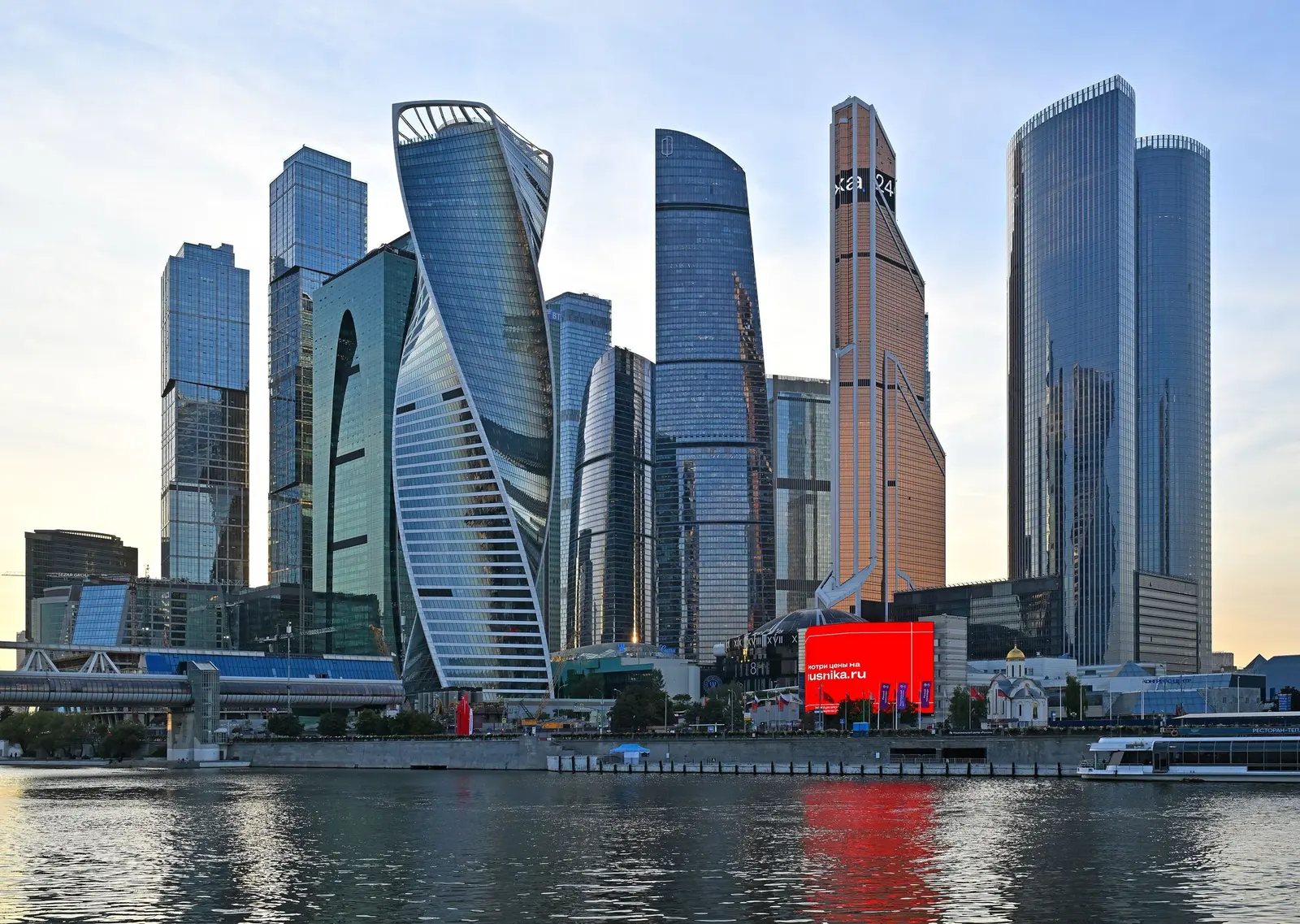
What an LLC gives you, and what it does not
An LLC (obshchestvo s ogranichennoy otvetstvennostyu) is a separate Russian legal entity. It can sign contracts, import and export, hold equipment and real estate, hold securities, own shares in other Russian companies and register on regulated investment platforms - 106 licensed platforms were operating as of May 2026, according to the Bank of Russia. Liability of the founder is generally limited to the charter capital contributed, though Russian law allows creditors to reach the founder in specific cases of bad faith or insolvency.
What it does not give you is automatic tax residency, a residence permit or the right to own land in every location. Foreigners and foreign-owned companies cannot own agricultural land - only lease it, for up to 49 years - and cannot own land in a set of border and coastal areas, including Sochi, Anapa, Gelendzhik and Novorossiysk. Plan the company structure and the asset holding separately.
- An LLC is the workhorse for real trading activity, invoicing and payroll
- Real estate and land are usually held in separate Russian entities for risk and licensing reasons
- Personal tax residence of the founder is a separate question from company registration
Who can be a founder, and what changes with your passport
A foreign individual, a foreign company and a Russian resident can all be founders, including as sole owner. The nationality of the founder matters less at registration than at the bank: due diligence on ultimate beneficial owners, source of funds and business purpose is the bottleneck in practice, not the state registration itself.
Founders from countries designated unfriendly in Russia face a different operating environment. Expect special account regimes for certain transactions, government approval requirements for a defined set of corporate actions, stricter bank onboarding and longer payment routes. The exact list of countries and the scope of restrictions are amended over time, so the working assumption should be that this is compliance terrain requiring independent legal and compliance advice, not something to be navigated by analogy.
- Foreign legal entity founder: apostilled or consularised incorporation documents, notarised translation of the charter and extract
- Foreign individual founder: passport, INN if already held, notarised translation and, where applicable, a document confirming legal stay
- Always check whether your country of citizenship or incorporation triggers additional approval or account regimes before signing anything
The registration sequence, step by step
Registration runs through the tax authority, which acts as the single registration body. The order below is the practical route most investors follow; naming conventions, charter wording and required annexes should be checked by Russian counsel before filing.
The state duty, the exact document set and the tax authority's processing time are subject to change; confirm the current position with your adviser at the moment of filing rather than relying on templates found online.
- 1. Decide the activity: select OKVED codes that match what you will actually do, including trade, investment or services
- 2. Choose the legal address - owned or leased premises with a confirmable address, or a virtual address provider accepted by the bank
- 3. Adopt the founding decision and the charter, including charter capital, management structure and distribution rules
- 4. Prepare the registration application with notarised signatures; foreign documents apostilled and translated
- 5. File with the tax authority and receive the registration entry and tax number
- 6. Obtain statistics codes and register with the social funds as an employer once you hire
- 7. Apply for licences if the activity is licensed, such as certain transport, security or pharmaceutical lines
- 8. Open a Russian bank account and appoint the director who will operate it
Bank, currency control and moving money
The bank account is where the process usually slows down. Banks run full know-your-customer checks on the founder, the director, the beneficiary chain and the commercial rationale of the business, and they will ask for contracts, counterparties and expected turnover. A director with no Russian residence and no physical presence in Russia is workable in some banks and rejected in others.
Settlement is no longer a dollar question for most Russian trade. According to the Bank of Russia, 86% of exports were settled in rubles and friendly-country currencies in 2025, and 88% of retail payments were cashless in the same year. Practically, that means your contracts should specify currencies and banks that can actually clear, and your advisors should map the payment corridor before you sign. Cross-border dividend payments to a foreign parent, currency repatriation rules and the availability of double tax treaty relief have all been subject to change and must be checked for your specific jurisdiction.
- Expect to document source of funds and the economic purpose of each significant payment
- Some transactions involving founders from unfriendly countries require approvals or special accounts - confirm before wiring
- Treat correspondent bank availability as a commercial risk in every contract
Tax: what the entity pays and what the owner pays
The standard corporate profit tax rate is 25%, per the Federal Tax Service for 2025. Special tax regimes apply rates in the range of 0 to 5%, but eligibility depends on activity, revenue and headcount, and the parameters of those regimes are amended periodically. The standard VAT rate has been 22% since 1 January 2026. Whether you must charge VAT, and whether you can use a simplified regime instead, is a threshold question that has to be confirmed at registration time.
On the way out, dividends paid to a foreign parent are subject to Russian withholding tax, reduced or eliminated under an applicable double tax treaty. Treaty application, beneficial ownership tests and the list of treaties in force have all moved in recent years - this is the single point in the structure where an independent tax opinion is worth the cost.
- 25% standard profit tax; 0 to 5% under special regimes (Federal Tax Service, 2025)
- 22% standard VAT since 1 January 2026 (Federal Tax Service, 2026)
- Withholding on dividends to a foreign parent depends on treaty access and substance, not on the ownership percentage alone
Incentive regimes an LLC can plug into
Russia operates several geographically or contractually defined regimes that reduce tax and administrative burden for a qualifying project. They are not available to a generic trading company set up at a Moscow address; each requires the activity, the location and the investment commitment to match the regime.
The most-used by foreign-linked projects are the special administrative regions for holding structures, and the project-based regimes in the Far East and the Arctic. Special investment contracts are the instrument for investors committing to localise production: the government reported 90 such contracts covering more than 2 trillion rubles of investment in 2025.
- Special administrative regions: 674 companies registered as of 2025, per the Ministry of Economic Development
- Free Port of Vladivostok: 2,130 projects as of 2026, per KRDV
- Arctic Zone: 1,000 residents with 1.1 trillion rubles declared, as of December 2025, per KRDV
- Special investment contracts: 90 contracts, over 2 trillion rubles of investment, per the Government of Russia, 2025
- Regulated investment platforms: 106 licensed platforms as of May 2026, per the Bank of Russia, a route for an LLC to hold and trade instruments
Hard limits and a due diligence checklist
Some restrictions are structural and cannot be solved by good structuring. Foreigners and foreign-controlled entities cannot own agricultural land, only lease it for up to 49 years. Land ownership in a defined list of border and coastal areas, including Sochi, Anapa, Gelendzhik and Novorossiysk, is closed to foreign ownership. Acquisition of control in strategic sectors requires prior approval under Law 57-FZ, and the sector list is broad enough to cover energy, defence-adjacent industry, communications, transport infrastructure and large subsoil assets.
Before you spend on legal work, confirm the following with a Russian lawyer and an independent compliance adviser in your own jurisdiction.
- Whether your intended activity falls under Law 57-FZ and needs prior government approval
- Whether your nationality or country of incorporation triggers special account or approval regimes
- Whether the director and the bank will accept remote management, or whether local presence is required
- Which OKVED codes and which tax regime fit the actual business, not the template
- Whether the location of any real property triggers land ownership restrictions
- Whether dividends can be paid out under a treaty that applies to your structure
- This article is general information and does not constitute investment, legal, tax or compliance advice.
FAQ
Can a foreigner own 100% of a Russian LLC?
Yes, in most sectors a foreign individual or foreign company can be the sole founder. Exceptions relate to strategic activities requiring prior government approval under Law 57-FZ, and to certain licensed activities. Land ownership follows separate rules and is restricted for foreigners in defined agricultural and border areas.
Do I need to travel to Russia to register an LLC?
Not necessarily. Registration documents can be filed with notarised signatures and apostilled translations, and some banks onboard non-resident founders remotely. In practice, a Russian-resident director, a local accountant and a Russian bank relationship are what make the company operational, so most investors build a small local team even if the founder never relocates.
Can a Russian LLC be used to hold securities or invest?
Yes. An LLC can hold securities, participate in regulated investment platforms and hold shares in other Russian companies. The relevant tax treatment, reporting obligations and the platform's own onboarding rules depend on the instruments and on the company's tax regime.
What is the biggest practical risk for a foreign-owned LLC?
Banking and compliance, not registration. Payments, account operation, approval requirements for certain transactions and dividend repatriation are the areas where structures fail. Build the payment corridor and the exit route before the company starts trading, and take independent legal, tax and compliance advice for your specific jurisdiction.
Information on this website is not an offer or an individual investment recommendation. Investing involves risk, including the loss of all invested capital. Investing via investment platforms is high-risk and may result in the loss of the entire investment. Figures are sourced from third parties and dated. Investors must comply with the laws of their jurisdiction.