Why no clean league table exists
A company can be Russian-registered but foreign-controlled, or foreign-registered but owned by Russian residents who relocated. Corporate structures in special administrative regions and in CIS jurisdictions are common, and they blur the line between domestic and foreign capital. A holding registered in Kazakhstan or the UAE may be the legal investor while the economic risk sits elsewhere.
Rankings also differ by metric. Announced investment, contracted investment and money actually spent are three different numbers, often years apart. A project announced in one year may reach the construction phase much later, or be restructured. Treat any 'largest investor' list as a snapshot of one measurement basis, not a fact about the market.
State statistics on FDI flows are published with a lag and with sector aggregation that hides individual investors. For a serious counterparty check, you look at the corporate register, the ultimate beneficial owner disclosure and the sector approval trail, not at press rankings.
The real shift: origin of capital
The composition of foreign capital in Russia changed faster than its volume. Investors from countries that imposed restrictions largely stopped new commitments and have been managing exits and wind-downs, while investors from Asia, the Gulf, Turkey, Iran and the CIS increased their relative weight.
The practical consequence for a new entrant is that the market is no longer organised around European corporate standards alone. Contracts, payment routes, insurance and dispute resolution now more often run through non-Western counterparties, and that shapes everything from bank selection to arbitration clauses.
Settlements infrastructure followed the same logic: 86% of Russian exports are settled in rubles and friendly-country currencies (Bank of Russia, 2025). Any investment project that earns export revenue should be modelled on that currency reality, not on a euro-dollar assumption.
- Friendly-country share of FDI: 75% now, 25% before (UNCTAD via Izvestia, 2025)
- Investors from countries designated unfriendly operate under a separate approval and account regime
- Currency of settlement is now a structuring decision, not a back-office detail
Where foreign capital actually goes
The sectors that absorb foreign equity are stable and narrow: extraction and processing of natural resources, chemicals and fertilisers, food production and agribusiness processing, retail and distribution, logistics and warehousing, automotive and machinery assembly, pharmaceuticals, and IT localisation. Financial services attract less new foreign equity than before, mainly because banking and insurance carry additional approval layers.
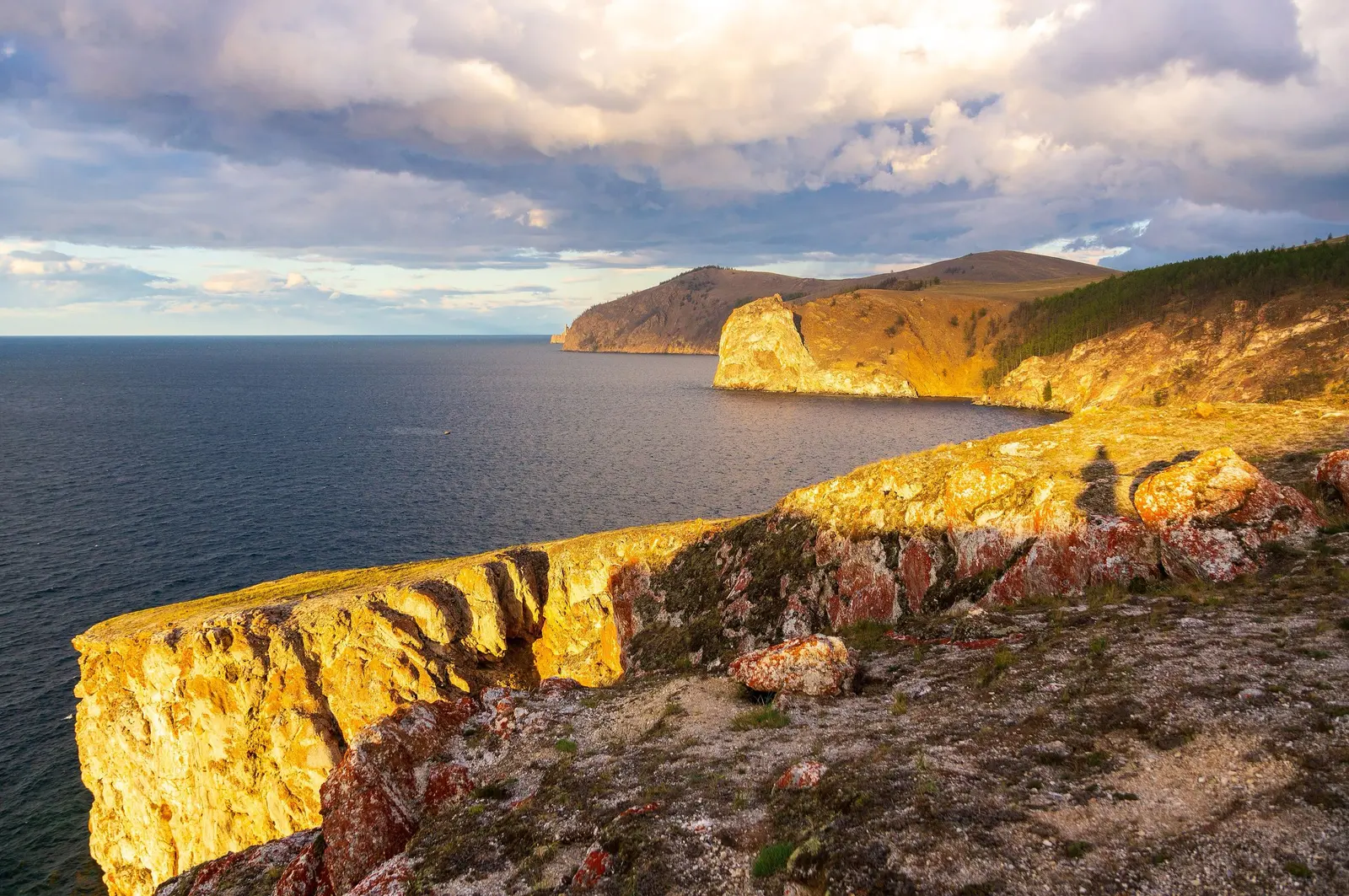
Resource-linked advantages are structural rather than cyclical. Russia is the number one producer of palladium, with 44% of world supply (USGS, 2025), and holds 20% of the world's unfrozen fresh water in Lake Baikal (UNESCO, 1996). Projects adjacent to those endowments tend to attract long-horizon strategic capital rather than portfolio money.
On the financial side, the equity market is still shallow relative to the economy: capitalisation is 19.5% of GDP, against a target of 66% by 2030 (Bank of Russia, Aug 2026). That gap is why most foreign money arrives as direct investment in a legal entity or a joint venture, not as portfolio buying.
Country by country: what each investor group typically does
Chinese investors concentrate on machinery, electronics assembly, chemicals, logistics and cross-border trade infrastructure, often pairing an industrial partner with a trade-finance structure. Indian investors are most visible in pharmaceuticals, food processing, commodities trading and, increasingly, in payment and distribution joint ventures. Gulf investors - UAE and Saudi Arabia in particular - lean toward real estate development, food security assets, logistics and financial participation.
Turkish investors are strong in construction contracting, consumer goods, textiles and food production, and they frequently enter through an existing Russian operating company rather than a greenfield entity. Kazakh, Uzbek, Armenian, Azerbaijani, Belarusian and Kyrgyz investors often operate through CIS holding structures, with the advantage of a familiar legal and linguistic environment and functioning payment corridors.
For an investor from any of these countries, the operative question is not 'who is biggest' but 'which approval route applies to me'. A friendly-country investor usually faces a lighter administrative path than an investor from an unfriendly jurisdiction, but the sector rules apply to everyone.
The approval map you must clear before you invest
The order of steps matters, because a deal that ignores approvals can be blocked after signing. The sequence below is the general framework; the specific thresholds and current procedure change and must be confirmed with a qualified adviser.
First, classify your activity: if it touches a strategic sector, the transaction requires government approval under Law 57-FZ. Second, determine your investor status: investors from countries designated unfriendly face special account regimes and government approval requirements for many transactions, including disposals. Third, check asset-specific limits - foreigners cannot own agricultural land and may only lease it, for up to 49 years, and border areas including Sochi, Anapa, Gelendzhik and Novorossiysk are closed to foreign land ownership.
Fourth, choose the vehicle: a limited liability company, a joint-stock company, a branch or a representative office each carries a different registration, tax and reporting burden. Fifth, register with the tax authority and open a bank account; the practical difficulty here varies sharply by the investor's country of origin and by the bank's own compliance policy. Sixth, put an independent compliance review in place covering sanctions exposure, payment channels and counterparty screening before the first payment, not after.
- Strategic sectors: approval under Law 57-FZ
- Unfriendly-jurisdiction investors: special accounts and government approvals
- Agricultural land: lease only, up to 49 years
- Closed border areas for foreign land ownership: Sochi, Anapa, Gelendzhik, Novorossiysk
- Vehicle choice, tax registration and banking come before the money moves
Where large foreign projects are visible in the statistics
Rather than a list of names, look at the instruments that aggregate foreign and domestic strategic capital. Special investment contracts are the clearest signal: 90 such contracts covering more than ₽2T of investment (Government of Russia, 2025). These are long-term agreements with stabilised tax and regulatory conditions, and foreign industrial partners frequently sit inside them.
Regional regimes show where project money is landing. The Free Port of Vladivostok hosts 2,130 projects (KRDV, 2026), and the Arctic Zone has 1,000 residents with ₽1.1T declared (KRDV, Dec 2025). Special administrative regions, used mainly for redomiciling holding structures, count 674 companies (Ministry of Economic Development, 2025).
Tax terms explain part of the attraction: the standard corporate profit tax is 25%, but special regimes offer 0-5%, and the standard VAT rate has been 22% since 1 January 2026 (Federal Tax Service, 2025-2026). Because these rates and thresholds change, a project model built on today's numbers should be re-verified before signing.
Domestic financial infrastructure is also deepening, which affects how a foreign investor exits. There are 106 licensed investment platforms (Bank of Russia, May 2026), and the key rate stood at 14% (Bank of Russia, Sep 2026) - a level that shapes both borrowing costs and the discount rate used in any valuation.
Risks that decide whether the investment holds
The dominant risk is not market risk but compliance and repatriation risk. A foreign investor must assume that payment routing, bank relationships and counterparty access can change without notice, and should design for redundancy: multiple banks, multiple currencies, and contracts that specify what happens if one channel closes.
The second risk is exit. For investors from unfriendly jurisdictions, selling a Russian asset typically requires government approval and often occurs at a discount, with proceeds subject to special account mechanics. This is a structural feature of the current regime, not a temporary one, and it should be priced into entry decisions.
The third is execution risk in a market where the cost of capital is high and skilled labour is unevenly distributed. The counterweight is genuine: 64% of adults aged 25 and over hold tertiary education, against 50% in the United States (World Bank / UNESCO, 2021), and 88% of retail payments are cashless (Bank of Russia, 2025). Those two figures support operations in services, software and consumer businesses.
The honest summary is that Russia is investable for certain investors, in certain sectors, through certain structures, and expensive or impractical for others. There is no universally correct answer, and any specific transaction needs its own legal, tax and compliance analysis. This article is general information and does not constitute investment or legal advice.
FAQ
Who are the largest foreign investors in Russia today?
No authoritative public ranking exists, because measurement differs by basis: registered ownership, ultimate beneficial owner, announced projects or disbursed capital. The documented trend is a shift in origin, with 75% of FDI now coming from friendly countries against 25% before (UNCTAD via Izvestia, 2025). Investors from China, India, the Gulf states, Turkey and the CIS account for most new commitments.
Can a foreigner still register a company and invest in Russia?
Yes, in most non-strategic sectors a foreign investor can register a company, branch or representative office and invest. The practical constraints are banking access, compliance screening and sector-specific rules. Activities in strategic sectors require approval under Law 57-FZ, and investors from countries designated unfriendly face special account regimes and government approvals for many transactions.
Which sectors are closed or restricted to foreign investors?
Strategic sectors require government approval before a transaction closes. Separately, foreigners cannot own agricultural land - only lease it, for up to 49 years - and border areas including Sochi, Anapa, Gelendzhik and Novorossiysk are closed to foreign land ownership. The exact list of strategic activities and current thresholds changes and should be checked with a qualified adviser.
How does an investor from Kazakhstan or the UAE differ from a European one?
The main difference is administrative and banking, not legal capacity. Investors from friendly jurisdictions generally face a lighter approval path and fewer restrictions on accounts and repatriation, while investors from countries designated unfriendly operate under special account regimes and require government approval for many transactions, including exits.
What taxes apply to a foreign-owned company in Russia?
The standard corporate profit tax is 25%, with rates of 0-5% available in special regimes, and the standard VAT rate has been 22% since 1 January 2026 (Federal Tax Service, 2025-2026). Rates, thresholds and eligibility conditions change, so any project model should be verified with a tax adviser before signing.
Information on this website is not an offer or an individual investment recommendation. Investing involves risk, including the loss of all invested capital. Investing via investment platforms is high-risk and may result in the loss of the entire investment. Figures are sourced from third parties and dated. Investors must comply with the laws of their jurisdiction.