What the corridor physically consists of
Cargo from China reaches Russia through four families of routes. Each has a different cost profile, seasonal risk and customs procedure, and most shippers run more than one in parallel.
Rail dominates containerised goods. The main crossing groups are the Zabaikalsk - Manzhouli corridor on the Trans-Siberian spine, and the Far East crossings in Primorye that feed the ports. Rail gives predictable transit but competes for a finite number of train slots and checkpoint capacity, so queues build in peak season.
Road works for smaller volumes and for cargo that needs to reach regional distributors directly. The Amur crossings connect Chinese border cities to the Russian federal road network, which then feeds the Trans-Siberian corridor.
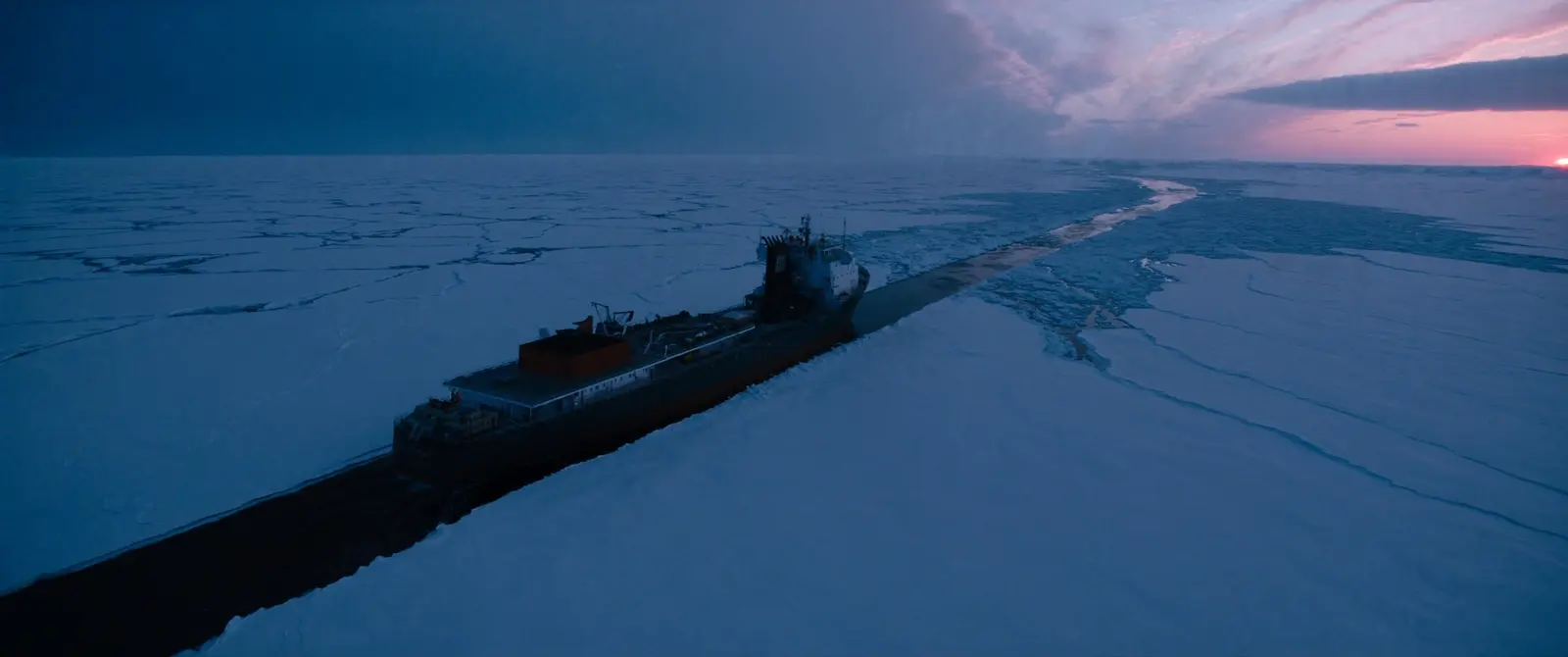
Sea is the volume route. Far East ports handle container and bulk cargo, and the Free Port of Vladivostok regime covers 2,130 projects (KRDV, 2026) - a useful indicator of how much logistics and processing capacity has been built around that coastline. The Northern Sea Route is a seasonal Asia-Europe alternative with heavy ice dependency and a short window.
- Rail: highest share of containerised cargo, checkpoint-capacity constrained, book slots early.
- Road: flexible, best for regional distribution, higher per-unit cost on long hauls.
- Far East sea ports: bulk and container volumes, supported by resident regimes; 2,130 Free Port of Vladivostok projects (KRDV, 2026).
- Northern Sea Route: seasonal, ice-class vessels and escort requirements apply.
Payments decide whether the route works
Route economics are secondary to settlement. A corridor is only usable if the invoice can be paid and the money can be repatriated on a schedule the counterparties can live with.
The structural shift is already visible: 86% of Russian exports are settled in rubles and friendly-country currencies (Bank of Russia, 2025). That means a Chinese buyer or seller is working inside a settlement pool that is no longer dollar- or euro-centric, but it does not mean payments are frictionless. Each bank applies its own compliance screening, and transaction timelines vary by counterparty, commodity and documentation quality.
Practically, this is where deals slow down. Before signing, confirm with your own bank and an independent compliance adviser which currencies, banks and documentation sets are acceptable for your specific commodity. Do not build a business plan on an assumed payment channel.
- Settlement is mostly non-dollar: 86% of exports in rubles and friendly-country currencies (Bank of Russia, 2025).
- Bank-level compliance screening, not the currency itself, is the usual bottleneck.
- Get pre-clearance on the payment structure before committing to volumes.
- Payment terms, not freight rates, are the most common cause of renegotiation.
Who is investing along the corridor now
The investor base has rotated. Friendly countries now account for 75% of foreign direct investment into Russia, against 25% previously (UNCTAD via Izvestia, 2025). Chinese, Gulf, Indian and CIS capital sit in that group, and a visible share of it is attached to corridor infrastructure: storage, cold chain, container yards, processing and assembly.
For holding and structuring purposes, 674 companies are registered in Russian special administrative regions (Ministry of Economic Development, 2025), a regime commonly used for re-domiciliation and holding structures. Further north, the Arctic Zone counts 1,000 residents with ₽1.1T declared investment (KRDV, December 2025) - relevant to anyone linking corridor flows to Arctic logistics.
Long-term industrial commitments run through a separate instrument: 90 special investment contracts with more than ₽2T of declared investment (Government of Russia, 2025). These are contractual, obligation-heavy and not a light-touch entry route.
- 75% of FDI now comes from friendly countries, versus 25% before (UNCTAD via Izvestia, 2025).
- 674 companies in special administrative regions (Ministry of Economic Development, 2025).
- Arctic Zone: 1,000 residents, ₽1.1T declared (KRDV, December 2025).
- 90 special investment contracts, ₽2T+ (Government of Russia, 2025).
Which vehicle a Chinese investor typically uses
There is no single answer, because the trade flow and the investment usually sit in different entities. Trading is best kept in a vehicle that can recover VAT and hire locally; the asset side is best held where the incentive regime applies. Mixing the two concentrates risk.
A local trading company is the default: a Russian legal entity for customs, VAT recovery on exports and local payroll. The standard corporate profit tax is 25%, with 0-5% available in special regimes (Federal Tax Service, 2025), and the standard VAT rate is 22% since 1 January 2026 (Federal Tax Service, 2026). Whether you qualify for a reduced regime depends on activity, region and resident status, and it must be verified case by case.
For holding structures, special administrative regions are the usual answer. For physical capacity - warehouses, processing, port services - the Free Port of Vladivostok and similar resident regimes give the framework, with obligations attached. For large industrial projects, a special investment contract is the instrument, and it is a long-term commitment with localisation conditions.
Whichever route you take, keep the compliance perimeter clean: the trade entity, the asset entity and the holding entity should each have their own banking and documentation story.
- Trading entity: customs clearance, VAT recovery, local hiring.
- Special administrative region company: holding and re-domiciliation; 674 companies registered (2025).
- Resident regimes (Free Port, Arctic Zone): physical assets and logistics.
- Special investment contract: large industrial projects, localisation obligations.
- Profit tax 25% standard, 0-5% in special regimes (FTS, 2025); VAT 22% since 1 Jan 2026 (FTS, 2026).
Restrictions that shape what a foreigner can own
The corridor story is often told as pure logistics, but ownership rules decide what you can actually build and hold. These are structural limits, not negotiation points.
Agricultural land cannot be owned by foreign persons - it can only be leased, for up to 49 years. Border areas are closed to foreign land ownership, and that list includes Sochi, Anapa, Gelendzhik and Novorossiysk. Any warehouse or terminal project near a border needs a structure that separates land holding from operations.
Sector approval is a separate gate. Acquisitions in strategic sectors require government approval under Law 57-FZ, and the definition of strategic is broad enough that a logistics or port-adjacent asset can fall inside it depending on activity. Investors from countries designated unfriendly face additional special account regimes and approval layers - Chinese, Gulf and CIS investors sit outside that category, which changes the practical difficulty of a transaction.
None of this is a reason to avoid the corridor. It is a reason to map the ownership question before the site question.
- Foreigners cannot own agricultural land; lease only, up to 49 years.
- Border areas including Sochi, Anapa, Gelendzhik and Novorossiysk are closed to foreign land ownership.
- Strategic sectors require approval under Law 57-FZ.
- Unfriendly-country investors face special account regimes and additional approvals.
- Structure land holding separately from operating assets.
Costs to model before you commit
Financing is not cheap in local terms. The Bank of Russia key rate stood at 14% in September 2026, which sets the floor for ruble lending and raises the hurdle for capital-intensive logistics projects. Debt-funded warehouse construction is therefore sensitive to rate movements in a way that trading working capital is not.
On the tax side, model 25% corporate profit tax as the base case, with 0-5% only where a special regime genuinely applies (FTS, 2025), and 22% VAT since 1 January 2026 (FTS, 2026). VAT is recoverable on exports, which is precisely why the trading entity matters.
Commercial space is another input. Moscow office vacancy was 7.6% in Q2 2026 (IBC Real Estate), which means quality space is tight and trading offices compete with domestic occupiers. If your corridor business needs a Moscow front office plus Far East operational capacity, budget for two very different cost bases.
- Key rate 14% (Bank of Russia, September 2026) - the floor for ruble debt.
- Profit tax 25% standard, 0-5% in special regimes (FTS, 2025).
- VAT 22% since 1 January 2026 (FTS, 2026); recoverable on exports.
- Moscow office vacancy 7.6% (IBC Real Estate, Q2 2026).
The order of due diligence
Work the sequence, not the ambition. Most failed corridor projects skip from commodity to site without resolving the middle layers.
Start with the flow: which commodity, which crossing, container or bulk, and what the seasonal capacity picture looks like. Ask freight forwarders for current queue and transit data rather than relying on published averages. Then resolve payment: get your bank's view on currency, counterparty and documentation in writing before you commit to volumes.
Next comes customs and certification - classification, certification requirements and any import restrictions for your specific product. Only after that does the vehicle decision make sense: trading entity, holding entity, resident regime, and whether the activity triggers strategic-sector review under Law 57-FZ. Land comes last, because the ownership restrictions may change the site.
Finally, engage local counsel and an independent compliance adviser. Rules on rates, thresholds, resident status and approval procedures change, and any figure in this article should be re-verified at the point of decision.
This article is general information only and is not investment, tax or legal advice.
- 1. Define the commodity and route; get live forwarder data on queues and transit.
- 2. Confirm the payment channel with your bank and a compliance adviser in writing.
- 3. Resolve customs classification, certification and import restrictions.
- 4. Choose the vehicle: trading entity, holding entity, resident regime.
- 5. Check whether the activity requires approval under Law 57-FZ.
- 6. Address land ownership limits before selecting a site.
FAQ
Which route is fastest for containers from China to western Russia?
Rail through the Zabaikalsk - Manzhouli crossing group is the standard container option, with the Far East sea ports plus rail as the volume alternative. Transit times move with season and checkpoint queues, so ask a forwarder for current figures rather than planning on an average.
Can a Chinese company settle trade in yuan?
Yes in practice - 86% of Russian exports are settled in rubles and friendly-country currencies (Bank of Russia, 2025). The binding constraint is bank-level compliance screening, not the currency. Confirm acceptable currencies, banks and documents with your own bank and an independent compliance adviser before committing to volumes.
Do I need a Russian legal entity to trade along the corridor?
Not always - you can contract from abroad. A local entity helps with customs procedures, VAT recovery on exports and local hiring, and it keeps the trading function separate from any asset holding company. The choice depends on your activity and must be reviewed by local counsel.
Can a foreign company buy warehouse land near the border?
Border areas including Sochi, Anapa, Gelendzhik and Novorossiysk are closed to foreign land ownership, and agricultural land can only be leased, for up to 49 years. The workable route is usually a resident regime, a long lease, or a Russian operating company with separate land holding.
What taxes apply to a corridor trading company?
Standard corporate profit tax is 25%, with 0-5% available in special regimes, and the standard VAT rate has been 22% since 1 January 2026 (Federal Tax Service). VAT is recoverable on exports. Special-regime eligibility depends on activity, region and resident status and must be verified case by case.
Information on this website is not an offer or an individual investment recommendation. Investing involves risk, including the loss of all invested capital. Investing via investment platforms is high-risk and may result in the loss of the entire investment. Figures are sourced from third parties and dated. Investors must comply with the laws of their jurisdiction.