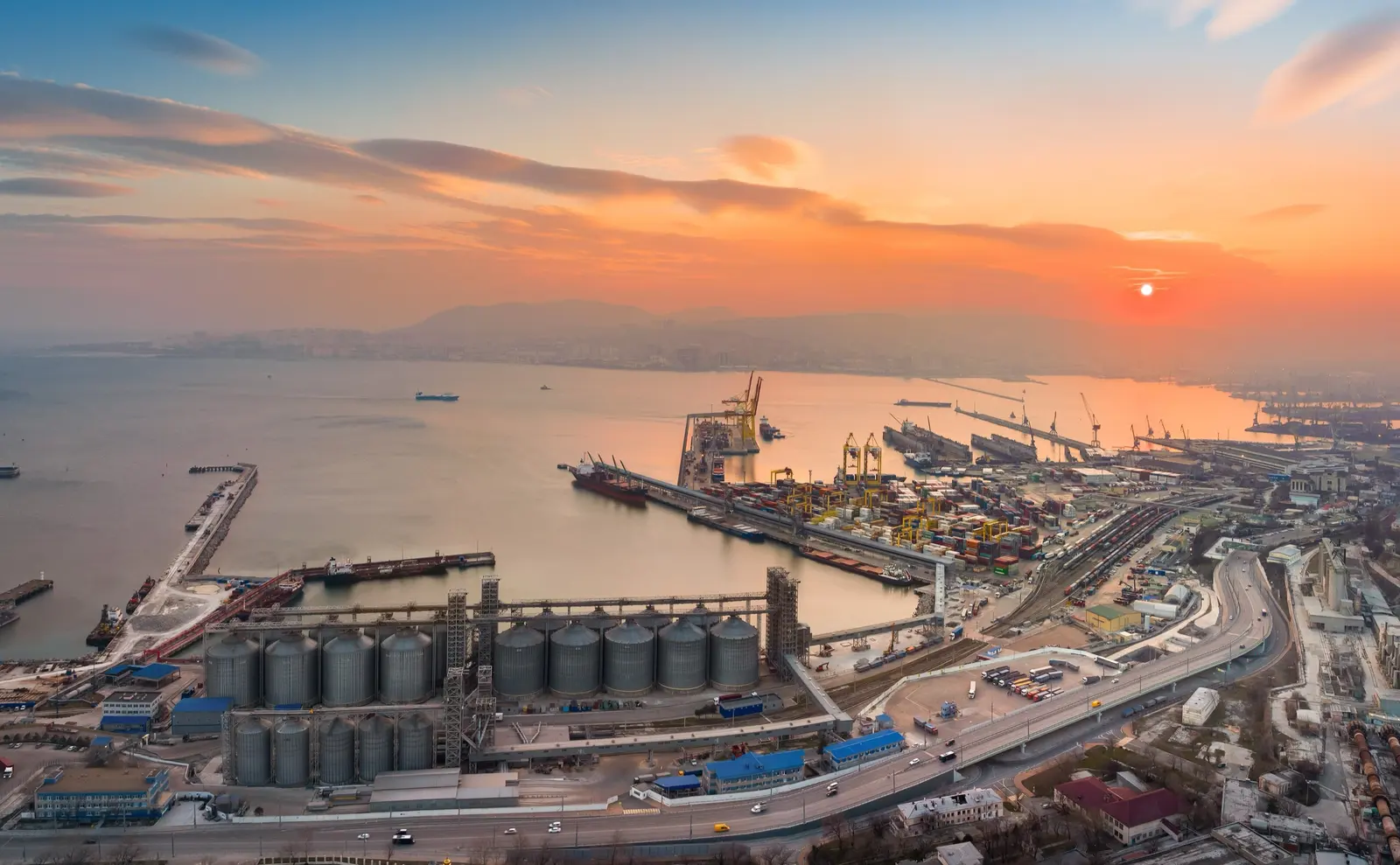
The trade story is now a payments and logistics story
The headline turnover figure matters far less than the mechanism behind it. Russian exports to China are weighted towards commodities and intermediate goods, while imports run towards machinery, vehicles, electronics and consumer goods. That asymmetry means the working capital cycle - prepayment, documentary credit, transit time, currency conversion - determines whether a trade-linked investment is viable.
Because a large share of export proceeds now lands in rubles and friendly-country currencies (86%, Bank of Russia, 2025), the currency risk in a trade structure is no longer a simple dollar-ruble question. It is a question of which currency your counterparty earns in, which currency the contract is denominated in, and how many conversion steps sit between the two. Each step adds cost and a compliance review.
The domestic payment infrastructure that supports this is mature: 88% of retail payments in Russia are cashless (Bank of Russia, 2025). Corporate settlement is a different matter, and channel availability changes at the level of individual banks rather than by decree.
- Settlement currency, not headline volume, is the first thing to model.
- Expect two or three conversion steps in a cross-border structure; each has a cost.
- Bank-level policy, not just regulation, determines whether a payment clears.
Which capital is actually coming in
The composition of foreign direct investment has shifted decisively. 75% of FDI into Russia now originates from friendly countries, against 25% previously (UNCTAD via Izvestia, 2025). Chinese capital is a central part of that shift, and it is arriving mostly as operating businesses, joint ventures and supply-chain assets rather than as portfolio flows.
The macro backdrop for that decision is unusual. General government debt stands at 17% of GDP against 124% in the US (IMF WEO, 2025), and real GDP grew 4.1% in 2023 and 4.9% in 2024 (Rosstat, 2023-2024). Neither number tells you what a specific project will earn, but together they explain why industrial and infrastructure investors have kept looking at the market while portfolio investors have stayed cautious.
The equity market is small relative to the economy: capitalisation is 19.5% of GDP, with a stated target of 66% by 2030 (Bank of Russia, Aug 2026). That gap is the structural argument for the public-market route, and also the reason liquidity is thin.
- Most incoming capital is operating capital, not listed equity.
- Government debt load is low by developed-market comparison (17% of GDP, IMF WEO 2025).
- Listed market capitalisation is 19.5% of GDP, target 66% by 2030 (Bank of Russia, Aug 2026).
The five entry routes and what each is for
A Chinese investor normally chooses between a locally incorporated subsidiary, a joint venture with a Russian partner, a special investment contract, a special administrative region, or a regional regime such as the Free Port of Vladivostok or the Arctic Zone. These are not interchangeable: each carries a different approval path, tax profile and exit mechanism.
Special investment contracts are the standard tool where the state wants a long-horizon manufacturing or technology project. There are 90 such contracts in force, covering over RUB 2 trillion of investment (Government of Russia, 2025). Special administrative regions are used for holding and corporate redomiciliation: 674 companies are registered in them (Ministry of Economic Development, 2025).
For physical projects the regional regimes matter more. The Free Port of Vladivostok hosts 2,130 projects (KRDV, 2026), and the Arctic Zone has 1,000 residents with RUB 1.1 trillion declared (KRDV, Dec 2025). These regimes offer administrative and fiscal terms that a plain subsidiary does not get, but eligibility is project-specific and must be confirmed before you commit.
- Subsidiary: simplest, fewest incentives, cleanest exit.
- Joint venture: fastest route to local licences and staff, but governance must be negotiated in detail.
- Special investment contract: 90 in force, RUB 2 trillion plus committed (Government of Russia, 2025).
- Special administrative region: 674 companies registered (Ministry of Economic Development, 2025).
- Free Port of Vladivostok (2,130 projects, KRDV 2026) and Arctic Zone (1,000 residents, RUB 1.1 trillion declared, KRDV Dec 2025) for asset-heavy projects.
Sectors where the fit is structural, not opportunistic
Metals and mining stand out because the supply position is genuinely strategic. Russia is the world's number one palladium producer with 44% of world output (USGS, 2025), and Chinese industrial demand for platinum-group metals is concentrated in autocatalysts, electronics and hydrogen applications. A supply relationship of that kind supports long-term offtake structures rather than spot trading.
Agriculture and food processing attract consistent interest, but the ownership rule shapes the deal: foreigners cannot own agricultural land and may only lease it for up to 49 years. That pushes structures towards processing plants, storage and logistics, where ownership is permitted, rather than land acquisition.
Water-intensive production is another area where the resource base is real: 20% of the world's unfrozen fresh water is in Lake Baikal (UNESCO, 1996). Food and beverage processing, bottling and related industrial uses are the practical applications. Education is an underused angle for service-sector investors: 64% of adults aged 25 and over hold tertiary education, against 50% in the US (World Bank / UNESCO, 2021), which supports engineering-heavy operations.
Logistics and warehousing remain the most immediate opportunity for trade-linked capital. Moscow office vacancy at 7.6% (IBC Real Estate, Q2 2026) indicates a commercial property market that is neither distressed nor overheated, and trade corridors need warehousing regardless of which way volumes move.
- Metals and PGM: 44% of world palladium, number one producer (USGS, 2025).
- Agri-processing: land cannot be owned by foreigners, lease up to 49 years.
- Water and food processing: Baikal holds 20% of the world's unfrozen fresh water (UNESCO, 1996).
- Logistics and warehousing: a trade-corridor play, not a commodity bet.
- Skilled labour base: 64% of adults 25+ hold tertiary education (World Bank / UNESCO, 2021).
What is closed, restricted or simply slow
Three hard limits apply regardless of the sector. Foreigners cannot own agricultural land; the maximum is a lease of up to 49 years. Border areas including Sochi, Anapa, Gelendzhik and Novorossiysk are closed to foreign land ownership. And investments in strategic sectors require government approval under Law 57-FZ, with the definition of strategic broad enough that it should be checked at the screening stage rather than after signing.
There is a fourth consideration that is easy to overlook: investors from countries designated unfriendly face special account regimes and additional government approvals. A Chinese investor is not in that category, but a joint venture partner, a lender, an insurer or a technology supplier may be. That single fact can reshape the ownership chart, the banking channel and the timeline.
Compliance is the part where general guidance runs out. Sanctions and export controls are a neutral regulatory matter: you should take independent compliance advice on your own jurisdiction, your banks and your counterparties before structuring, and you should not rely on any intermediary's assurance that a channel is permanently open.
- Agricultural land: no foreign ownership, lease up to 49 years.
- Border areas including Sochi, Anapa, Gelendzhik and Novorossiysk: closed to foreign land ownership.
- Strategic sectors: approval required under Law 57-FZ.
- Unfriendly-country participation anywhere in the structure triggers special account regimes and approvals.
- Take independent compliance advice; do not rely on a broker's or agent's assurance.
The tax and financing arithmetic that decides the deal
The standard corporate profit tax is 25%, while special regimes can apply rates between 0% and 5% (Federal Tax Service, 2025). That spread is usually the single largest driver of where a project is domiciled, and it is also where most optimistic business plans go wrong, because qualifying for a special regime is a substantive test, not a formality.
On the indirect side, the standard VAT rate has been 22% since 1 January 2026 (Federal Tax Service, 2026). On funding, the Bank of Russia key rate stood at 14% in September 2026 (Bank of Russia, Sep 2026), which sets the floor for ruble borrowing costs. A project that only works with cheap local debt does not currently work.
The public-market route exists and is regulated: there were 106 licensed investment platforms as of May 2026 (Bank of Russia, May 2026). Access for non-residents depends on the individual platform and the account type, and this is a point to verify directly with the platform rather than assume.
Tax rates, thresholds and special-regime conditions change. Treat every number in this section as a starting point for a conversation with a qualified tax adviser, not as a planning assumption.
- Profit tax: 25% standard, 0-5% in special regimes (Federal Tax Service, 2025).
- VAT: 22% standard rate since 1 January 2026 (Federal Tax Service, 2026).
- Key rate: 14% as of September 2026 (Bank of Russia, Sep 2026).
- Licensed investment platforms: 106 as of May 2026 (Bank of Russia, May 2026).
- All rates and thresholds change; confirm current terms with an adviser.
A verification sequence before committing capital
The order of checks matters more than the checks themselves, because a negative answer at step two invalidates the work done at step five. The sequence below reflects how projects usually fail: not on economics, but on structure.
First, establish your own position. Confirm what your home jurisdiction permits, what your bank will process, and what your auditor will sign off on. Second, define the legal vehicle and screen the activity against Law 57-FZ before you negotiate anything. Third, map your land requirements against the foreign ownership restrictions, including the border-area list.
Fourth, model tax under both the general regime and any special regime you believe you qualify for, and verify current rates and conditions with an adviser. Fifth, confirm at least two workable banking channels, not one. Sixth, if the project is asset-heavy, test eligibility for the Free Port regime, the Arctic Zone or a special investment contract before committing to a site.
This is general information about how the market is structured, not investment, tax or legal advice, and it is not a recommendation to enter any transaction. Every figure above carries the year of its source and should be re-verified before it is used in a decision.
- Step 1: home-jurisdiction and bank permissions.
- Step 2: vehicle choice plus Law 57-FZ screening.
- Step 3: land needs against ownership restrictions.
- Step 4: tax model under both standard and special regimes, rates verified.
- Step 5: two banking channels confirmed, not one.
- Step 6: regional regime eligibility tested before site commitment.
FAQ
Can Chinese companies still be paid for goods delivered to Russia?
Yes, but settlement now runs almost entirely through rubles and friendly-country currencies: 86% of Russian exports are settled that way (Bank of Russia, 2025). The practical constraint is not the currency but the individual bank's compliance policy, which can change without notice. Confirm your channel with two independent alternatives before signing a supply contract.
Can a Chinese investor buy Russian stocks directly?
The public market is served by 106 licensed investment platforms as of May 2026 (Bank of Russia, May 2026), and market capitalisation is 19.5% of GDP with a stated target of 66% by 2030 (Bank of Russia, Aug 2026). Non-resident access depends on the platform and account type, so it must be verified with the platform directly. Note that liquidity is thin relative to developed markets.
Can foreigners buy land in Russia?
Agricultural land cannot be owned by foreigners; the maximum holding is a lease of up to 49 years. Border areas including Sochi, Anapa, Gelendzhik and Novorossiysk are closed to foreign land ownership entirely. Non-agricultural commercial and industrial land is generally purchasable, subject to checks on the specific plot.
Does a Chinese investor need Russian government approval for a project?
It depends on the sector. Investments in strategic sectors require approval under Law 57-FZ. Separately, investors from countries designated unfriendly face special account regimes and additional approvals, and this can be triggered indirectly if your joint venture partner, lender or supplier comes from such a jurisdiction. Screen the full ownership and financing chain, not just the investor.
What is the tax burden on a Russian operating company?
The standard corporate profit tax is 25%, with rates of 0-5% available in special regimes (Federal Tax Service, 2025). Standard VAT has been 22% since 1 January 2026 (Federal Tax Service, 2026). Qualifying for a special regime is a substantive test, and rates and conditions change, so verify current terms with a qualified tax adviser.
Information on this website is not an offer or an individual investment recommendation. Investing involves risk, including the loss of all invested capital. Investing via investment platforms is high-risk and may result in the loss of the entire investment. Figures are sourced from third parties and dated. Investors must comply with the laws of their jurisdiction.