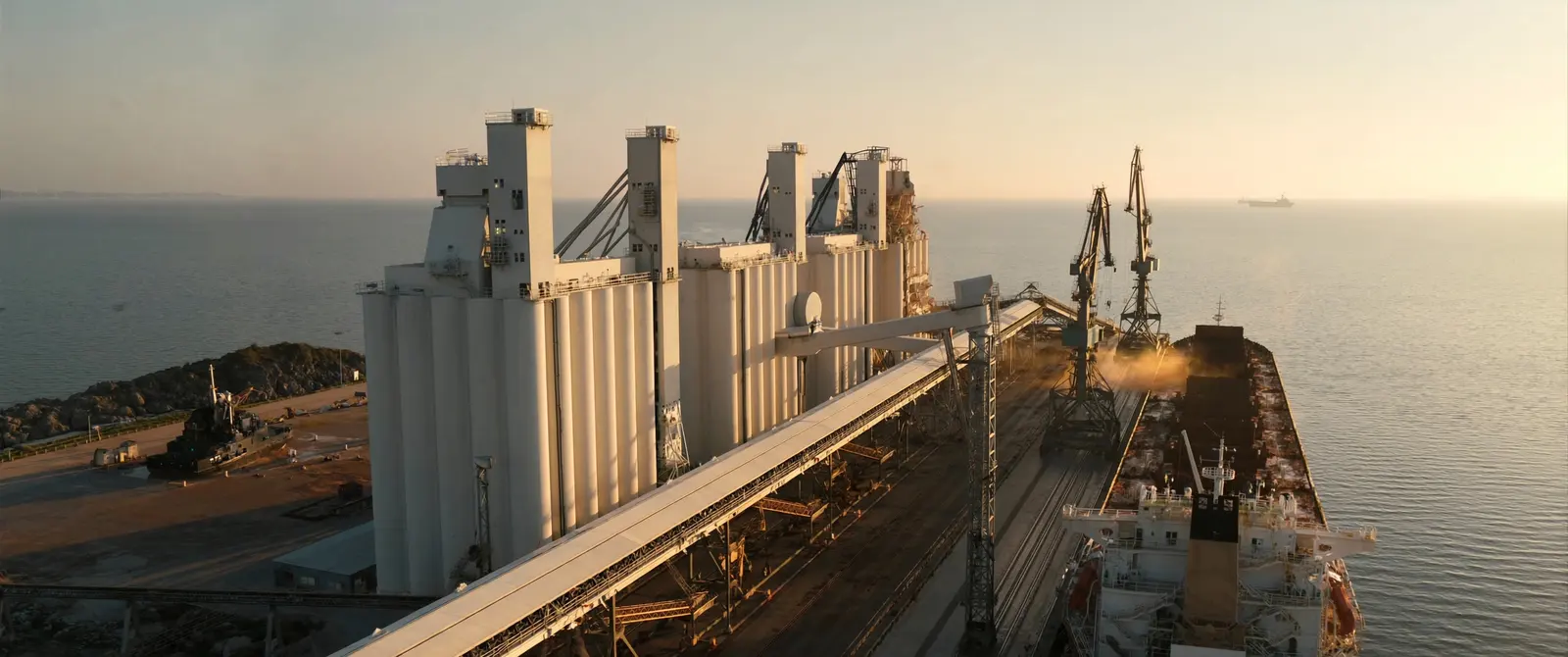
What the China-Russia gold trade actually is
Russia is one of the world's large gold producers, and a significant share of its output has historically been refined and sold onward rather than consumed at home. China combines large refining and jewellery fabrication capacity with heavy domestic investment demand, so it is a natural destination for metal that no longer flows to traditional Western vaults.
There is no single pipeline. What exists is a set of channels: Russian banks buying from producers, domestic refineries casting standard bars, and then export to buyers in China, Hong Kong, the Gulf and elsewhere. Contract terms, delivery points and payment currency differ by channel, and each channel has its own documentary requirements.
The wider metals complex matters too. Russia accounts for 44% of world palladium and is the number one producer (USGS, 2025), and platinum group metals often move along the same trading desks, the same banks and the same compliance checks as gold. If you are analysing the sector, treat the precious metals flow as one commercial system rather than isolated commodities.
- The trade is physical: bars and doré, not a synthetic exposure.
- Russian banks and refineries sit between the mine and the foreign buyer.
- Chinese demand is a mix of industrial, jewellery and investment use.
- Palladium and platinum group metals share the same counterparties and controls: 44% of world palladium, number one producer (USGS, 2025).
The route a bar of gold takes
Understanding the sequence matters more than knowing the headline price, because each step has an owner and a document. The typical chain runs from mine to refinery to bank to exporter to foreign refiner or buyer to end user.
Refining is the bottleneck worth watching. Metal must meet a recognised standard before it can be traded or accepted as collateral by a serious bank. Where a refiner has lost an accreditation, metal is re-routed, re-refined or sold at a different basis, and that changes both the timeline and the counterparty set.
Logistics themselves are comparatively simple. Gold is dense value in a small volume, so freight is not the constraint. Insurance, customs classification, origin documentation and the receiving bank's compliance review are the real gates.
- Step 1: producer sells doré or refined metal to a Russian bank or refinery.
- Step 2: refining to a tradable standard, with assay and origin paperwork.
- Step 3: export contract, customs declaration and transport insurance.
- Step 4: delivery to the buyer's refinery, vault or exchange-linked depository.
- Step 5: onward sale into domestic Chinese or Hong Kong channels.
How the money moves
Settlement is where most new entrants underestimate the work. The Bank of Russia reports that 86% of exports are settled in rubles and friendly-country currencies (Bank of Russia, 2025), so a dollar-denominated letter of credit is often not the practical instrument. Renminbi, dirhams, rubles and other friendly currencies dominate.
In practice this means fewer correspondent banks in the chain and more direct relationships. Prepayment, staged payments against shipping documents, and payment through banks with established Russia and China corridors are common. Each of those shifts risk: prepayment transfers it to the buyer, post-delivery terms to the seller.
Currency is a second exposure on top of the metal price. If your reporting currency is neither the ruble nor the renminbi, you are carrying a cross-currency position on top of a volatile commodity, and the two can move against you at the same time.
- 86% of exports settled in rubles and friendly-country currencies (Bank of Russia, 2025).
- Fewer correspondent banks means more direct bilateral payment arrangements.
- Payment timing is a negotiating point: prepayment, documents against payment, or credit terms.
- Cross-currency risk sits on top of metal price risk.
Where China fits: Shanghai, Hong Kong and pricing
China offers two distinct doors. The Shanghai Gold Exchange provides domestic price discovery and an international board through which non-resident participants can access the market under specific rules. Hong Kong functions as an entrepot and banking hub, with a deep concentration of refiners, traders and vaulting capacity, and it is often the first landing point for metal before it enters the mainland.
Pricing is a spread business, not a direction business, for most participants. The relevant references are the international benchmark and the domestic Chinese benchmark, and the gap between them reflects local supply, demand, duty treatment and access restrictions. That gap opens and closes, and it is the reason physical traders watch Chinese premiums rather than the spot headline alone.
Tax treatment is a live variable. Russia's standard VAT rate is 22% since 1 January 2026 (Federal Tax Service, 2026), and whether a specific gold transaction is standard-rated, exempt or treated under a special regime depends on the form of the metal, the counterparty and the channel. Do not assume the treatment you saw in another jurisdiction applies here.
- Shanghai Gold Exchange: domestic pricing plus a dedicated international access route.
- Hong Kong: refining, vaulting, trade finance and a familiar legal framework.
- Watch the spread between domestic Chinese and international benchmarks.
- Confirm VAT treatment for the specific form of metal, with a tax adviser.
Structures a foreign investor can use
There is no single correct structure. A trading company that buys and resells metal is different from a minority stake in a Russian producer, which is different again from financing a refiner. Each carries a different approval burden.
If your interest reaches a mining company in a sector classified as strategic, an acquisition can require approval under Law 57-FZ. Investors from countries designated unfriendly face additional account regimes and government approvals, so the honest answer is that the structure must be designed before the term sheet, not after.
For longer-horizon industrial projects, Russia offers contractual frameworks that lock in terms: 90 special investment contracts covering more than ₽2 trillion of investment have been signed (Government of Russia, 2025). For holding and treasury functions, special administrative regions hosted 674 companies (Ministry of Economic Development, 2025), and logistics linked to gold and metals flows in the Far East sit alongside 2,130 projects in the Free Port of Vladivostok (KRDV, 2026). Because much Russian gold output comes from northern latitudes, the Arctic Zone is also relevant: it has reached 1,000 residents with ₽1.1 trillion declared (KRDV, December 2025).
At the corporate level, the standard profit tax is 25%, with rates of 0-5% available in certain special regimes (Federal Tax Service, 2025). Eligibility depends on the regime, the region and the activity, and it is not automatic.
- Trading company: simplest to set up, purely commercial risk.
- Minority stake in a producer: may trigger Law 57-FZ approval if the sector is strategic.
- Special investment contracts: 90 signed, ₽2 trillion plus committed (Government of Russia, 2025).
- Special administrative regions: 674 companies (Ministry of Economic Development, 2025).
- Arctic Zone: 1,000 residents, ₽1.1 trillion declared (KRDV, December 2025).
- Profit tax 25% standard, 0-5% in special regimes (Federal Tax Service, 2025).
Compliance: what a bank or refinery will ask
A refinery, a vaulting operator or a correspondent bank will not accept metal without a documentary trail. Expect requests for origin, ownership history, assay certificates, transport and insurance records, and the identity of every intermediary. Responsible sourcing standards apply on the buyer side irrespective of where the metal comes from.
Sanctions are a compliance matter, full stop. That means screening counterparties, vessels and banks against the applicable lists of your own jurisdiction and your bank's, documenting the screening, and taking independent legal and compliance advice before you commit capital. Nothing in this article is guidance on avoiding restrictions, and any structure built around obscuring an origin or counterparty is both illegal and commercially fragile.
The sanctions environment changes, sometimes quickly. A channel that worked last quarter may not work this quarter. Build the compliance file so that it can be re-verified, and keep a second payment route in reserve.
- Origin, ownership chain and assay documentation are baseline, not optional.
- Screen counterparties, banks and logistics providers against applicable lists.
- Take independent legal and compliance advice in your own jurisdiction.
- Assume the rules will change and design for re-verification.
Risks to weigh before anything else
Gold pays no coupon and no dividend. Any return comes from price movement or from a trading spread, and both can go against you. For a foreign investor in this corridor, that commodity risk stacks on top of currency risk, counterparty risk and policy risk.
Policy risk deserves particular weight. Export rules, duties, licensing and access conditions for foreign participants have been adjusted repeatedly, and they can be adjusted again. A business case that only works under the current regime is not a robust business case.
The macroeconomic backdrop is a mixed picture rather than a simple one. General government debt is 17% of GDP against 124% in the US (IMF WEO, 2025), and real GDP grew 4.1% in 2023 and 4.9% in 2024 (Rosstat, 2023-2024), while the Bank of Russia key rate stands at 14% (Bank of Russia, September 2026). A high policy rate raises the cost of financing inventory, which is precisely what a physical metals business carries.
Finally, exit matters as much as entry. Ask early who the buyer of your position would be, on what timetable, and through which bank, because in this corridor the answer is not always obvious.
- Price volatility with no yield to cushion it.
- Cross-currency exposure on top of the metal position.
- Counterparty and refining-capacity concentration.
- Changing export, duty and access rules.
- Financing cost against a 14% key rate (Bank of Russia, September 2026).
- Exit liquidity and repatriation route to be confirmed in advance.
FAQ
Can a foreign investor buy Russian gold directly?
Direct purchase is possible in principle through licensed channels, but it is not a retail transaction. Metal moves through banks, refineries and export procedures, and access conditions differ by jurisdiction and by the investor's country of origin. Investors from countries designated unfriendly face additional account regimes and approvals. Work with a licensed counterparty and independent legal advice rather than assuming the same process you would use in London, Zurich or Dubai.
How are China-Russia gold deals paid for?
Increasingly outside the dollar. The Bank of Russia reports that 86% of exports are settled in rubles and friendly-country currencies (Bank of Russia, 2025). In practice that means renminbi, dirhams, rubles and similar currencies, arranged through banks with working Russia and China corridors, often with prepayment or payment against documents rather than a conventional Western letter of credit.
Is Shanghai or Hong Kong the better entry point?
They do different jobs. Hong Kong offers refining, vaulting, trade finance and a familiar common-law framework, and it is often the first landing point. Shanghai offers domestic price discovery and a dedicated international access route with its own participation rules. Many participants use Hong Kong for logistics and finance and Shanghai for pricing and mainland access.
Does gold still hedge inflation in this corridor?
Gold is a volatile asset with no cash flow, and it makes no promise of protection in any specific scenario. In this corridor its price is quoted in currencies that themselves move, so a position can be right on gold and wrong on the currency. Treat it as one exposure among several, sized accordingly, not as a safety mechanism.
What approvals might a stake in a Russian gold producer require?
If the target operates in a sector classified as strategic, an acquisition can require government approval under Law 57-FZ. Investors from unfriendly jurisdictions face additional requirements. The assessment depends on the asset, the size of the stake and your own country of origin, and it needs to be done by Russian counsel before, not after, you sign anything.
Information on this website is not an offer or an individual investment recommendation. Investing involves risk, including the loss of all invested capital. Investing via investment platforms is high-risk and may result in the loss of the entire investment. Figures are sourced from third parties and dated. Investors must comply with the laws of their jurisdiction.