The short answer: what a foreigner can and cannot own
Russian law does not ban foreign land ownership in general. The restriction is structural: it applies to specific categories of land and to specific territories, not to the nationality of the buyer as such. A foreign citizen or a company with foreign participation can, in principle, hold a plot of settlement land or industrial land under a registered title.
The practical consequence is that due diligence starts with two questions, not with the price: what category is the plot, and where exactly is it. Get those two answers wrong and the transaction will not be registered, regardless of the contract you signed.
- Open in practice: land in settlements, industrial and other special-purpose land, subject to local rules
- Closed to ownership: agricultural land, forest fund land, water fund land, specially protected natural areas
- Closed by geography: border territories and a defined list of municipalities, including Sochi, Anapa, Gelendzhik and Novorossiysk
- Additional screening: entities in strategic sectors require approval under Law 57-FZ
Land categories: the first filter every deal passes through
Russian land is divided into categories, and the category is recorded in the state register. Changing it is a separate administrative procedure, not a paperwork formality, and it can take years or fail. Investors who buy a plot assuming they can convert it into a construction site are the ones who lose money.
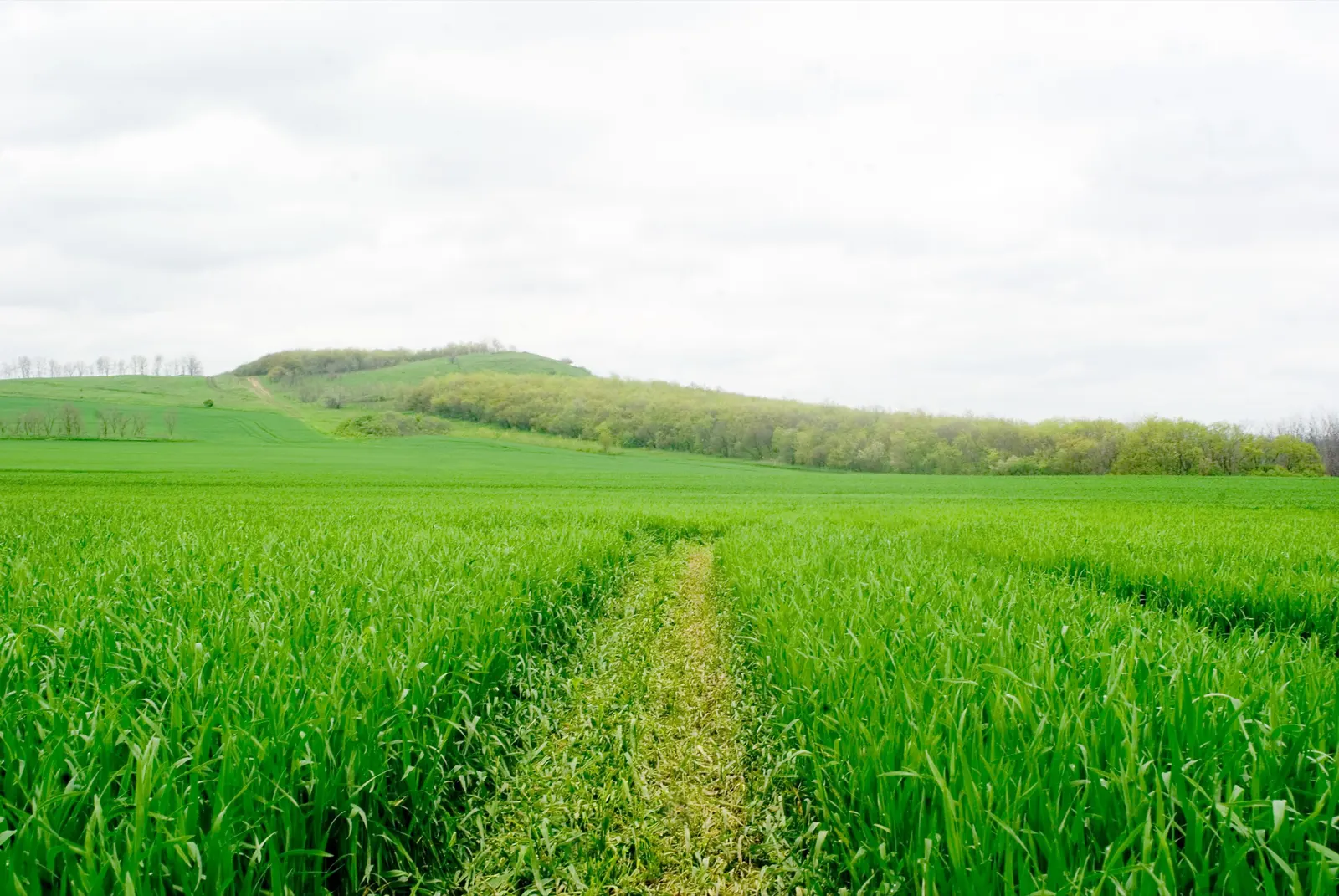
Settlement land is the usual route for residential and commercial development. Industrial and other special-purpose land is used for plants, warehouses and logistics. Agricultural land is the category with the hardest restriction on foreign capital.
- Settlement land - the most common category for development; local zoning rules decide what can be built
- Industrial and special-purpose land - standard for production, storage, transport infrastructure
- Agricultural land - no foreign ownership, lease only
- Forest and water fund land - federal property, not available for private ownership by anyone
- Specially protected areas - no private ownership, activity limited by conservation rules
Border areas and closed territories: check before you negotiate
Russia maintains a list of territories where foreign citizens, foreign legal entities and Russian companies with foreign participation cannot own land. The list is set at federal level and covers border districts. Among the municipalities widely known to be closed to foreign land ownership are Sochi, Anapa, Gelendzhik and Novorossiysk.
This is a location test, not a sector test. A plot of perfectly ordinary commercial land inside a closed municipality is still unavailable to a foreign buyer. The check should be done at the municipal district level, using the current version of the list, before any deposit is paid.
- Verify the municipality against the current federal list, not against a broker's summary
- A closed location does not block leasing in every case, but it does block ownership - confirm with counsel
- Corporate structures with foreign participation can be caught by the same rule, so a Russian SPV is not automatically a workaround
- Border status applies to land, so check whether the plot straddles a district boundary
Agricultural land: a 49-year lease is the ceiling
Agricultural land cannot be owned by foreign citizens, foreign legal entities, stateless persons or companies in which foreign participation exceeds the threshold set by law. The permitted structure is a lease, and the maximum term is 49 years.
That makes agricultural projects a long-horizon asset with a contractual, not proprietary, position. The lease itself is registrable, transferable within the rules and can be long enough to justify capital expenditure on irrigation, storage or processing. But the land stays in Russian hands, and the lease terms, renewal conditions and the landlord's identity matter as much as the agronomy.
- Ownership: not available to foreign persons
- Lease: up to 49 years, registered in the state register
- Due diligence: title of the lessor, encumbrances, sublease history, cadastral boundaries
- Operational risk: farmland use is regulated, and misuse can trigger termination proceedings
- Practical note: the largest agricultural holdings in Russia operate through lease portfolios rather than freehold
How a land purchase or lease actually runs, step by step
The sequence below is the standard one for a direct acquisition by a foreign legal entity. Individual buyers follow the same path with a notarised passport translation and a tax number added at the start.
Registration of the transfer is handled by Rosreestr, the state registration service. The right exists from the moment of registration, not from the moment of signature, so the date on the contract is not the date that matters.
- Step 1 - confirm the category, permitted use and municipal district
- Step 2 - order an extract from the state register and the cadastral passport; check the owner, encumbrances, easements, pledges and lease claims
- Step 3 - decide the holding structure: direct foreign ownership, or a Russian legal entity
- Step 4 - if the plot belongs to an entity in a strategic sector, obtain approval under Law 57-FZ before closing
- Step 5 - sign the sale and purchase agreement or the lease in written form; notarisation is required in certain cases only
- Step 6 - file for state registration with Rosreestr through a multifunctional centre or electronically
- Step 7 - pay land tax from the registered period and keep the title documents current
Buying the company instead of the plot
A common alternative is to acquire the Russian legal entity that owns the land rather than the land itself. This avoids some registration friction, but it transfers every liability the company carries as well: tax arrears, litigation, guarantees, environmental claims and historical transactions that can be unwound.
For investors from countries designated unfriendly, share transactions and real-estate transactions are subject to government approval and to special account regimes for payment. These are compliance matters, and they should be handled by advisers who work with the current rules, which change.
- Request a full tax, legal and technical audit of the target company, not only of the asset
- Check that the land is on the balance sheet at a defensible valuation and is not pledged
- Confirm that the corporate structure itself does not create a foreign-participation problem for the category of land
- Budget time for approvals if the buyer or the target touches a restricted jurisdiction or sector
Tax, financing and the special regimes worth knowing
Corporate profit tax is 25%, with rates of 0 to 5% available in certain special regimes (Federal Tax Service, 2025). VAT is 22% since 1 January 2026. Land and property taxes are levied locally, so the cost of holding a plot varies by municipality and must be checked for the specific site.
Development finance is expensive. The Bank of Russia key rate stood at 14% in September 2026, and lending to foreign-owned entities is subject to additional bank compliance. Equity or joint-venture structures are common for that reason.
Where land comes bundled with an investment regime, the terms are set by agreement rather than by the market. There were 90 special investment contracts with more than RUB 2 trillion of declared investment in 2025. The Free Port of Vladivostok had 2,130 projects registered in 2026, and the Arctic Zone had 1,000 residents with RUB 1.1 trillion declared as of December 2025. These regimes can include land plots or long leases on defined terms, and each has its own eligibility rules.
- Profit tax 25%, or 0 to 5% in special regimes (2025)
- VAT 22% since 1 January 2026
- Key rate 14% (Bank of Russia, September 2026) - relevant to any leveraged project
- Special investment contracts: 90 signed, RUB 2 trillion plus of investment (Government of Russia, 2025)
- Free Port of Vladivostok: 2,130 projects (KRDV, 2026)
- Arctic Zone: 1,000 residents, RUB 1.1 trillion declared (KRDV, December 2025)
- This is general information, not investment or legal advice. Rates, thresholds, closed-territory lists and approval requirements change; verify the current position with a qualified adviser before committing capital.
FAQ
Can a foreign citizen own land in Russia?
Yes, in most categories outside agriculture, forestry, water fund and protected areas, provided the plot is not in a territory closed to foreign land ownership. Ownership is registered with Rosreestr, and the right arises on registration.
Can a foreigner buy agricultural land in Russia?
No. Foreign citizens, foreign companies and companies with foreign participation above the legal threshold cannot own agricultural land. The permitted route is a lease of up to 49 years, registered in the state register.
Which areas of Russia are closed to foreign land ownership?
Border territories and a defined list of municipalities. Sochi, Anapa, Gelendzhik and Novorossiysk are among the well-known examples. The list is set at federal level and updated, so it must be checked against the current version for the specific district.
Do I need a Russian company to buy land?
Not always, but a Russian legal entity is often used for tax, financing and administrative reasons. It does not remove restrictions based on land category, closed territories or strategic-sector approval, and it carries its own reporting obligations.
Does buying an apartment work the same way as buying land?
No. Apartment ownership is a separate legal regime from land ownership, and the land under the building is shared among owners. Different rules and different restrictions apply.
Information on this website is not an offer or an individual investment recommendation. Investing involves risk, including the loss of all invested capital. Investing via investment platforms is high-risk and may result in the loss of the entire investment. Figures are sourced from third parties and dated. Investors must comply with the laws of their jurisdiction.