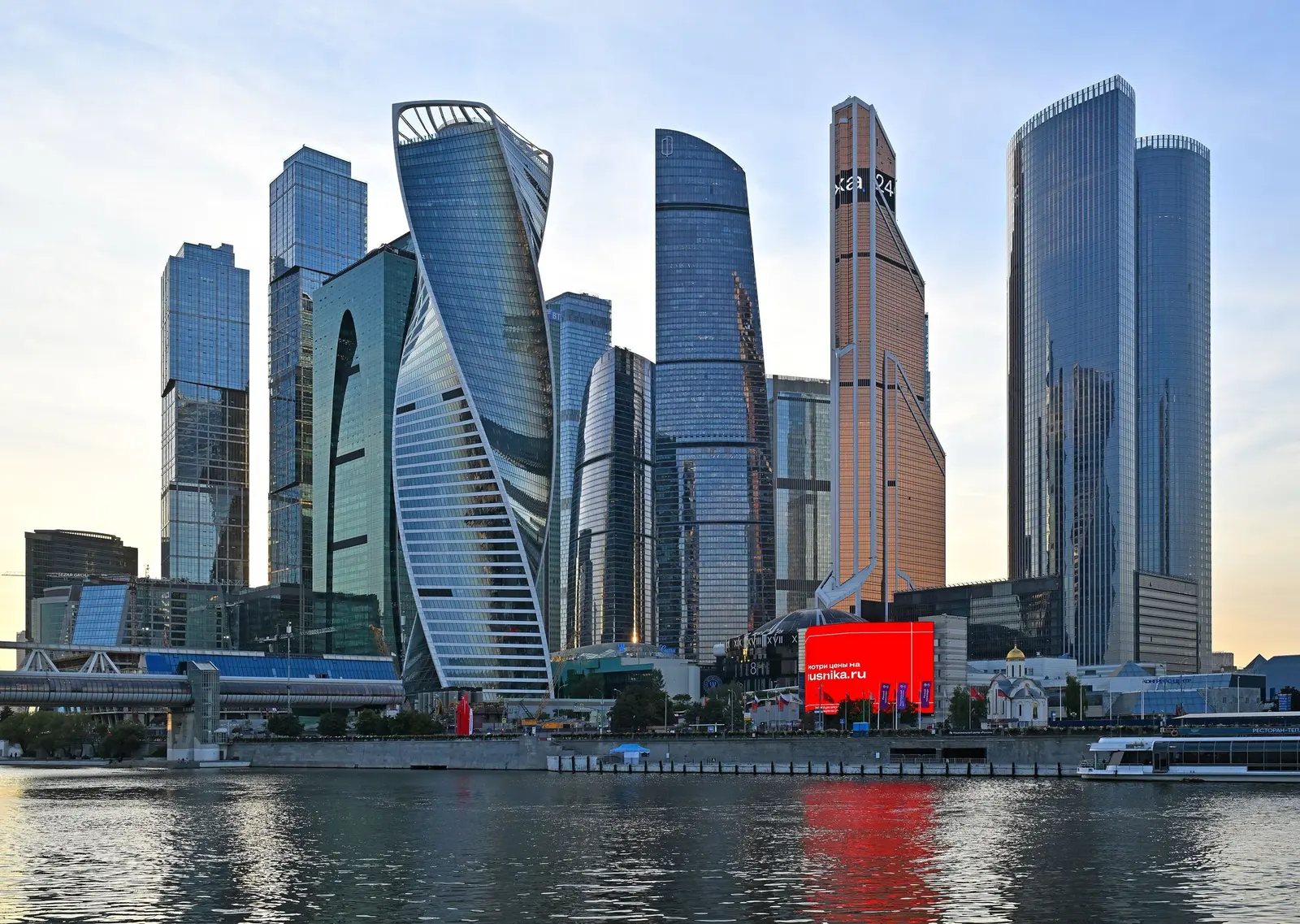
How Decisions Are Actually Made
Russian corporate culture concentrates authority at the top of a short chain. A middle manager can stop a project, but rarely has the mandate to approve one. Your practical task in the first weeks is to identify who signs - usually the owner, the general director or a deputy with a formal power of attorney - and to confirm that authority in writing rather than by assumption.
Because authority is personal, the composition of your counterparties at the second or third meeting matters more than the agenda. A move from technical specialists to the general director signals that your proposal has cleared internal review and is now a commercial decision.
- Step 1: obtain the charter and an extract from the state legal register to see who may sign without additional approval.
- Step 2: check whether a power of attorney is required for a specific transaction or threshold amount.
- Step 3: identify the ultimate beneficial owner, not only the negotiating director.
- Step 4: ask for corporate approval documents (board or participant resolution) before signing anything significant.
- Step 5: keep a written record of every meeting, and send it to your counterpart for confirmation.
Meetings, Punctuality and Negotiation Style
Punctuality is expected from foreigners and noticed. The first meeting is usually a mutual assessment rather than a negotiation: your counterpart is testing reliability, scale and seriousness. Business cards are still exchanged, seating tends to follow status, and small talk is brief before the agenda starts.
Negotiations often open with a strong position and test how you respond to pressure. This is a style, not necessarily a final position. Concessions are expected to be reciprocal and recorded. Anything agreed verbally should be confirmed in writing the same day, because a verbal commitment is not treated as binding by either side.
Interpreters change dynamics. If the negotiation is in Russian, insist on a written bilingual summary of key terms after each round, and clarify numbers, currency and payment dates explicitly rather than through nuance.
- Arrive on time, dress formally, and keep the first meeting short and factual.
- Do not treat the absence of a 'no' as a 'yes'.
- Bring documents in Russian or with certified translation.
- Expect the pace to accelerate sharply once the decision-maker is engaged.
Contracts, Seals and the Paper Trail
In Russian practice a contract is a document, not a shared understanding. It should be in Russian, signed by an authorised person and, in most organisations, stamped with the company seal. The seal has lost some of its strictly legal force in recent years, but commercially it still signals that the counterpart considers the document valid and internal.
Foreign documents usually need apostille or consular legalisation plus notarised translation before Russian banks, registrars and courts will accept them. This is a routine but slow step, and it is worth starting before you need it.
Payments between businesses are normally made through bank accounts, in line with the broader cashless pattern: 88% of retail payments in Russia are cashless (Bank of Russia, 2025). Expect each transfer to pass compliance checks, and provide supporting contracts, invoices and explanations in advance.
- Documents to collect early: charter, register extract, tax registration, licence, signature authority, beneficial ownership confirmation.
- Keep originals of powers of attorney and corporate resolutions in your own file.
- Verify current tax treatment and invoicing requirements with a local adviser - rates and thresholds change.
Relationships, Trust and the Rules on Gifts
Trust in Russian business is built laterally: through repeated contact, site visits, shared meals and introductions by people both sides respect. A foreign investor introduced by an existing partner, bank or industry association moves several steps forward. Cold approaches work, but slower.
Hospitality is genuine and generous, and accepting it is part of the relationship. Gifts to private counterparties are a normal courtesy; gifts, payments or favours to public officials are a legal risk and should be avoided entirely. Russian anti-bribery rules apply to foreign officials as well, and your home-country rules may apply to you wherever you are.
The investor base has shifted. Around 75% of foreign direct investment now comes from friendly countries, against roughly 25% previously (UNCTAD via Izvestia, 2025), so your business network in Moscow and the regions is increasingly likely to include partners from the Gulf, China, India, Turkey and the CIS.
- Do: invest time in face-to-face contact before the first contract.
- Do: use introductions from banks, chambers and existing partners.
- Do not: offer anything of value to officials or employees of state bodies.
- Do not: assume a warm personal relationship replaces written terms.
Language, Talent and the Education Base
Russia has a deep technical talent pool: 64% of adults aged 25 and over hold tertiary education, compared with 50% in the United States (World Bank / UNESCO, 2021). Engineering, mathematics, physics and IT graduates are strong, and the labour market for specialists is competitive in large cities.
English proficiency is uneven. It is common among younger staff in finance, IT and international departments, less so among production managers and regional officials. A bilingual project lead on your side, or a Russian-speaking member of your team, removes most day-to-day friction.
Employment law is employee-protective in specific ways: written employment contracts, defined probation periods, notice requirements and mandatory social contributions. Terms are set by current legislation, so confirm the present rules and thresholds with a local employment adviser before hiring.
- Contracts, internal policies and instructions should exist in Russian to be enforceable internally.
- Budget for translation of technical documentation, not only legal papers.
- Expect salary expectations in Moscow and St Petersburg to differ materially from regional levels.
The Compliance Layer You Cannot Skip
Business culture and regulation overlap in Russia more than in most markets, and the overlap is where foreign investors lose time. Investors from countries designated unfriendly face special account regimes and government approvals for various transactions. Investment in sectors classified as strategic requires approval under Law 57-FZ. None of this is optional, and none of it is improved by informal workarounds - take independent compliance advice in your own jurisdiction and in Russia.
Property and land rules are a separate layer of culture, because they shape what a foreign-owned entity can actually hold. Foreigners cannot own agricultural land and may hold it only under lease of up to 49 years. Border areas, including Sochi, Anapa, Gelendzhik and Novorossiysk, are closed to foreign land ownership. Structures must be built around these limits, not against them.
Incentive regimes are part of the same picture and are frequently used as negotiating levers. Corporate profit tax is 25%, with 0-5% in special regimes (Federal Tax Service, 2025), and standard VAT has been 22% since 1 January 2026 (Federal Tax Service, 2026). Rates, thresholds and eligibility conditions change, so treat any figure quoted in a meeting as a starting point for verification, not a fact. Special administrative regions hosted 674 companies (Ministry of Economic Development, 2025), 90 special investment contracts were in force with more than ₽2 trillion of declared investment (Government of Russia, 2025), the Free Port of Vladivostok counted 2,130 projects (KRDV, 2026), and the Arctic Zone reached 1,000 residents with ₽1.1 trillion declared (KRDV, December 2025).
- Confirm whether your jurisdiction triggers special account and approval requirements before structuring.
- Check Law 57-FZ applicability before any acquisition in a strategic sector.
- Verify land and real estate eligibility by region, not by country-level assumption.
- Keep compliance decisions documented; counterparties will ask for the paper trail.
The Rhythm of the Business Year and Regional Differences
The Russian business year has a distinctive shape. The first ten days of January are effectively closed, and late December is a poor time to schedule approvals. Early May and much of August are slow. The most productive windows are February to April and September to early December, with a push to close contracts in the fourth quarter.
Moscow dominates finance and headquarters functions, but decision-making in production, energy, agriculture and logistics sits in the regions, where relationships are more personal and travel is unavoidable. Office space is available on reasonable terms in the capital: Moscow office vacancy was 7.6% in the second quarter of 2026 (IBC Real Estate, Q2 2026).
Financing conditions affect negotiating behaviour. The Bank of Russia key rate stood at 14% in September 2026 (Bank of Russia, Sep 2026), which shapes how counterparties price deferred payment, discounts and instalments. Domestic capital markets remain small relative to the economy: stock market capitalisation was 19.5% of GDP in August 2026, against a stated target of 66% by 2030 (Bank of Russia, Aug 2026), and 106 licensed investment platforms were regulated as of May 2026 (Bank of Russia, May 2026). For a foreign investor, this means bank relationships and direct agreements still matter more than public-market exits.
This article is general information about how business culture works in Russia. It is not investment, legal or tax advice, and it does not take account of your circumstances - verify every rule, rate and approval requirement with your own qualified advisers before acting.
- Plan visits outside the first half of January, early May and August.
- Expect regional counterparts to value repeat visits over video calls.
- Ask counterparties how the current cost of funding affects their payment terms.
FAQ
Do Russian counterparties rely more on contracts or on personal trust?
Both, but in sequence. Personal trust gets you to the table and speeds up approvals; the contract governs what happens if the relationship changes. Never let a good relationship replace a properly drafted, Russian-language agreement signed by an authorised person.
Is English enough to do business in Russia?
Often at the negotiation stage with large companies and in finance or IT functions, less so in production, the regions and state bodies. Written documents are in Russian. A bilingual project lead or an interpreter plus a written bilingual summary after each meeting is the practical minimum.
Can I give gifts or pay for hospitality?
Gifts and hospitality toward private business counterparts are a normal part of relationship-building. Anything directed at public officials, or intended to influence a decision, is a legal risk under Russian anti-bribery rules and possibly under your own country's laws. Keep a written policy and apply it consistently.
How long does a typical negotiation take?
It varies by sector and by whether approvals are needed. Technical discussions can take several rounds over weeks, then move quickly once the decision-maker is involved. If your jurisdiction triggers special account regimes or Law 57-FZ approval, add a separate approval timeline on top of the commercial one.
Do I need to visit in person?
For first contact with a serious counterparty, yes. Video calls maintain relationships well, but they rarely create them. One well-prepared visit with documents in hand usually replaces several months of correspondence.
Information on this website is not an offer or an individual investment recommendation. Investing involves risk, including the loss of all invested capital. Investing via investment platforms is high-risk and may result in the loss of the entire investment. Figures are sourced from third parties and dated. Investors must comply with the laws of their jurisdiction.